

This month the Democratic Party has successfully removed the Green Party from ballots in Wisconsin and Pennsylvania. The article by the WSWS (World Socialist Website) clarifies that
while the World Socialist Web Site and the Socialist Equality Party—which is running its own candidates Joseph Kishore for US President and Norissa Santa Cruz for US Vice President—have fundamental class and political differences with the Green Party, we defend their right to participate in the 2020 elections. We denounce the Democratic Party for its repeated and blatant abuse of ballot access procedural rules and the courts to have Hawkins and Walker kicked off the November ballot.
The WSWS recognizes, with obvious disapproval, that “the political purpose of the Pennsylvania ruling is to keep the Green Party from providing an alternative for voters who might otherwise cast ballots for Democrats Joe Biden and Kamala Harris,” and that this was also the motive behind removing the Green Party from the ballot in Wisconsin. Further, the Socialist Equality Party was denied access to being on the ballot in Michigan.
The reason Pennsylvania, Michigan and Wisconsin became particular targets of the Democrats, the WSWS says,
In the 2016 election, Hillary Clinton lost to Donald Trump by 11,000 votes in Michigan, 23,000 in Wisconsin, and 44,000 in Pennsylvania. In each state, Green Party presidential candidate Jill Stein received more votes than Clinton’s margin of defeat.
This led the Democrats, and their media apologists, to blame the Greens for a defeat which Clinton brought on herself by running a right-wing, anti-working-class campaign…
WSWS adds that “one conclusion drawn by the Democrats from the experience of 2016 was that the basic democratic right of third parties to ballot access and of the public to vote for a candidate of their choosing must not be allowed to disrupt the two-party system.”
In essence, here, the Democratic Party has decided any threats to the votes that the Party hopes to accumulate must mean that the other Party threatening the votes should not be on the ballot at all.
The Democratic Party has long been comfortable with the relationship it has with the Republican Party where once simply “reaches across the isle” in an effort of bipartisanship. Any threat to that relationship – especially one where a third party, who could “take votes away” from the Democratic Party – would simply change the nature of bipartisanship.
There’s a an important point to make here about kicking a candidate off the ballot. That naturally implies that the candidate actually qualified to make the ballot – which is what Howie Hawkins and his running mate successfully did. They submitted more than the required amount of signatures required to make the ballot, and submitted all the necessary forms. They were simply removed over a technicality.
The Democratic Party has become exclusionary and set in their ways to the point of reactionary and repressive polices when the threat of the status quo is threatened.
The International Day of Democracy, which happens every year on September 15, “provides an opportunity to review the state of democracy in the world.” the UN says. While the UN continues recognizes that democracy is more of a process than a goal, Secretary of State Michael Pompeo said in recognition of the day that democracy is an “aspiration of people all over the world because each of us yearns to be free.
While democracies can be found all around the world, let’s look at this from an American perspective. First, we need to remember that the UN says
the values of freedom, respect for human rights and the principle of holding periodic and genuine elections by universal suffrage are essential elements of democracy. In turn, democracy provides the natural environment for the protection and effective realization of human rights.
Democracy in America
Every commentary on democracy agrees that “periodic and genuine elections” are the cornerstone of democracy. There cannot be a democracy without fair and accepted voting. America is in a election season at the moment; like every other election this is the “most important election of our lifetime“.
Besides the impediments to free and fair elections like removing polling places that I mentioned in Modern Voter Disenfranchisement, the current election has also candidates removed from the ballots in some states. For instance, in Wisconsin Democrats successfully sued to keep Howie Hawkis, the Green Party nominee for president from being on the ballot. In fact, an article that ran a just a few weeks ago is titled “Democratic Party leads nationwide purge of Green Party candidates from November ballots,” and points out that part of the issue is that third-party candidates are being forced to collect signatures, during COVID-19, to be on the ballot.
This, of course, is the opposite of a genuine election, when a majority party gets to decide that a non-majority party can’t be on the ballot.
Further from the voting booth, but hopefully very much on people’s mind when they cast their vote, are human rights abuses perpetuated by the government and its agents. Protests against police killings, which only began to fade as smoke from human-induced climate disasters made the air unbreathable, have continued for months. ICE, the government agency tasked by the executive branch – and funded by Congress despite their protestations – of keeping migrants in inhuman conditions have been accused of performing indiscriminate hysterectomies. This is a racist, misogynistic, act that is another human rights violation against the captive migrants.
As the UN makes clear, as democracy increases the granting of and protecting of human rights increases. The opposite is true; as democracy declines human rights abuses increase.
Social media is amazingly useful, if you let it be. For instance, an organization I follow on Twitter follows another organization on Twitter (USCPR follows Haymarket Books), and for that reason I find out on this day in 1867 Das Kapital was first published.
Some people I know have read, by assignment or interest, nearly the entire Marx-Engel reader, 2nd Edition, edited by Robert Tucker ( (C) 1978 ). I confess I have merely read parts of it, despite plans to do otherwise.
I’m not going to take space on the internet reviewing Marx’s mathematical equations of produce plus capital. Before I get into a long quote I want to point out his M–C–M where “M” equals money and “C” equals a an exchange of money (selling or buying).
A capitalist, Marx said – and he remains correct – looks for the expansion of value.
The expansion of value, which is the objective basis or main-spring of the circulation M–C–M, becomes [the capitalists’] subjective aim, and it is only in so far as the appropriation of ever more and more wealth in abstract becomes the sole motive of his operations. … The restless never-ending process of profit-making is what he aims at. This boundless greed after riches, this passionate chase after exchange-value, is common to the capitalist.
(p 334, paperback edition of Marx-Engel Reader by Tucker)
While that is equally the aim of the miser, Marx says, the difference is that the miser saves his money, while the capitalist looks to throw more and more money into the system, so that (s)he can have more capital.
Marx moves on to many things, but let’s look at the labor process.
The labour process, turned into the process by which the capitalist consumes labour-power, exhibits two characteristic phenomena. First, the labourer works under the control of the capitalist to who his labour belongs; the capitalist taking good care that the work is done in a proper manner, and the the means of production are used with intelligence, so that there are no unnecessary waste of raw material, and no wear and tear of the implements beyond what is necessarily caused by the work.
Secondly, the product is the property of the capitalist and not that of the labourer. …
(p. 350
I’ll skip part of that paragraph that talks about horses and use value, and commerce. The paragraph, about the product belong to the capitalist and not the person who did the labor, says just as importantly that ” the labour- process is a process between things that the capitalist has already purchased” including the price of labor.
The capitalist is always looking to expand his capital and he looks to do this through the labor of other people, who works under the capitalist and who has no claim to the product of their labor under this system.
Along with the “constantly diminishing numbers of magnates of capital, who usurp and monopolise all advantages of this process” of the transformation of capitalism, Marx concluded, “grows the mass of misery, oppression, slavery, degradation, exploitation; but with this too grows the revolt of the working-class ; a class always increasing in numbers, and disciplined, united, organized by the very mechanism of of the process of capitalist production itself.” Then, in the end the “centralization of the means of production and socialization of labour at last reach a point where they become incompatible” with the capitalist system. This layer of capitalism “is burst asunder. The knell of capitalist private property sounds.”
Say what you will about private property. Marx is not wrong that capitalism leads to an increasing number of members of the working, class, and the capitalism system, as it increases, leads to the growth of “misery, oppression, slavery, degradation, exploitation”. We might also being seeing the “revolt of the working class” against the system based merely on capital. It is apparent that as the capitalist reaches for ever more capital, the level of oppression and exploitation increase, and therefore the level of revolt against the capital system increases in volume.
The United States has been at war with Afghanistan and Iraq for so long that the some soldiers fighting in the one-sided war weren’t born when the war started.
The one-sided war has largely been downgraded and the reason for fighting has largely been forgotten both by those who fight and those who stand at home and doing cheerleading for soldiers overseas, including those elected representatives that continue to provide the funding for the destruction.
At the beginning of this year it was estimated that the United States has spent over $2trillion for the unending the Iraq War. CNBC, last November concluded that the U.S. has spend $6.4trillion since 2001 on wars in the Middle East and Asia (I didn’t know we are at war in Asia). The key takeaways from the CNBC report were that
The U.S. wars in Afghanistan, Iraq, Syria and Pakistan have cost American taxpayers $6.4 trillion since they began in 2001.
That total is $2 trillion more than all federal government spending during the recently completed fiscal year.
The report, from Watson Institute of International and Public Affairs at Brown University, also finds that more than 801,000 people have died as a direct result of fighting.
To break that down, CNBC says that in March 2019 “the Pentagon estimated that the wars in Afghanistan, Iraq and Syria have cost each taxpayer $7,623 through fiscal 2018.”
The costs are not merely related to the waging of war, of course. As the war drags on “more and more service members will ultimately claim veterans benefits and disability payments.” Some – perhaps many – of the soldiers and support units that have been in these endless, one-sided wars, have already left the military and claimed benefits from the government.
It is the role of the government to support its citizens. The issue becomes why the government and the people are fighting a one-sided war where no one remember why we’re there or what we’re fighting about.
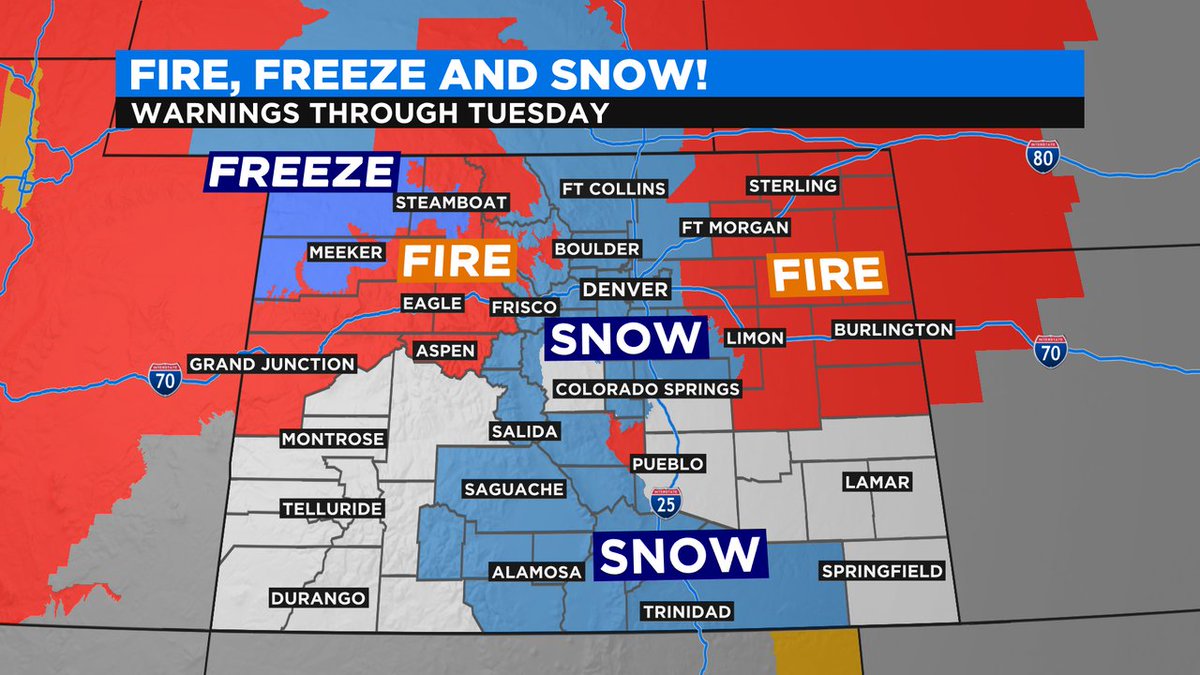
Climate change is real. Look around you. The world’s fifth largest economy, California, is on fire in the north, south, west, and east parts of the state. Oregon is on fire. Washington state is on fire. Not only is Colorado on fire, it’s also experiencing snow storms.

Hurricanes, while normal, are intensified by climate change (Climate change didn’t cause Hurricane Laura but it did make the storm worse). While hurricanes are an North American thing, typhoons are the same as hurricanes, but occur in different weather pattern zone. While it seems to have been quite overshadowed by the floods, fires, and ice in America, Typhoon Haishen helped render 17,000 South Korean without power, after it became the third typhoon to hit South Korea over the last two weeks.

Some of the travesties that happen are due to idiocies (hello, gender reveal party) and some are due to other kind of idiocies such as greed (intentionally burning the Amazon), but climate change will make a travesty into a disastrous catastrophe because as things heat up the land and forest are more inclined to catch fire.
Four months ago the Associated Press wrote a great article on climate change and coastal flooding of April of this year. The article, which I’ve seen the AP write about at other times recently, titled “Extreme Coastal Flooding Could Be Daily Event by 2100“. Referring to a study in Scientific Reports, the AP says that:
In the United States, about 40% of the nation’s population lives in coastal areas at risk of hazards such as flooding, shoreline erosion and storm hazards. On a global scale, eight of the world’s largest cities are located on coasts.
This phenomenon of increasing sea levels is caused by two major factors: thermal expansion from warmer waters and melting from land-based ice. With the former, the oceans act as a sort of sponge for the atmosphere, absorbing more than 90% of atmospheric emissions caused by human activity, including heat that causes the waters to expand.
The only piece missing from one of the largest distributors of news in the world is that climate change is increasing because of human activity.
In an NPR article, “Everything Is Unprecedented. Welcome To Your Hotter Earth” Camilo Mora, a climate scientist at the University of Hawaii, explains the science:
Keep in mind that all these things are related….CO2 is increasing the temperature. As a result, the temperature is accelerating the evaporation of water. The evaporation of water leads to drought that in turn leads to heat waves and wildfires. In places that are humid, that evaporation — the same evaporation — leads to massive precipitation that is then commonly followed by floods.
“Keep in mind that these thing are related”. Not only is the science related but the human element is connected. I don’t merely mean our contribution of fossil fuels. The struggle to mitigate climate change and end our patterns of climate degradation is a struggle for human rights. In this way, the fight for climate justice is connected to racial justice and the fights for other human rights, including a life of peace and an end to war.
The Yale School of Environment recently talked with Elizabeth Yeampierre of Climate Justice Alliance. Yeampierre drew “a direct line from slavery and the rapacious exploitation of natural resources to current issues of environmental justice.” Time also wrote about environmental racism just a couple months ago. It concludes, after a summary of recent and decades-long struggle for both the environment and racism, that “the increased attention to systemic racism and the urgency of climate change has made for a unique opportunity: address centuries of racism while saving the world from a global warming catastrophe.”
If the overall goal of saving the world from a global warming catastrophe that is caused in large part by CO2 emissions then the sensible thing to do is to target the emitters of CO2. Connected with the struggle for human rights and a peaceful world, it turns out that a 2019 article found that the “U.S. military emits more CO2 than most countries“. The article says that “the Department of Defense spews so much greenhouse gas every year that it would rank as the 55th worst polluter in the world if it were a country, beating out Sweden, Denmark, and Portugal, according to a new paper from Brown University’s Costs of War project.” While 55 of out of almost 200 doesn’t sound bad, it hardly sounds good.
The irony, Grist points out, is that “the military is concerned about what will happen as the world keeps heating up.” The Department of Defense has said that “half of its bases were threatened by the effects of global warming” including rising seas that regularly flood Norfolk Naval Base in Virginia – even on sunny days- as well as” melting permafrost threatens the stability of military buildings in the Arctic.” Further, “national security experts project that climate change will fuel more conflicts as resources become scarce.” Indeed, climate change probably create the conditions for the civil war in Syria.
Racism and war would both continue if there was no climate change, and it’s clear the war will continue, and perhaps increase, if climate change continues. The need to stop war and end racism are valuable goals and are hopefully the goals of all people not consumed by greed, but if we don’t end the human contribution to climate change we will end up with an unlivable planet.
Look around you. This is climate change in action. Can we really sustain this as a species?
This is a story about history and fiction inspired by the excellent novel The Three Musketeers. I happen to have acquired a 1906 copy as a family heirloom – the first several pages were very delicate hard to turn! – that I had rebound. Of course, it doesn’t vary from any other Three Musketeers except for excellent translation of the prose.
The story itself is inspiring. The historical references, for anyone interested in history (all of, I hope) makes the story even more exciting.
I don’t merely refer to Cardinal Richelieu and his spat with the Duke of Buckingham. Nor merely to Ann of Austria and her relationship with the the Duke of Buckingham (maybe it was the other way around) and her relations with Richelieu, and her lack of relationship with her husband, Louis XIII.

What really sparked my interest was a mention of François Ravaillac (yes, I’m citing Wikipedia). Ravaaillac, I never knew, assassinated Henry IV, the father of Louis XIII, in 1610. Further, Henry IV’s father, Henry III was also assassinated, in 1589,
While these deaths are mentioned they are but part of a mini-plot in the Three Musketeers. But the story, besides being about intrigue, is about the religious wars that led to the death Henry III and and Henry IV.
The last of the Huguenot, Protestant, rebellion against the French crown occurred, as it did in The Three Musketeers, on the tiny Isle de Re, off the coast of La Rochelle, between Bordeax and Nantes.
Four hundred years later, the idea of of a religious war between the French and and the French that ended in the French Catholics starving our the French Protestants doesn’t sound like a big deal. Unless we were to extrapolate and consider that to be a class war and a culture war, in which one side had the support of the government and the clergy, and the other side begged for help from foreign countries across the sea.
Voter suppression goes far beyond intentionally delaying the Postal Service or removing polling places with an end-goal of creating long lines and making people spend hours in line to vote.
The staff for Common Dreams published a story yesterday that should be – and is not! – front news on every paper. Just a few days ago Tennessee passed a law that makes it a felony to protest and camp on state property; the punishment for committing such a felony is up to six years in prison and the loss of voting rights.
This isn’t one state in the union that’s gone rogue. Twenty other states “punish felons by taking away their right to vote” which is a great excuse to arrest and charge any dissident with a felony. Responses quickly pointed out that the law, inspired by ongoing protests sparked by the killing of George Floyd, is racially motivated and the opposite of why American fought a Revolutionary War.
Whether the law would withstand a Constitutional challenge (one would hope it is found unconstitutional!) is beyond the point. State governments increasingly criminalize protest. The criminalization of environmental protest, Deutsche Welle (DW) says began or intensified with Standing Rock protests in 2016. During and following this “States across the US subsequently passed ‘critical infrastructure’ bills that criminalized trespass, and hence protest, around oil pipelines like the Keystone XL.”
NPR, The Intercept, and others agree that criminalizing climate change, fossil fuel, environmental protest began in earnest because of and after Standing Rock. These criminalization efforts have increased during the Trump years. The West Virginia critical infrastructure law “mimics a model policy promoted by the American Legislative Exchange Council (ALEC);” regarding the ability to vote ALEC’s co-founder maintained a white supremacist view that ‘not everyone should vote‘.
Of course, if you want to make sure not everyone can vote you do what you can to suppress the ability of people to vote. If threat of jail and loss of voting rights aren’t enough for people the polling places should be removed, and if that doesn’t work their ability to vote by mail should be impacted. At least, that’s how it appears, as both Republican and Democratic governors have criminalized protest, and the federal government has worked to make voting more difficult.
The amount of effort put in to prevent the votes of non-whites or dissidents is astounding, racially and politically motivated, and is contrary to the premise of American democracy.
Three and a half years into a Trump presidency, most Americans don’t support him. Whether he’ll be reelected or not is a different matter. The Democrats have chosen Joe Biden to run against Trump, and there are at least two other major candidates running (Howie Hawkins and Jo Jorgensen).
Not withstanding where other candidates or former candidates stand (see PoliticalCompass),

let’s talk about Biden for a minute. Just a couple days ago the Democratic Party Virtual Convention finished its four days of platitudes. For those listening around the Convention, just before it you might have heard a top aid to Biden, former Senator Ted Kaufman, confirm that ‘When you see what Trump’s done to the deficit…forget about Covid-19, all the deficits that he built with the incredible tax cuts. So we’re going to be limited’ providing money to alleviate any problem.
What Kaufman said was code-word for austerity. Politically, austerity is “a set of economic policies a government implements to control public sector debt.” Austerity is a common, but very unpleasant and unnecessary, option used “particularly when a nation is in jeopardy of defaulting on its bonds.” The United States is nowhere near that point, despite the fact that it’s predicted our debt will exceed our economy this year (predicted in April with the caveat that it could be even worse should legislation change our spending).
As Investopedia says, “austerity refers to strict economic policies that a government imposes to control growing public debt, defined by increased frugality.” There are three main ways to pursue austerity: “revenue generation (higher taxes) to fund spending, raising taxes while cutting nonessential government functions, and lower taxes, and lower government spending.” Importantly, and I think that no policy-maker ever decided to investigate the matter before jumping into the fray, Investopedia says that “outcomes from austerity measures can be more damaging than if they hadn’t been used.”
Following the 2008-’09 financial crisis some countries were forced (by the IMF and European Central Bank) to adhere to austerity. The four countries that became famous for it were PIGS (Portugal, Ireland, Greece, and Spain), The Guardian says that it wasn’t until 2015, when Portugal chose a socialist government, that “austerity has eased, consumer and business confidence has recovered and GDP growth” – very important for economists – has stayed above 2%. Portugal is still in deep debt, but more costly is the fact that they lost an exodus of the young generation that will probably never move back.
Ireland didn’t recover – that is, they aren’t bankrupt – until 2013, and they had suffered the biggest blow to their economy since the Irish Potato Famine. Meanwhile, The Guardian said in 2018, “homelessness remains a major problem across the country” and more than eight percent “of the population live in consistent poverty.”
Greece almost went bankrupt three times between 2008 and 2015, until the right-wing government left office and the “radical left” government received another bailout. In its ten-year check-in with the PIGS countries, The Guardian says that after years “eye-watering austerity,” in Greece, “in which taxes have risen, welfare subsidies have been cut, pensions reduced and thousands of public sector workers made redundant, the government is poised to agree the final tranche of loans from the EU.”
Spain avoided economic collapse, but because some areas recovered quicker and better than others, there has been political strife that led to the arrest or exile of several leaders.
Austerity is not limited to the PIGS countries. The Guardian also reported recently of austerity in Britain and the plight of octogenarians that are forced to care for their disabled children because the government has decided it won’t.
The list goes on, on course. No country wants to go bankrupt. To avoid going bankrupt, countries resort to austerity measures that destroy the social net. When countries resort to austerity, taxes change, unending poverty becomes common, housing becomes an issue, welfare subsidies and pensions disappear, and the whole social net and the whole of society is fragmented.
The United States doesn’t need to turn to austerity measures. Despite huge income inequality and an economy impacted by COVID-19 the United States is not on the verge of an economic situation that call for austerity.
Let’s return to Biden. Some people interpreted the remarks on austerity – made by a surrogate, but in no way misrepresenting Biden’s views and plans – as a remark that Social Security will need to be cut. Austerity automatically negatively impacts the working class “main street”.
There is an increasingly long string of tweets on Twitter about “austerity”. While Twitter isn’t a new source it, like the rest of the social internet, is a good barometer of what people think. To look to the future, along with a lot of other people including David Sirota (Jacobin, supra), if Biden wins this election and fails to make transformative change a more wicked demagogue will likely win in 2024, making the Trump years look progressive and cuddly. Or, as Sirata put it, “if Democrats win this election and 2020 is a repeat of 2009, then 2024 is going to be a repeat of 2016, only with a much smarter version of Trump winning the presidency.”
To look to the past, as Sirota does looking at 2009, is important. The idea of austerity didn’t magically appear in the 21st Century. To give a short, essential, background John Maynard Keynes “advocated for increased government expenditures and lower taxes to stimulate demand and pull the global economy out of the depression” in the 1930’s (He might have been influenced by Frank Ramsey). These policies were well for a few decades; in fact, the policies never worked badly, but were replaced and subsumed by a different school of economic thought.
The Chicago School of Economics is a loose term for the ideas that replaced or subsumed Keynesian economics. In the 1950s and ’60s economists who taught at the University of Chicago; Milton Friedman may be the most notable of the scholars. In fact, says Investopedia, “What Keynes wrought, Friedman undid, and supporters of the free market are deeply in debt to this Chicago school academic for his effort.” Collectively, Chicago School economists became economic advisors to many governments where they urged policies for hard money and small government. Friedman was an advisor to Reagan and influenced Thatcher. I am not aware of anywhere that says the Chicago School advocates for austerity. Merely “hard money and small government”.
The hard money and small government that is the basis of Chicago school thinking is the same thing as austerity. It translates to the government not being able to provide for people – housing, opportunity, welfare subsidies, and a basic social net by choice of force. No one will force the United States to enter and endure austerity. Will the next president choose to lead Americans to austerity? If he does, what will that mean for the future?
I recently talked to my Congressman about legislation he should be working on. And by saying I did this, I joined a group of people who said more than me, and by Congressman I mean his local and D.C-based staffers. We were enjoining him to sign on to legislation that mitigates or abolishes harm that has been done by nuclear weapons, with the end goal of denuclearization.
To his credit my Congressman has signed on to some good legislation regarding nuclear weapons. There is also legislation regarding nuclear weapons he hasn’t signed on to. My Congressman, who is retiring (and by retiring I mean that he’s now running for state office) seems reticent to challenge Trump.
In fact, that seems to be the attitudes of the Democrats. The staffers, who live and breathe politics, confirmed that Mr. Congressman and many Democrats don’t want to sign on to to legislation that would challenge Trump’s authority, including bills that would affirm that no president can start a war – nuclear or otherwise – without authorization of Congress.
Remember that this is goes against the Constitution, which declares that only Congress can start a war. It is true that for the last seventy-five years, since the end of WWII, the president has gone around the Constitution, and started wars; it also seems that as La Resistance! the Democrats would want to at least, as he opposition party with a majority in the House, sign on to a bill reminding the president that only Congress can start a war.
However, La Resistance! thinks otherwise, and mainly issues platitudes.

