
Last week New York State forced a nonprofit that “repeatedly targeted individuals based on religion and national origin” to dissolve.
Betar-US, based in New York, gained attention over the last couple years, as it created a ‘deportation list’ which included Mahmoud Khalil, an Columbia University student detained by ICE likely because he advocated for Palestinian rights and an end to the destruction of Gaza.
Betar is considered a “racist ultrazionist movement” by the Center for Constitutional Rights. CCR continues to represent Mahmoud, as the United States still makes efforts to deport him due to his advocacy.
The Office of the Attorney General (OAG) in New York began an investigation into Betar-US in March, 2025, “after receiving multiple complaints alleging that Betar and its members engaged in violent and threatening conduct directed at Muslim, Arab, Palestinian, and Jewish individuals, particularly in connection with protests related to Israel and Palestine.” Note that being a Jew who supports protests in favor of human rights for Palestinians will still make Betar target you.

Drop Site News, which takes some credit for the dissolution of Betar-US, describes the origins of Betar and it’s offshoot in New York:
Founded as a paramilitary Zionist organization in 1923, Betar Worldwide has a prominent far-right chapter in the US that has aided the Trump administration’s deportation efforts by doxxing and agitating against pro-Palestine organizers. Betar US largely operates out of New York City
I’ve written about the origins of Betar in A Minor Betar Dispute.
OAG continues to describe Betar’s methods in in New York, and around the United States:
Betar also used its public platform to threaten individuals with deportation and attempt to suppress protected speech. The organization repeatedly threatened to report protesters to immigration enforcement officials and publicly claimed that it used facial recognition software to compile deportation lists for the federal government. Even though Betar later disavowed these claims, OAG found that this conduct was designed to intimidate protesters and unlawfully chill the exercise of First Amendment rights.
Attacking and dissolving nonprofits because they advocate for a different worldview than the one you support is a dangerous idea. There’s current legislation in Congress – nicknamed the nonprofit killer bill – that could force a nonprofit to dissolve if the Secretary of Treasurer wishes to. Advocacy groups are concerned that the bill would be used to crush free speech.
However, I don’t think that the settlement against Betar-US goes far enough. New York OAG summarizes that the settlement “subjects the organization to a suspended $50,000 penalty that will be enforced if Betar violates the agreement”. In other words, they get could get away without paying anything for instigating or encouraging violence.
There are many ways to celebrate and remember Christmas. On this first day of Christmas (we do all learn in school through song that there’s 12 days of Christmas?) we could look at the birthplace of Messiach Yeshuah (Jesus – or Joshua – the Messiah) where Christians have can’t peacefully pray in Bethlehem or Jerusalem, and the last Christian city in the West Bank is being destroyed by Israeli settlers.
There are other ways to look at Christmas.
I’m currently watching Victoria on Netflix, and it is fascinating to think of history and the line of succession. Royalty married royalty, and a lot of royalty through the years have marry their cousins and close relations. Most of Queen Victoria’s children married royalty throughout Europe, and when the First World War (the “Great War” or the “War to End All Wars”) began just a decade after her death many of the countries fighting were led by first cousins descendant from Victoria.
The war was declared by cousins, but not fought by them.
When the trench warfare begin in August 1914 officials said they thought the fighting would be over by Christmas. It didn’t end on Christmas, but the Christmas of 1914 became famous for the Christmas Truce where German and English soldiers stopped fighting for a day.
Some lower ranking British officers told their men to not fire unless fired on. This became known as a “live and let live” policy.
Britannica.com describes the Christmas Truce this way: “British soldiers wrote of playing football (soccer) and sharing food and drink with men who had been, just a day earlier, their mortal enemies.”

The Christmas Truce of 1914 wasn’t that long ago. Many of us had great-grandparents alive at that time. Many American Civil War Veterans were still alive.
The soldiers who fought the First World War stopped fighting for a day and realized they had more common with the people they were fighting than their own commanders.
Think what you have you in common with the people our government is fighting against across the globe – the Middle East, South America, Africa … – and do what you can to call for a Truce every day.
A few months ago we got a dog. Realistically we got a dog to replace our Xoloitzcuintli who died and comfort ourselves and our Chihuahua who no longer had another dog in the house. Even though Sophie, the Chihuahua, never seemed to care about other dogs and is an introvert who likes ignores other dogs but loves to sleep, preferably on someone’s lap.
We know little of the Corgi-mix dog that we got. For ten days, before he was with us, he was a with a woman (in her seventies?) who couldn’t keep him because she couldn’t take him for walks – and she lived in a mobile home community with almost no grass. We know she got him from the pound, where he was promplty neutered. So we know that Oliver – the name he came with from the kindly woman, and the name we’re using – has a lot of trauma and a lot of separation anxiety.
There’s a lot to teach Oliver. It seems like the biggest, and hardest, lesson is to sit and stay. Especially important things like to stay out of the kitchen.

It seems like there’s an invisible line we don’t want him to cross. It reminds of the eruv, an invisible boundary under Jewish law to allow Jews to continue to have functionally and essential personal items otherwise not allowed during the Sabbath.
Oliver can be a family dog. He has energy that a young dog should have, he has chosen his favorite human, he’s happy to sit next to us on the couch, likes going places, and likes having a home.
He just needs to learn that there are some rules, and that’s he’s not actually in charge.
If you’re feeling lost for words and trying to figure out how to take meaningful action while our elected officials continue to provide support for Israel’s crimes you’re not alone.
There’s so much to say and so many travesties to address.
Gaza is facing a man-made, policy-decision, state 5 famine implemented by Israel and supported by the United States. In theory, Israel is doing this to get it’s hostages back – the same hostages that are also dying of starvation – and are out to destroy and dismantle Hamas.
Israel has even less reason – and legally it has no right and no reason left to what’s it’s doing to Gaza – to attack the West Bank. Nonetheless, Israel is attacking the West Bank and is supporting the takeover of the West Bank by settlers.
Below is a message to send to your elected officials about the West Bank:
Dear Representative _______,
I’m reaching to to you a concerned constituent asking you to protect Palestinians in the West Bank and beyond, and to issue statements and join your colleagues in letters to our executive branch related to protecting lives in the West Bank and beyond.
As you might know, Saif Mussalet, an American citizen, was killed by Israeli settlers on July 11 while visiting family and friends in the West Bank. Settlers prevented ambulances of reaching Saif, and he died because Israel allowed him to be killed. I ask that you issue a statement condemning this death, and join your colleagues in holding those responsible for his death accountable.
I’m also writing to you about the city of Taybeh, the last all-Christian city in the West Bank, which is being attacked by the Israeli army. Israel has no reason and no right to attack the city of Taybey and I ask that you condemn this attack both on on moral and religious grounds.
Lastly, I want to let you know that Israeli settlers, with full backing of the Israeli army and Israeli government, killed Awdah Hathaleen, one of the co-producers and makers of the 2025 Oscar Winning Film, “No Other Land”
Please join your colleagues in advocating for a true, lasting, peace between Israelis and Palestinians, and make statements and send letters
Please make it clear to your constituents that these killings and assaults are not acceptable acts by Israel, our great ally in the Middle East.
Thanks again for your representation,
Bill Moyers, the acclaimed journalist and advocate for public broadcasting, died today at age ninety one.
It is worth looking at Moyers’ chapter of his autobiographical Moyers on America: A Journalist and his times, which is quite relevant twenty years later. In the chapter, ‘This Is Your Story. Pass It On,’ referring to the privatization of public lands, which can then be sold at a discount to corporate cronies, he wrote that this is “the most radical assault on the notion of one nation, indivisible,, that has occurred in our lifetime.”

He continues that he can’t explain the rage of the Conservatives who want to “dismantle every last brick of the social contract.” He is rightfully puzzled “as with the right-wing wrecking crews blasting away at social benefits once considered invulnerable, Democrats are fearful of being branded as ‘class warriors’ in a war that the other side started and determined to win”.
Dwelling on how hard is to resolve the class war, Moyers – the exceptional journalist – continues that he doesn’t “know how to reconfigure Progressive politics to fit into an age of sound bites and polling dominated by a media oligarchy whose corporate journalists are neutered and whose right-wing publicists have no shame”
Moyers, providing a history lesson, says that “while the social dislocation and meanness that galvanized Progressives in the nineteenth century are resurgent, so is the vision of justice, fairness, and. equality. No challenge to America is greater than to open suffrage and the marketplace to new and marginal people — and this is the Progressive vision. It’s a powerful vision if only there are people around to fight for it. The battle to renew democracy has enormous resources to call on — and great precedents for inspiration.”
Listing these precedents, and what it takes to “get back into the fight” – complete with several bullet points – Moyers condludes his chapter with the though “ideas have power — as long as they not frozen in doctrine — but they need legs.”
Listing the progressive ideas such as the the minimum wage; conserving national resources including air, water, and land; women’s rights and civil rights’ trade unions; social security, and other social nets, Moyers reminds us that all of these were
launched as citizens’ movements, and won the endorsement of the political class only after long struggles and in the face of bitter opposition and and sneering attacks. Democracy doesn’t work without citizen activism and participation. Trickle-down politics is no more effective than trickle-down economics. Moreover, civilization happens because we don’t leave things to other people. What’s right and good doesn’t come naturally. You have to stand up and fight as if the cause depends on you. Allow yourself that conceit– to believe that the flames of democracy will never go out as long as there’s one candle in one citizen’s hand.
With one more quote from a journalist from the nineteenth century, Moyers concludes his chapter with these words: “This is our story, the Progressive story of America. Pass it on.”
This morning I spoke to the state investment board about their obligation under international law to not provide material support Israel. What I said is a shortened piece of a letter to the editor – which itself requires brevity. I was given two minutes to talk this morning, and below is what I said, excluding some introduction about my name and connection to the issue:
Last year the International Court of Justice passed a ruling, concluding that Israel’s continued seizure of the the Occupied Palestinian Territory (OPT) of East Jerusalem, Gaza, and the West Bank is illegal under international law and that it must be ended immediately. The court asserted that countries, and states within them, are obligated NOT to recognize Israel’s illegal acts, and must REFRAIN from providing aid or assistance that maintains Israel’s illegal presence in the OPT. The UN General Assembly passed a resolution supporting the findings of the ICJ.
Simply, this means that we as people, and you as a board, have an obligation to not invest in any company within Israel, or with any company that provides Israel material support such as shipping, or mass surveillance.
Thanks for your time today, and you attention on where our collective money is invested.
I hope you find your own words to write to to newspapers and to speak to the powers that be to ensure our money is invested in a way that does not create harm.

I recently did what is somewhat expected in society, although one person called it one of the hardest things we can do, and asked a woman out. There’s some unwritten expectation that as a the guy – or the man – I’m supposed to be the one to take the lead. As the older person – I know I’m older – there’s some expectation that I act like the responsible adult.
I don’t think I’ve asked anyone out since prom in high school when I asked a long-time friend who was in a different school.
If you’re the person I asked out, and you’re reading this, don’t worry. I like you and will continue to like you. I love you for who you are, for your values and your worldview.
I’m not good at looking at it as asking her out. I don’t know that I even want to call it a date. I wanted and want to spend time with her to get to know her better, and, frankly, just to spend time with her because I enjoy spending time with her.
There was a lot of anxiety about asking her. Almost as much anxiety as deciding whether to press the ‘friend’ button on social media. The anxiety wasn’t about her, but about me. Was I doing the right thing? Would I hear a yes? Would a hear a no? Would I push her away? All of these things worried me.
Anxiety
Merriam-Webster defines anxiety, in the medical sense, as “an abnormal and overwhelming sense of apprehension and fear … concerning the reality and nature of the threat, and by self-doubt about one’s capacity to cope with it.” the American Psychological Association defines anxiety as “an emotion characterized by feelings of tension, worried thoughts, and physical changes like increased blood pressure.”
I mentioned to a friend about the anxiety of relationships, and how hard it is to meet people and make friends once we become adults and have left college.
The social media algorithm picked up on the words ‘relationship,’ and ‘anxiety,’ and ‘overthinking’ and gave me lots of reels to look at and pages to look at that I don’t follow.
Many of the reels and stories I’ve come across while doomscrolling, or scrolling without knowing that I’m looking for, are useless and irrelevant. Most reels are how to deal with a break-up, which is useless to me, or how to send the perfect message, or determine by body language if the person really want you. Some said that if she’s not responding to your texts – leave the relationship. Again, pointless because who I’m thinking of does respond to my texts and hasn’t ghosted me, and we have a relationship beyond whether the answer to “can I take you out” is a ‘yes’ or a ‘no’. (Although for several weeks I had anxiety of whether we can exist beyond that question for several weeks, I think the answer is we’ll be fine).
Attachment Types
What I did learn from the reels is that everyone brings an attachment type into a relationship. It’s not news that everyone has emotional baggage they bring into a relationship, but I’d never thought about attachment types. We all have issues from our childhood that we generally know nothing about that determines how we interact with romantic partners.
An experiment from 1969 showed that there are four attachment types: “One is secure attachment. The other three — anxious, avoidant and disorganized — are considered insecure attachment styles.”
Each style, continues an article in Cleveland Health about the four attachment types, “exists on a spectrum, so you may not find yourself identifying completely with any one style. Or your style may fall into one category but be more or less extreme in how it affects the quality of your relationships.”
- Secure attachment in a an adult relationship People with a secure attachment style “are more readily able to form long-lasting and healthy relationships with others. They’re more likely to trust their partner and be emotionally available to them.” Studies show that about 58% of adults are securely attached.
- Anxious attachment style “may be seen as ‘clingy,’ ‘needy’ or not trusting. People with an anxious attachment style can be consumed with concern that their loved ones will abandon them, and they may seek constant reassurance that they’re safe in their relationship.” Research indicates that about 19% of adults have an anxious attachment style.
- Avoidant attachment “can look like an adult who is a “’one wolf’ or overly self-sufficient. People with an avoidant attachment style are likely to not delve much into emotional conversations, either in regard to their own feelings or those of others.” The article adds that “adults with an avoidant attachment style can be seen as self-reliant and emotionally guarded. They’re unlikely to seek emotional comfort or understand how to comfort their partner.” Research shows about 23% of adults have an avoidant attachment style.
- Adults with disorganized attachments are likely to live with mental health disorders or personality disorders that prevent them from developing healthy relationships with others. They’re likely to crave close relationships but push others away when they show them attention. Cleveland Health does not mention the percentage of people that fall under this category.

There’s a lot more information about how each attachment style develops and about labeling yourself our your partner with one or more of these elements of attachments and attempting to understand upbringing as a child.
I spent a long time (or at least a while) trying to understand myself, and the person I asked out in terms of these attachment styles. I can see myself having more than one of these attachment styles at the same time, although I can’t tell you what part of my childhood caused what. As for anyone else, since we often develop these styles as children without knowing it, you may relate to these styles without knowing why.
In another edition of IT’S TIME TO WRITE TO YOUR ELECTED OFFICIALS I recently send this letter to my Senators, Congresswoman, and the President.
I encourage you to find your own words and write to your elected officials.
….
Dear Representative,
I’m writing to you to as a constituent, and as an American Jew, to emphasize that safety to Jews in the United States and beyond is intrinsically tied to the actions of the Israeli government as long as it claims to act in the voice of all Jews.
While Israel continues its unnecessary and disproportionate assault on the population of Gaza, the safety of American Jews deceases and anti-Semitism increases.
I ask you to immediately take action to condemn Israel’s assault on the Palestinian people, and make clear that while this assault on Palestinians continue, your constituents are less safe.
Thanks again for your representation.
It’s been 600 days since Hamas and other resistance groups in Gaza broke through the fence that keeps them in Gaza, and returned to Gaza with more than 200 Israeli and foreign national as hostages.
About 1,200 Israelis and foreign nationals died that day, which is horrific number on the Israeli side – a number that was unfathomable. It has become clear that Israel killed many of those 1,200 people, many of who were civilians, as they enacted the Hannibal Doctrine which allows Israelis forces to fire on on their own solders and civilians in order to prevent soldiers and civilians falling into enemy hands.
We’ll never know exactly how many of the 1,200 were killed by Israel. We do know that at this point, more than 50,000 Palestinians have been killed in Gaza by Israeli forces. The number may be several times higher, because only bodies who have been identified are counted, but not the thousands buried under the rubble or crushed to death beyond recognition. More than 75% of the Palestinians killed are officially woman and children. More than half of Gaza’s population is under the age of 18. Israel is waging a war on children.
All elements of life have been targeted and destroyed in Gaza. Schools, colleges, hospitals, mosques, churches, and every other element of society. Israel has been accused of targeting hospitals and medical workers and journalists, as well as scholasticide and genocide. Israel succeeded, with the help of the United States, to defund UNRWA, the UN Refugee of War Agency responsible for providing the basic education, healthcare, and food, that, as the occupying power Israel has a responsibility to provide to the people of Gaza. Since the last ceasefire, designed in Israel’s favor to allow the release of hostages, collapsed in February of this year Israel has prevented food, fuel, or anything else to be allowed into Gaza over the last two and a half months.
Efforts to outsource the distribution of food to U.S. paramilitary forces is ongoing while it’s estimated that thousands of Palestinians will starve to death.
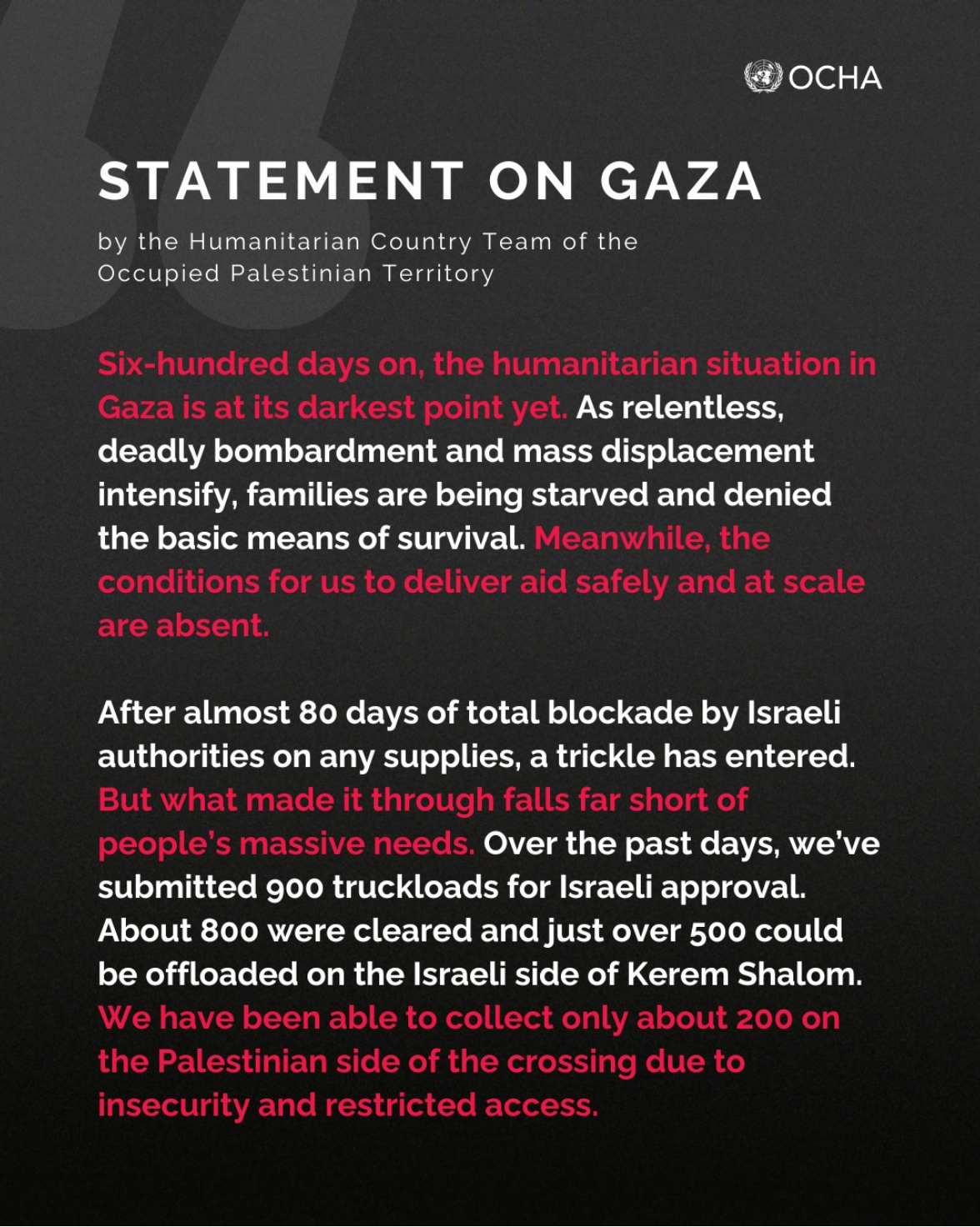
In response to the humanitarian situation in Gaza, the UN Office of the Coordination of Humanitarian Affairs (OCHA) issued a statement about Israel’s obligations under international law.


For years I’ve been working on a mathematical equation that I haven’t got quite right or been able tp prove. The facts are easy enough: when two people are having a conversation, there’s actually three conversations going on. One inside each person’s head, and one between them (even if there’s no talking). Which means’ there’s 7 conversations between three people, etc. I think it’s #people x #people + 1 + the # of people in the conversation, or something like that.
Thinking of mathematical proofs – which is not my strong point -reminded me of Yom Tov Lipman Lipkin. Referring to Wikipedia (where else?) it says that with Charles-Nicolas Peaucellier, Lipkin invented the first true planar straight line mechanism – the first planar linkage capable of transforming rotary motion into perfect straight-line motion, and vice versa. Wikipedia continues,
Until this invention, no planar method existed of converting exact straight-line motion to circular motion, without reference guideways. In 1864, all power came from steam engines, which had a piston moving in a straight-line up and down a cylinder. This piston needed to keep a good seal with the cylinder in order to retain the driving medium, and not lose energy efficiency due to leaks. The piston does this by remaining perpendicular to the axis of the cylinder, retaining its straight-line motion. Converting the straight-line motion of the piston into circular motion was of critical importance. Most, if not all, applications of these steam engines, were rotary. The mathematics of the Peaucellier–Lipkin linkage is directly related to the inversion of a circle.
Yom Tov Lipman Lipkin, Wikipedia says, was the youngest son of the “famed” son of Rabbi Israel Salanter, or the Salanter Reb (Rabbi). The Salanter Reb was the founder of the modern Mussar Movement, which might be called ethical Judaism. What I heard growing up, and what I listed on my genealogical chart for high school, is that the Salanter Rabbi is my great-great-great-great grandfather (and I’m otherwise unrelated to Yom Tov Lipman). Some in town question whether this could be true, because apparently everyone wants to claim the Salanter Reb as an ancestor.
The Ethical Will
I was interested in looking for the ethical will from the Salanter Rabbi. An ethical will is a series of moral instructions to a persons descendants on what he want them to do – first, in the sense of how he should be buried, and second, how his children and grandchildren should live life.
It turns out that the beat up, taped-together-with-painters-tape, ethical will – with English translations – was not for the Salanter Rabbi, but for another ancestor, Rabbi Joseph Moses Abraham Levinski, known as the Tzadik [a good moral and spiritual leader] of Lazday.
I interrupt these thoughts to say that I’m not bragging about my ancestry, or tooting my horn. What we know and what we can know of our ancestors, and their lives, and what expectations they might have of us, though, is fascinating and important. The English version of the ethical will that I’m referring to were organized by cousins – second, third, or fourth cousins – who were equally interested in their ancestry, and shared with my grandmother because she remained interested in her family history.
The Tzadik’s ethical will mentions the Salanter Rabbi and the Mussar movement, which called him “the founder and spiritual leader of the Mussar Movement.” It gives a history of other rabbis that influenced Israel Lipkin – the Salanter Rabbi – and describes Mussar as the improvement and refinement of the human person.
In this sense the ethical will of Joseph Levinki, written before cars and most modern amenities we take for granted, remains relevant and interesting.

An image of the ethical will of Rabbi Joseph Moses Abraham Levinski, taken from the internet.
 The Dole Blog