
One of the core elements of learning about international justice is the study of ICTY and ICTR.
ICTY, the The International Criminal Tribunal for the former Yugoslavia, was created by the United Nations in 1993 to respond to ongoing war crimes where thousands of civilians were being killed and wounded, tortured and sexually abused in detention camps, and hundreds of thousands expelled from their homes. The goal was to criminally try individuals most responsible for the murder, torture, rape, enslavement, destruction of property, and other crimes listed in the Tribunal’s Statute. By bringing perpetrators to trial, the UN page for ICTY says, ICTY aimed, “to deter future crimes and render justice to thousands of victims and their families, thus contributing to a lasting peace in the former Yugoslavia.”
Over it’s twenty-four years, until it ended in 2017, ICTY charged over 160 people, including prime ministers, head-of-army, high and mid-level political leaders, and other actors with crimes. ICTY, the UN page adds, “was the first war crimes court created by the UN and the first international war crimes tribunal since the Nuremberg and Tokyo tribunals. It was established by the Security Council in accordance with Chapter VII of the UN Charter.” The International Justice Resource Center says that “ICTY’s jurisdiction extended to grave breaches of the Geneva Conventions of 1949, war crimes, genocide, and crimes against humanity committed by individuals within the territory of the former Yugoslavia from 1991 onwards.”
Similarly, ICTR, the International Criminal Tribunal for Rwanda, was established by the United Nations in 1995 to ‘prosecute persons responsible for genocide and other serious violations of international humanitarian law committed in the territory of Rwanda and neighbouring States, between 1 January 1994 and 31 December 1994.’ The genocide and and terror of the time has been commercialized and familiarized to the public with movies like Hotel Rwanda. The same page about ICTR, from the UN, adds that “the Tribunal has indicted 93 individuals whom it considered responsible for serious violations of international humanitarian law committed in Rwanda in 1994. Those indicted include high-ranking military and government officials, politicians, businessmen, as well as religious, militia, and media leaders.”
World Without Genocide, citing the ICTY page, says that Slobodan Milosevic, the former Serbian and former Yugoslavian president, was indicted by ICTY “for genocide; complicity in genocide; deportation; murder; persecutions on political, racial or religious grounds; inhumane acts/forcible transfer; extermination; imprisonment; torture; willful killing; unlawful confinement; willfully causing great suffering; unlawful deportation or transfer; extensive destruction and appropriation of property, not justified by military necessity and carried out unlawfully and wantonly; cruel treatment; plunder of public or private property; attacks on civilians; destruction or willful damage done to historic monuments and institutions dedicated to education or religion; [and] unlawful attacks on civilian objects.”
This week the world watched as South Africa brought a charge of genocide to the International Court of Justice against Israel, accusing Israel of committing genocide against Palestinians. With overwhelming evidence, South Africa’s legal team, backed by images and statements from Israeli officials over the last few months, argued that Israel has “shown ‘chilling’ and “incontrovertible” intent to commit genocide in Gaza, with full knowledge of how many civilians it is killing. More than 500 statements of incitement to genocide against Palestinians by Israel officials have been collected by Law for Palestine, in this continuously updated document. More Palestinians have been killed, on average, every day than in any other conflict in the 21st Century, according to research by Oxfam.
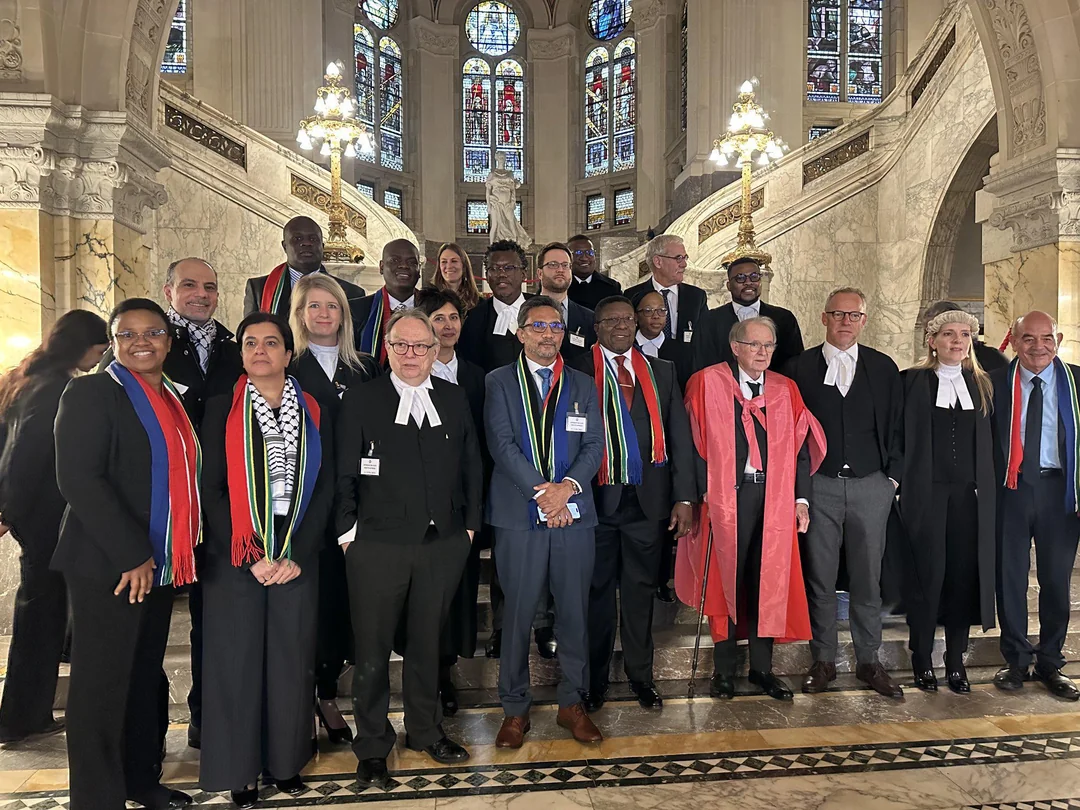
South Africa’s legal team
Returning to the charges against Milosovic, in ICTY, Israel’s government under Benjamin Netanyahu has committed nearly every act that Milosovic was charged with: genocide; complicity in genocide; deportation; murder; persecutions on political, racial or religious grounds; inhumane acts/forcible transfer; extermination; imprisonment; torture; willful killing; unlawful confinement; willfully causing great suffering; unlawful deportation or transfer; extensive destruction and appropriation of property, not justified by military necessity and carried out unlawfully and wantonly; cruel treatment; plunder of public or private property; attacks on civilians; destruction or willful damage done to historic monuments and institutions dedicated to education or religion; [and] unlawful attacks on civilian objects.
In some ways Israel’s assault on Gaza since October, 2023, which is the focus of the genocide charges, sound strikingly similar to ICTY and ICTR. Will there be an International Criminal Tribunal for Israel? Will there be an ICTI?
One of the benefits – indeed, an expectation – of a democratic system is that we communicate with our elected officials and ask them to represent our interests. While our government continues to support the bombing of Gaza, which has largely been referred to as a genocidal act, with our tax dollars and with weapons made in the United States, one of the best things we can do is to use our voice to make it clear we don’t support these polices.
With a few amendments, and removing names, below is my most recent letter to my member in the House of Representatives.
Dear Representative ______
I’m writing to you as a constituent concerned about the humanitarian situation in Gaza. I ask that you join your colleagues in calling for immediate and sufficient humanitarian aid into Gaza, both by endorsing H.Res. 935 “Calling for the same, timely and sufficient delivery of humanitarian aid to civilians in the Gaza strip,” and through other statements. I know you’re previously expressed concerned about the humanitarian situation in Gaza, and I appreciate your work on this matter.Let me take a moment to clarify by what I mean by sufficient humanitarian aid. The Office of the High
Commissioner Affairs (OCHA) reports that before October 7 an average of 500 trucks entered Gaza with food, water, and other essentials that comprise humanitarian aid that 500 trucks has never been
sufficient to meet the needs of the population . Since October 7, there hasn’t been a day when 150 trucks entered Gaza, and the numbers are often much closer to 100. I ask that you join HRes. 935, and clarify that sufficient humanitarian aid into Gaza means about five times the truckloads currently allowed in.
With
appreciation,
Continue to use send messages to elected officials, and take action to end oppression!
Growing up, there was a sort of junk yard where you could pick through discarded metal and other light machinery other people had given up on.
It was called something like “One Man’s Treasure,” meaning that someone’s junk could be useful to someone else. Of course, one man’s terrorist is another person’s freedom fighter.
To the Western governments with a history of colonizing, or being colonized, Hamas is one man’s terrorist.
Padraig O’Malley, in the Two State Delusion (2015), provides the following succinct summary of the beginning of Hamas, and he also shares in his book work that Israel and Palestine (including Hamas in Gaza) are addicted to the “peace process” and need each other to continue the charade of the process. Hamas was created by Sheikh Ahmed Yassin, and other friends. Years before this, in 1970, Yassin was “allowed” by Israel to register an Islamist charity group called Mujama al-Islamiya. The group refrained from violence but clashed with the PLO, which they saw as a rival. Hamas was formed in 1987, during the First Intifada, which started as a nonviolent protest against Israeli policies,. It wasn’t until 1992 that Harakat al-Muqawana al-Islamiya, or Hamas, added a military component to their composition. Avi Shaim, in The Iron Wall, adds that not only was Hamas created as a result of the Firs Intifada, but Israel encouraged it’s creation in the hope of weakening the secular nationalism of the PLO.
It should be common knowledge, although it becoming increasing clear that it isn’t, and that legislators and policy-makers in Washing D.C. either don’t know or won’t recall, that Hamas was elected to represent Palestinians in 2006. The election, which was promoted by the United States – and monitored by Jimmy Carter, who wrote about it Peace: Not Apartheid – was a free and fair election in which Hamas received a narrow popular majority but a a clear majority of parliamentary seats (74of 132). Hamas was interested in forming a unity government with Fatah, Jimmy Carter later wrote, but Abbas’ intention “was not cooperate with them”
Jimmy Carter, in his talks with Hamas leaders leading up to the election, says that Dr. Mahmoud Ramahi, who would be elected a parliamentarian, and then imprisoned by Israel, told him that Hamas hadn’t committed an act of violence since the ceasefire in August 2004, and that they were able and willing to extend the ceasefire (hudna) for ‘two, ten, or fifty years’ if “Israel would reciprocate by refraining from attacks on Palestinians. In 2006, elected Hamas prime minister stated that ‘we have no problem with a sovereign Palestinian state over all our lands within the 1967 borders, living in calm.’
Following the October 2012 Operation Pillar of Defense, as Israel called it, Hamas maintained a ceasefire. Further, prior to the Operation Protective Edge of 2014, Hamas and Fatah forged terms for a unity government. The U.S. approved but Israel was furious because this uncut Israel’s claim it can’t negotiate with a divided Palestine, Noam Chomsky wrote, in On Palestine. The unity government accepted three conditions the United States and the European Union have long asked for: nonviolence, adherence to past agreements, and the recognition of Israel.
Referring to the 2008-09 Operation Cast Lead attack on Gaza, Chomsky, in Gaza in Crisis, quotes Thomas Freedman in Gaza in Crisis saying that Israel’s tactics of attacking civilians during the war was meant to ‘educate Hamas’. In that Operation, like many others, Israel attacked civilian locations like police stations, villages, homes, densely populated refugee camps, water and sewage systems, hospitals, schools and universities, mosques, UN relief facilities, ambulances “and indeed anything that might relieve the pain of the unworthy victims”.
With some revisions, including fixing some typos I made in haste and exhaustion, I handed the above summary of the formation of, history of,, and policy of, Hamas to my Congresswoman in a meeting I had about two weeks ago. The meeting, planned months in advance, naturally ended up focusing on ceasefire – a resolution she still hasn’t signed on to and very Representatives have endorsed – and other Palestinian rights issues. It was expected, though, that there would be talks of Hamas, and it became clear she knew nothing about the history of Hamas, like it’s endorsement of a two-state solution – a solution that almost every member of Congress mentions, without contemplating how it could happen given actual facts.
What’s written above isn’t a full history of the history Hamas, but rather an attempt to summarize what other say, and therefore what we should know, about some of the basics about Hamas.
During his time as Special Rapporteur on the situation of human rights in the Palestinian territories occupied since 1967, Richard Falk wrote extensively about Hamas. In 2013 he wrote, in an article about how Israel fragments Palestinian lives and tries to drive a wedge between their social and political lives:
Israel and its supporters have been able to drive an ideological wedge between the Palestinians enduring occupation since 1967. With an initial effort to discredit the Palestine Liberation Organization that had achieved control over a unified and robust Palestine national movement, Israel actually encouraged the initial emergence of Hamas as a radical and fragmenting alternative to the PLO when it was founded in the course of the First Intifada. Israel of course later strongly repudiated Hamas when it began to carry armed struggle to pre-1967 Israel, most notoriously engaging in suicide bombings in Israel that involved indiscriminate attacks on civilians, a tactic repudiated in recent years.
Despite Hamas entering into the political life of occupied Palestine with American, and winning an internationally supervised election in 2006, and taking control of Gaza in 2007, it has continued to be categorized as ‘a terrorist organization’ that is given no international status. This terrorist designation is also relied upon to impose a blockade on Gaza that is a flagrant form of collective punishment in direct violation of Article 33 of the Fourth Geneva Convention. The Palestine Authority centered in Ramallah has also, despite occasional rhetoric to the contrary, refused to treat Hamas as a legitimate governing authority or to allow Hamas to operate as a legitimate political presence in the West Bank and Jerusalem or to insist on the inclusion of Hamas in international negotiations addressing the future of the Palestinian people. This refusal has persisted despite the more conciliatory tone of Hamas since 2009 when its leader, Khaled Meshaal, announced a shift in the organization’s goals: an acceptance of Israel as a state beside Palestine as a state provided a full withdrawal to 1967 borders and implementation of the right of return for refugees, and a discontinuation by Hamas of a movement based on armed struggle. Mashel also gave further reassurances of moderation by an indication that earlier goals of liberating the whole of historic Palestine, as proclaimed in its Charter, were a matter of history that was no longer descriptive of its political program.
Falk concludes his book, Palestine: The Legitimacy of Hope, by writing about the imprisoned nonviolent resistor Marwan Barghouti, saying, “I believe that when Israel is ready for a sustainable and just peace it will signal this to itself, to the Palestinians, and to the world by releasing Barghouti from prison and by treating Hamas as a political actor with genuine grievances and aspirations that needs to be included in any diplomacy of accommodation that deserves the label of ‘peace process.’”
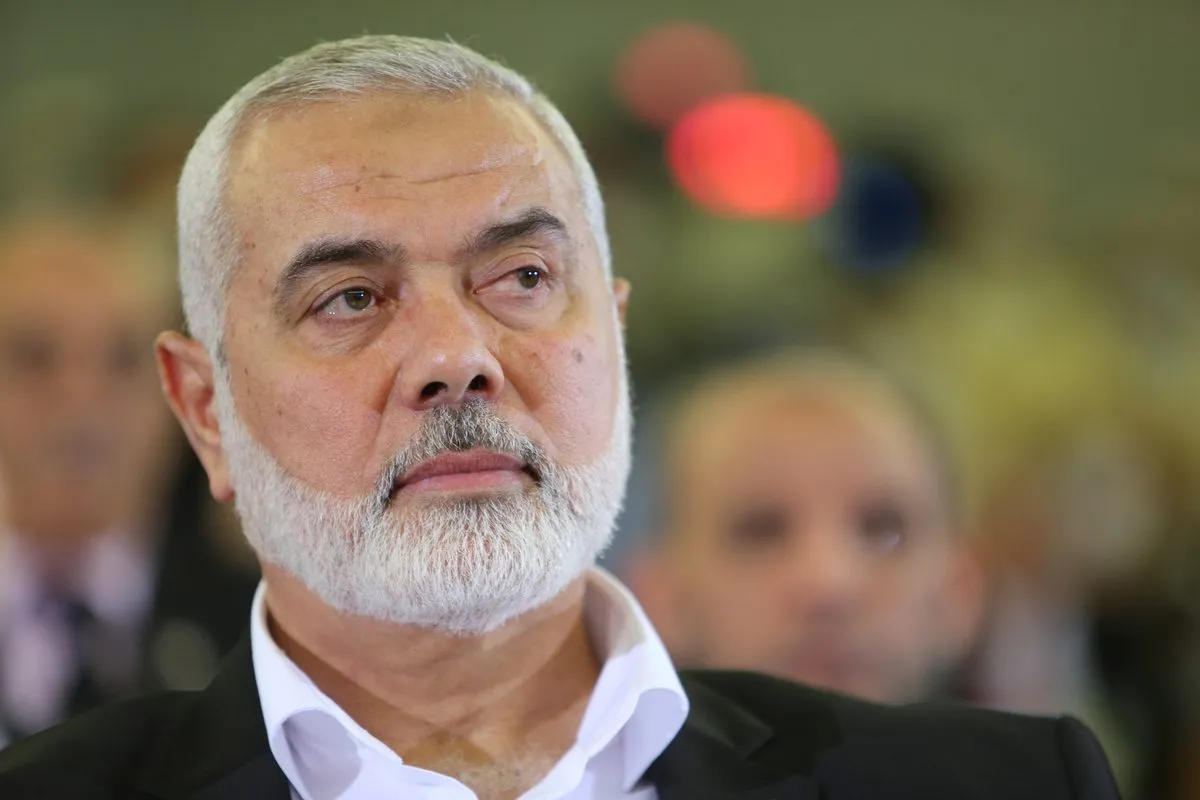
Ismail Haniyeh Head of the Hamas Political Bureau on October 13, 2022 [Fazil Abd Erahim/Anadolu Agency] from https://www.middleeastmonitor.com/20231124-hamas-leader-haniyeh-confirms-their-commitment-to-humanitarian-pause/
On Armistice Day, or what the United States has turned into Veterans Day, it’s good to pause for a moment to consider armistice and disarmament.
Armistice Day celebrates the end of World War I. But perhaps it’s aptly named, because armistice according to Merriam-Webster means “temporary stopping of open acts of warfare by agreement between the opponents”, or a truce.
As I wrote a few years ago in “On the eleventh hour of the eleventh day of the eleventh month”
The agreement between the armies to stop fighting – the armistice – lasted long enough to sign the Treaty of Versailles.
It sounds like a great excuse to have a three day weekend, but in reality what happened was A Peace to End All Peace.
Israel has been bombing Gaza daily for the last thirty-five days, attacking a defenseless civilian population in refugee camps, hospitals, mosques, and other densely packed places.
Over the last month there has increasing call worldwide for a ceasefire between Israel and Gaza. A ceasefire everyone is calling for might might be an armistice – a temporary stopping of attacks. Only 18 members of Congress signed on to a resolution calling for a ceasefire, and it’s becoming increasingly clear that Israel’s attack on Gaza is being done with full moral, financial, and military support from the United States, using weapons made in the United States.
Israel has met with the Palestinian Liberation Organization (PLO), and the Palestinian Authority several times not just for armistice, but to come up with durable, sustainable, solution to one of the word’s most noticeable conflicts. Unfortunately, the general consensus is that under a two state solution, the Israelis want to maintain a military, and ensure that the Palestinians remained disarmed. This is like allowing the tough kid on the playground to keep his rocks and a sledgehammer, but tell the other kids they can’t have rocks.
True peace requires that both sides lay down their weapons, not just for a ceasefire, but permanently. It’s time to reform Armistice Day into Permanent Disarmament Day.
It was clear, long before terrible news of devastation in Gaza and other parts of the Occupied Palestinian Territories in response to Hamas successfully taking more than a hundred hostages and killing several hundred Israelis, that Israel has a right-wing government.
“”Last year, elections brought to power the most extremist government in its history,” Ruth Margalit wrote in the New Yorker, this June.
This wasn’t the first time Netanyahu formed the most right-wing government in Israel, and I very much hope it’s the last time he’s ever allowed to see something other than the Hague. Ten years ago, in 2013, Richard Falk said that Netanyahu formed “the most right-wing, pro-settler government in the history of Israel, selecting a cabinet that is deeply dedicated to settlement expansion and resistant to the very idea of a genuine Palestinian state.”
More than a hundred Palestinians have been killed in the West Bank since October 7, when Hamas reminded the world hat Palestinians exist. Settlements, which are often illegal under Israel law, and are always illegal under international law, continue to expand quicker than ever.
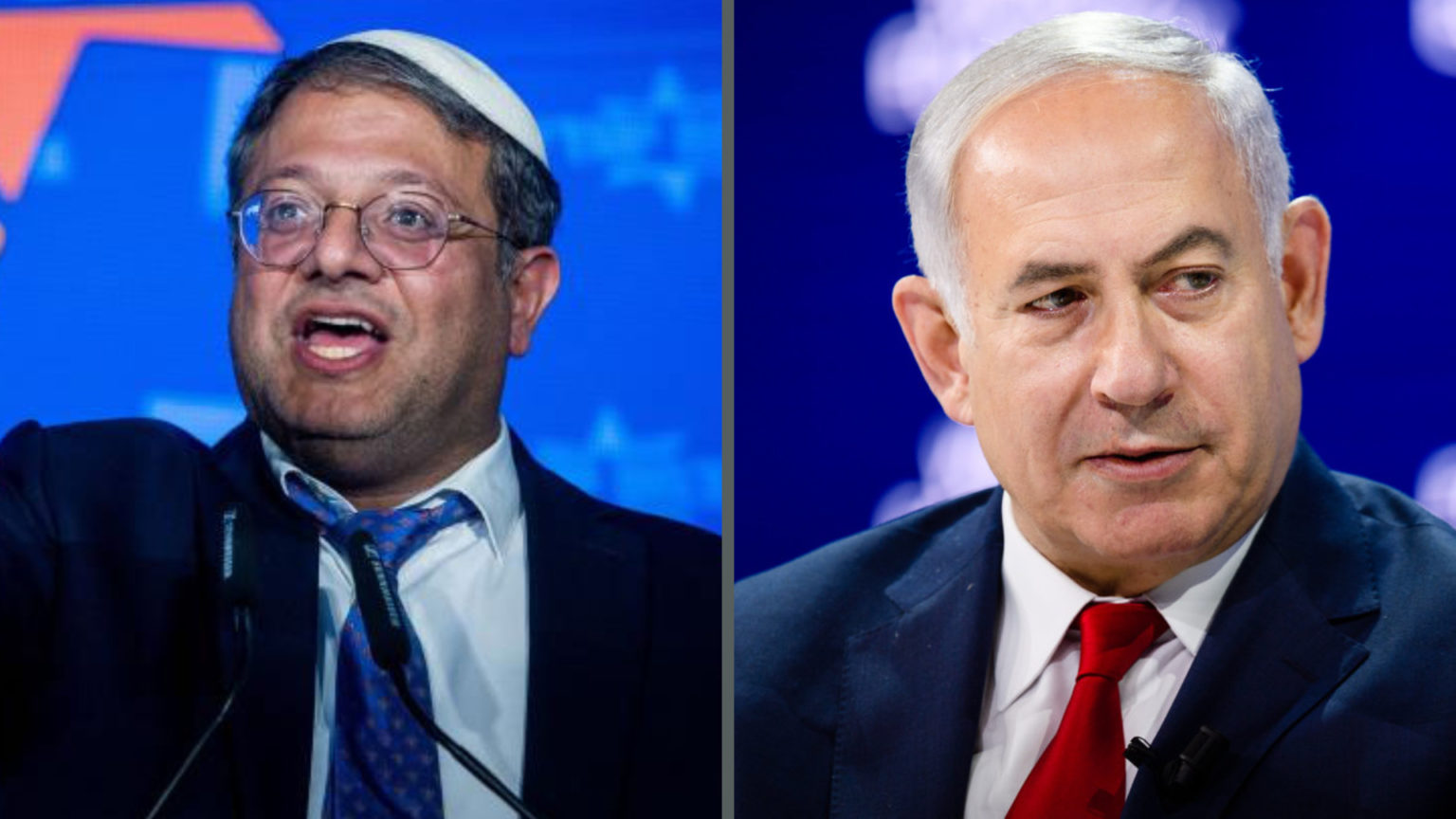
My point when I began writing this was that the term “the most extreme” changes over time, as Netanyahu’s extreme government is nothing like the current extreme right-wing government we see.
When a large group of people gather to confer together it becomes a conference.
I signed up to be at a conference this weekend. Like so many organizations, the U.S. Campaign for Palestinian Rights (USCPR) hasn’t had a conference in a few years, due to the pandemic. Even this year, pandemic awareness was high, with a Covid test before showing up, the day of showing up, and mask at all times.
When I first saw that this conference was happening again, in June, I started to think about about going and asking questions of people who had been before. I thought it would be educational, and good for working on social justice issues.
I was expecting to hear from Rashida Tlaib today as the keynote speaker, and to hear more about lawfare and other issues that both stymie and invigorate calls for Palestinians rights, and what we can do. I thought I might be having dinner tonight with some people I know, and a lot that I don’t. As you might have noticed, all of my words have been in the past tense.
About two weeks ago, ten days or so after Israel began bombing Gaza indiscriminately in response to Hamas’ attack on Gaza border communities, I received an email from USCPR, informing me that the conference was postponed indefinitely, and that I should cancel my flight, and all other preparations. The hotel, a Hilton Hotel in Houston, Texas, unilaterally cancelled the conference.
I don’t mind not going to Houston, and I wasn’t looking forward to a 6am flight – the only reasonable option – to get there.
The point here is that Israel’s ongoing war on Palestinians – it didn’t start on October 7 – has effects far beyond Israel or the Occupied Palestinian Territories.
It turns out that the USCPR conference is not the only conference to be cancelled because of the ongoing violence. Although no reason was given by USCPR about why Hilton backed out of hosting a conference for Palestinian rights, it’s reasonable to guess that they didn’t want protests around the hotel. The American Muslims for Palestine (AMP) conference, scheduled to take place in Chicago in mid-November, was cancelled because of multiple threats against the hotel.
Both the USCPR and AMP emphasize that their voices will not be silenced, and that they’re channeling all the energy that would be found at the conferences into other other methods to support Palestinian rights.

It’s hard to exist when you know other people are denied the right to exist.
The media, and the U.S. government, tells us that Israel is acting in self-defense as bombing of Gaza intensifies daily.
For a couple weeks after the current violence began on October 7 no aid or supplies were allowed into Gaza by Israel, who controls everything and everyone that enters and leaves Gaza. Twenty days later, on October 27, OCHA, which coordinates humanitarian aid for Palestinians, reports that the Rafah crossing to Egypt opened for the sixth time since October 21, allowing ten trucks with food water, and medical supplies to enter Gaza. The total number of trucks to enter Gaza, since with aid, since October 7, is 81 trucks. Before “hostilities began” on October 7, about 500 trucks a day entered Gaza with supplies, and even that provide bare-minimum supplies to Gaza.
As part of the same report on October 27 OCHA says that
On 27 October, landlines, cellular and internet services were cut across Gaza, shortly after the Israeli military announced extended ground operations and airstrikes. The main telecommunications tower in Gaza was reportedly struck. Humanitarian Coordinator Lynn Hastings stated that hospitals and humanitarian operations “can’t continue without communications,” alongside energy, food, water and medications. UNICEF and the World Health Organization (WHO) announced that they had lost touch with their staff in Gaza. Palestine Red Cresent Society (PRCS) expressed concern about its ability to provide emergency medical services.
How do we carry on with our day knowing that Israel is destroying Gaza – committing genocide, according to Jewish scholars and others – with the full support of the U.S. government?
All politics is local, and our government’s neglect of Palestinian rights has affects our lives, and causes pointless deaths. If there’s any way to exist while you know that genocide being committed half way around of world the answer take action.
Action can take many forms, but to be inactive is to be complicit in what’s turning into a non-televised genocide.

 The Dole Blog