
Six Are the Books of the Mishnah
About twenty years ago, when I was in college (did I just tell you my age?), I went to the university library for some light reading that had nothing to do with any class.
I found a few books, but I kept coming back to one.
In the section on religion I found, and kept reading, The Mishnah: A New Translation.
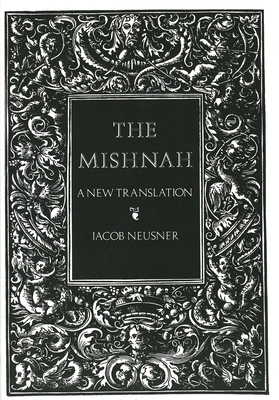
I don’t remember how many pages I read while in college; maybe a few hundred.
I read enough pages to buy a copy after college, thinking maybe one day I’d finish reading the Mishnah. I guess I should should be proud of myself that I finished the Mishnah before I turned the ripe old of of forty (I prefer to say that I am “two score” years old), since it is not my professional area of study, and I had no reason to read the Mishnah except to read the Mishnah.
The Mishmah, Jacob Neusner describes in the introduction of his new translation, “is a six-part code of descriptive rules formulated toward the end of the second century A.D. by a small number of Jewish sages and put forth as the constitution of Judaism under the sponsorship of Judah the Patriarch, the head of the Jewish community of Palestine at the end of that century.”
Anyone who has been to a Jewish Passover Seder will recall that six are the books of the Mishnah.
When the author of the book says that the book “must cause puzzlement” it’s hard to describe what I learned spending years reading the Mishnah.
I don’t know which way to face when slaughtering a sacrificial animal, or how to hold the bowl that will catch the animal’s blood. (Unfortunately, there are Orthodox Jews in Israel who are interested in building a Third Temple, and would follow out this ancient ritual). I do have some concept of why animals were sacrificed, the proper disembowelment of the body, and how it led to offerings and tithes, which helped feed those who were hungry -although I don’t think that’s the goal of the group interested in building a Third Temple.
The Mishnah – at least some of the Mishnah – is still relevant and important to our lives, Jewish or not. The laws and rules between neighbors and communities members, like what happens if you own a fruit tree and that fruit falls on your neighbor’s property. The laws of marriage, divorce, and the rights people have.
Perhaps most relevant to us in our current lives is the divisions (books) Nashin, concerning marriage and divorce and some forms of oaths. and Nizkim, dealing with civil and criminal law, the functioning of the courts and other oaths.
I was most fascinated in interested in the chapter on the Senhedrin, the compilation of the courts that determined the number of judges to see a case, the required number of witnesses, the punishment, and the restitution. The rules of law are strikingly similar to what most countries use today.
 The Dole Blog