
Victory and Defeat
Eighty years ago today the most feared name in the in the 20th Century took his life as the totalitarian state he built failed to rule until all of eternity. He-who-must-not-be-named, Adolf Hitler, died in a bunker in Berlin, as Soviet troops surrounded the city. Hitler’s power and fear under the Third Reich, which lasted from 1933-1945 – and which he expected to last a thousand years – ruled based on racism and divisiveness and drew inspiration from U.S. Jim Crow laws.
An article in the Indian Times today, titled “A Lesson In Absolute Power and Fear” says that while the Western media says Hitler shot himself, the narrative of the Soviets was quite different. Although this is somewhat irrelevant to Power and Fear, it’s a good reminder of the propaganda we’re given.
Thirty years later, fifty years ago today, Vietnam – South and North Vietnam – reunified as the Communist-run North Vietnam seized Saigon, which was the capital of the U.S.-backed South Vietnam. The current leader of Vietnam called this a ‘victory of faith’ and ‘justice over tyranny’. The 1975 “fall of Saigon, as Reuters called it, happened about two years after Washington withdrew its last combat troops from the country which “marked the end of a 20-year conflict that killed some 3 million Vietnamese and nearly 60,000 Americans, many of them young soldiers conscripted into the military.”
Today in history, then – frighteningly recent history that many of us and/or our parents and grandparents lived through – we think about Victory and Defeat.
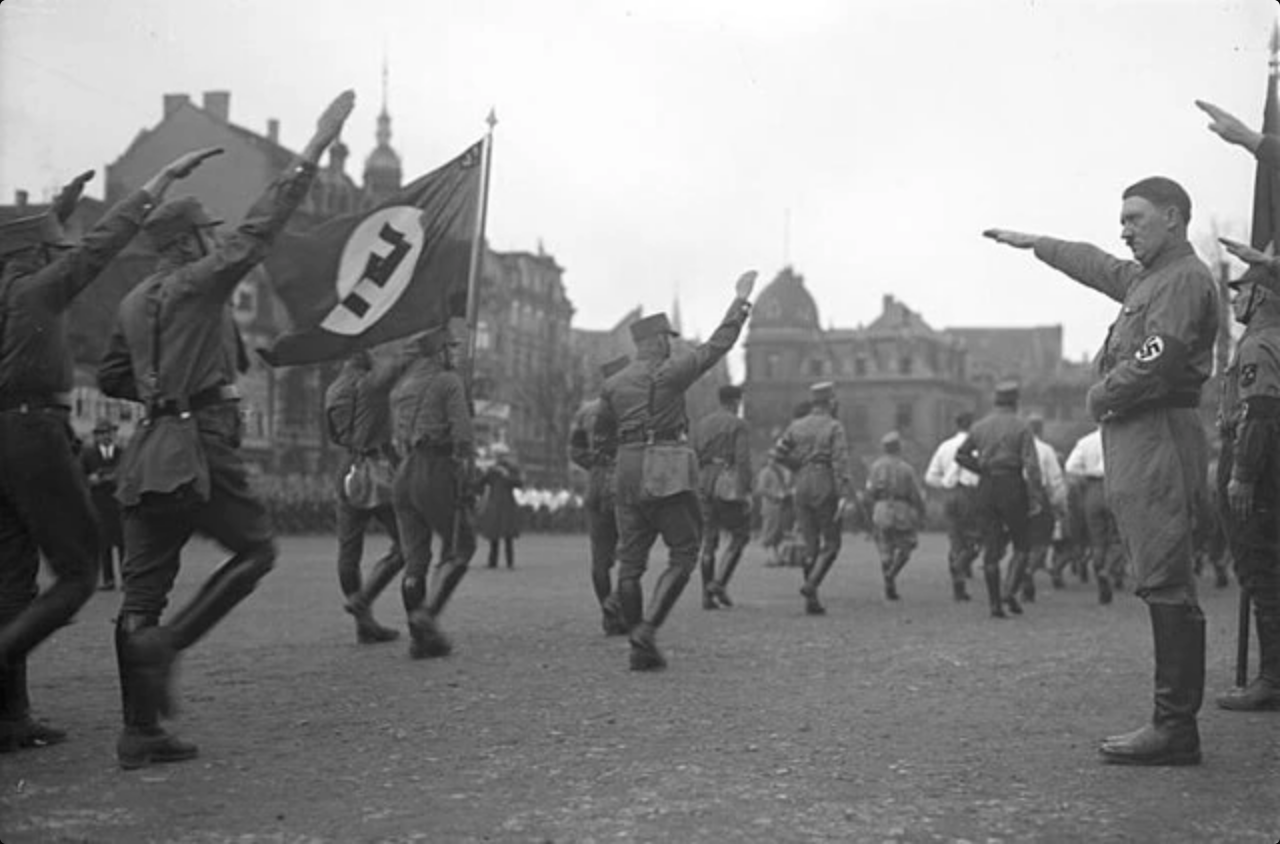
In 1945 Hitler was defeated, and in theory fascism and its end-result of totalitarianism was defeated. Fascism was never entirely defeated in 1945, because fascism results from the capitalist quest for more profits. At the same in 1945 there was victory for both the West – now dominated by the United States – and for the Soviet Russia.
Thirty years later The United States and the Soviet bloc were engaged in a proxy war, and Vietnam was part of that proxy war to determine who could control which regions on the global map. Facing public pressure because of the deaths overseas and at home caused by the war in Vietnam the United States left the country, although it would never admit defeat. From a perspective looking at the human cost of war, including lingering effects of Agent Orange and other chemicals, it’s hard to say that anyone one the war. But the Vietnam war was also a war on colonization, and a quest for self-determination, and in that sense Vietnam can claim victory.
 The Dole Blog