
Good King Wenceslas, The Feast of Steven, and Asssassins
King Wenceslas and the Feast of Steven have been immortalized by Love Actually. Good King Wenceslas, who was a duke, and not a king, was born in 907 according to Wikipedia.
Wenceslas’s father was named Vratislaus and his mother Drahomíra. Vratislaus’ father Bořivoj, also a duke, and his grandmother Ludmila converted to Byzantine Christianity. It was Ludmila who ensured Wenceslas received a Christian upbringing. In today’s world perhaps this wasn’t shocking, but eleven-hundred years ago Christianity was relatively new.
In 921, when Wenceslas was about 14, his father died and he became duke. Considered too young to rule – ask Edward III of England (king at 14, began rule at 17), or Louix XIV of France (king at 4, began rule at 17) – Ludmila declared herself regent. Jealous over her mother-in-laws control over her son assassins, on the order of Drahomíra, murdered Ludmila on 15 September 921. Drahomíra, Wikipedia says, took over the regency and initiated measures against Christians.
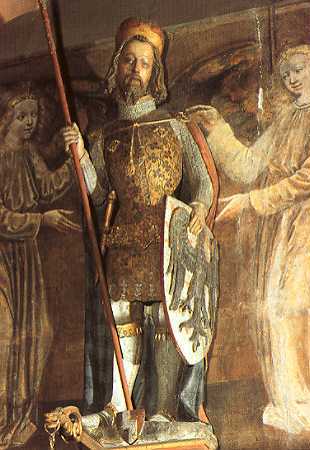
When Wenceslas was eighteen, remaining Christians nobles led an uprising, and Drahomíra was exiled. Wenceslas was remembered as a good king. All kings are good until proven otherwise, of course. Lots of things happened – military victories and defeats, and importantly the expansion of Christianity. I’ll skip the details, which can be found on Wikipedia because there’s not a lot of original sources about Wenceslas. In September 935, Wikipedia says, “a group of nobles allied with Wenceslaus’s younger brother Boleslav plotted to kill him”. Using the oldest trick in the Game of Thrones book, Boleslav invited Wenceslaus to a celebration of the feast of Saints Cosmas and Damian, at which point three of Boleslav’s companions stabbed Wenceslas to death. Apparently, Boleslav then ran Wenceslas through with a lance.
Wenceslas was assassinated. His grandmother, Ludmila, was assassinated by Wenceslas’s mom.
He was almost immediately made a saint and a martyr, and stories and biographies of Wenceslas appeared very quickly. Considering this was the Dark Ages and very few people theoretically knew how to write, this is fairly impress.
Good King Wenceslas, a song with lyrics appeared in 1853. (Not long after his death, Wenceslas was given the title “king” by the Church). The song refers to “on the day of Steven,” or Saint Steven’s Day, (December 26), and is partly made famous by Hugh Grant in Love Actually.
A relatively minor rule in history, who was just one of thousands of chiefs, barons, dukes, and kings, Wennceslas might best remember for being dead. His death, which made him a martyr – because the people said so – and a saint – because the Church said so – made him famous. The myths of what he accomplished has led to poets, songs, and more. He was given, several hundred years later, the aura of a noble and just leader which provided him Saint Stevens Day – the second day of Christmas.
His life of twenty-two years, full of intrigue and assassins has been forgotten. Now he’s Good King Wenceslas.
 The Dole Blog