
ICTY, ICTR – and ICTI?
One of the core elements of learning about international justice is the study of ICTY and ICTR.
ICTY, the The International Criminal Tribunal for the former Yugoslavia, was created by the United Nations in 1993 to respond to ongoing war crimes where thousands of civilians were being killed and wounded, tortured and sexually abused in detention camps, and hundreds of thousands expelled from their homes. The goal was to criminally try individuals most responsible for the murder, torture, rape, enslavement, destruction of property, and other crimes listed in the Tribunal’s Statute. By bringing perpetrators to trial, the UN page for ICTY says, ICTY aimed, “to deter future crimes and render justice to thousands of victims and their families, thus contributing to a lasting peace in the former Yugoslavia.”
Over it’s twenty-four years, until it ended in 2017, ICTY charged over 160 people, including prime ministers, head-of-army, high and mid-level political leaders, and other actors with crimes. ICTY, the UN page adds, “was the first war crimes court created by the UN and the first international war crimes tribunal since the Nuremberg and Tokyo tribunals. It was established by the Security Council in accordance with Chapter VII of the UN Charter.” The International Justice Resource Center says that “ICTY’s jurisdiction extended to grave breaches of the Geneva Conventions of 1949, war crimes, genocide, and crimes against humanity committed by individuals within the territory of the former Yugoslavia from 1991 onwards.”
Similarly, ICTR, the International Criminal Tribunal for Rwanda, was established by the United Nations in 1995 to ‘prosecute persons responsible for genocide and other serious violations of international humanitarian law committed in the territory of Rwanda and neighbouring States, between 1 January 1994 and 31 December 1994.’ The genocide and and terror of the time has been commercialized and familiarized to the public with movies like Hotel Rwanda. The same page about ICTR, from the UN, adds that “the Tribunal has indicted 93 individuals whom it considered responsible for serious violations of international humanitarian law committed in Rwanda in 1994. Those indicted include high-ranking military and government officials, politicians, businessmen, as well as religious, militia, and media leaders.”
World Without Genocide, citing the ICTY page, says that Slobodan Milosevic, the former Serbian and former Yugoslavian president, was indicted by ICTY “for genocide; complicity in genocide; deportation; murder; persecutions on political, racial or religious grounds; inhumane acts/forcible transfer; extermination; imprisonment; torture; willful killing; unlawful confinement; willfully causing great suffering; unlawful deportation or transfer; extensive destruction and appropriation of property, not justified by military necessity and carried out unlawfully and wantonly; cruel treatment; plunder of public or private property; attacks on civilians; destruction or willful damage done to historic monuments and institutions dedicated to education or religion; [and] unlawful attacks on civilian objects.”
This week the world watched as South Africa brought a charge of genocide to the International Court of Justice against Israel, accusing Israel of committing genocide against Palestinians. With overwhelming evidence, South Africa’s legal team, backed by images and statements from Israeli officials over the last few months, argued that Israel has “shown ‘chilling’ and “incontrovertible” intent to commit genocide in Gaza, with full knowledge of how many civilians it is killing. More than 500 statements of incitement to genocide against Palestinians by Israel officials have been collected by Law for Palestine, in this continuously updated document. More Palestinians have been killed, on average, every day than in any other conflict in the 21st Century, according to research by Oxfam.
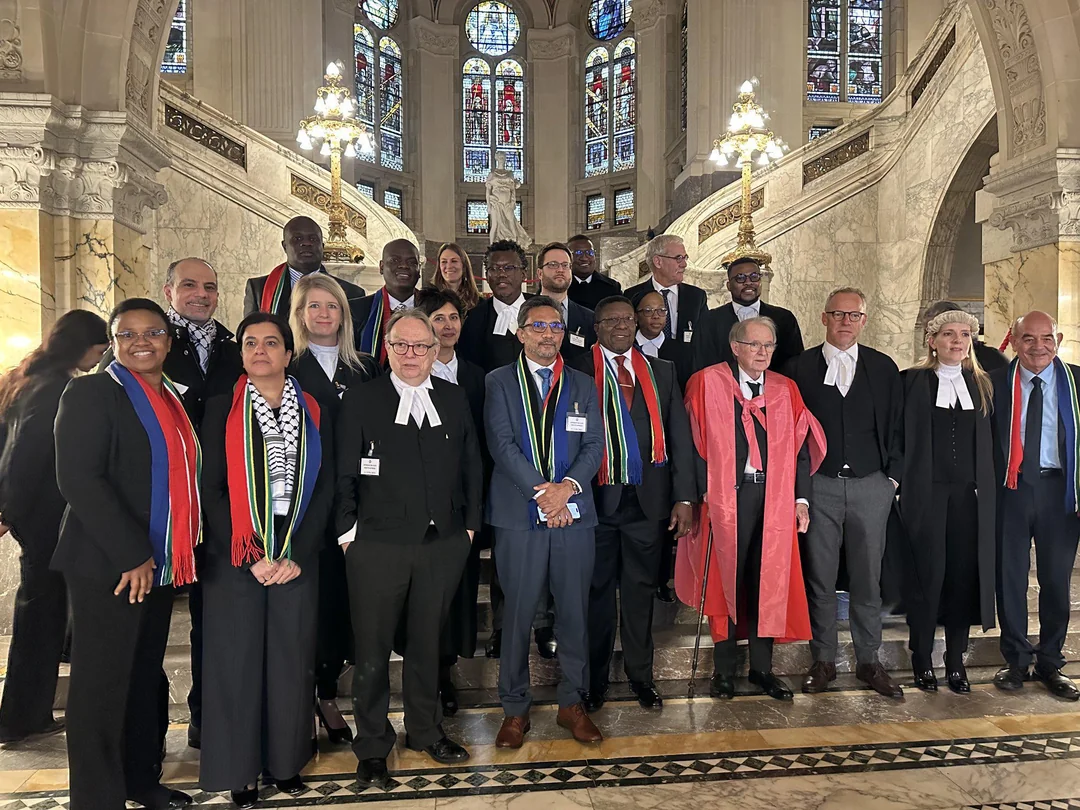
South Africa’s legal team
Returning to the charges against Milosovic, in ICTY, Israel’s government under Benjamin Netanyahu has committed nearly every act that Milosovic was charged with: genocide; complicity in genocide; deportation; murder; persecutions on political, racial or religious grounds; inhumane acts/forcible transfer; extermination; imprisonment; torture; willful killing; unlawful confinement; willfully causing great suffering; unlawful deportation or transfer; extensive destruction and appropriation of property, not justified by military necessity and carried out unlawfully and wantonly; cruel treatment; plunder of public or private property; attacks on civilians; destruction or willful damage done to historic monuments and institutions dedicated to education or religion; [and] unlawful attacks on civilian objects.
In some ways Israel’s assault on Gaza since October, 2023, which is the focus of the genocide charges, sound strikingly similar to ICTY and ICTR. Will there be an International Criminal Tribunal for Israel? Will there be an ICTI?
 The Dole Blog