
How to Decolonize Israel
This is a good time to share my master’s thesis titled “The Colonization of Israel and How to Decolonize It” I received a 9.9/10 on this work written in 2018. I’m sharing it in full, with resources included as footnotes. This was copied from Word, which explains the strange formatting.
| The Colonization Of Israel And How To Decolonize It |
| Moving toward a lasting peace between Israel and Palestine |
| Bill Dole |
| 2018 |
Sustainable Peace Program at the University for Peace
ABSTRACT
Since the Balfour Declaration of 1917, Palestine has been colonized first by Britain and next by Israel, which became a state in 1948. In turn, Israel has been subservient to the United States and the Israeli lobby in the US since that time. In 1967 Israel expanded its territory as a result of war with Egypt, Jordan, and Syria. Territory acquired by war is illegal but Israel has, since 1967, made a concentrated effort to transfer its population – as settlers – into land the international community does not recognize as Israel’s. Herein methods to decolonize Israel are proposed that are expected to lead to a lasting peace. The proposals are unsurprising but necessary, and are both doable and essential in order to resolve and transform the lengthy conflict.
Chapter 1: The Study
Introduction
This paper looks to propose ways to decolonize Israel. In order to decolonize Israel it must be assumed that it was and is colonized. In order to do so it is essential to examine the historical dimensions of the conflict, and the policies and political positions that have led us to where we are today.
This study intends to move beyond Noam Chomsky’s ‘it could happen but it won’t’. The proposal moves toward Mitchell and Sachar’s admonition ‘it is difficult but could happen’.[1] In this vein it could be said, as Obama so often does, that “if it was easy it would have happened already.” However the goal here is to propose rational policies, methods, and tactics that can implement sustainable peace for the Israeli-Palestinian conflict.
In 2014 Israel executed Operation Protective Edge against the people of Gaza. Wanting to write an article-length summary and description for an online audience of the war as facts appeared, the author of this paper began saving sources. Many of these sources delved into a history of the conflict, providing a context. Originally, the plan was to focus on the Hashoah and the Nakba (the ‘calamity’ of the Jews, notably in the Holocaust, and the ‘catastrophe’ of the Palestinians as more than 700,000 became and remain refugees during the formative year of Israel becoming a state, respectively). Research has brought the topic beyond the calamity and the catastrophe in their historical and present apparitions to remedy these devastations.
Nonetheless, this paper will not propose a particular solution to the conflict. It is assumed that the methods of resolution and reconciliation proposed herein can lead to peace, but it is for the conflicting parties themselves to decide what the resolution looks like.[2] The history of the process of the dissolution and attempted solutions certainly merit attention, although some must be relegated to footnotes and endnotes, and some will receive no mention at all, but may be found in informative sources listed at the end of this paper.
Several factors and historical events are of primary importance to the conflict. The colonization of Palestine by the British was followed by the colonization of Palestine by the Israelis; the war in 1948, the war in 1967, the war in 1973, the wars against Gaza in 2008-9, 2012, and 2014 have all contributed to the strife.
The Establishment of Israel
When Britain determined in 1947 that it could no longer fulfill its mandate in Palestine, granted in 1920 by the League of Nations, the United Nations issued Resolution 181, recommending the partition of Palestine into separate Jewish and Arab states. The Zionist leadership had publicly accepted the Partition Plan.[3] The partition of Mandate Palestine gave “55% of it for a Jewish state, although in 1947-8 “Zionist Jews at this time comprised about 33% of the population of Palestine,” including recent immigrants from Europe and owned only about 7% of the land,” reports Robert Fantina.[4]
On September 1, 1947, the United Nations Special Committee on Palestine (UNSCOP) issued a report that the British mandate should be terminated, with a majority of the committee recommending a partition into “separate Arab and Jewish states with Jerusalem set aside as an international enclave under UN auspices.” Some delegates of UNSCOP proposed a binational state, commonly called the one-state solution.[5]
Israel declared itself a state May 18, 1948. The next day Egypt, Jordan, Iraq, Syria and Lebanon invaded Israel.[6] Although the standard Israeli narrative is that it was unprepared,[7] it had been training paramilitary units for years, despite the prohibition of such acts under the British Mandate. The Arab League and the Palestinian Arabs had rejected the partition, leading to a civil war that lasted several months. It may be that the civil war has never ended; the planned but barely discernible ethnic cleansing of Palestinians certainly never has.
The war displaced at least 750,000 Palestinian who moved into what have become permanent refugee camps.”[8] This number includes the at least 250,000 who were forced from their homes between the end of the Mandate and the 1948 war between Israel and Arab countries fighting in support of Palestinians.[9] Most refugees and their descendants are still living in the camps and many still possess a key to a residence they fled.
The Declaration of the Establishment of the State of Israel defines the borders to be those specified in the Partition Plan, according to David Gerald Fincham, but does not say so explicitly.[10]
Israel claims ownership of 69 per cent of the 1948 land that was inherited from the British Mandate Government, either confiscating the land, or simply seized because it was alleged that it had no owners. The Development Authority claim 12 per cent of the land as properties belonging to ‘absentees’; or what might be called “properties that belong to ethnically-cleansed Palestinians.” The Jewish National Fund claims ownership of 13 per cent of the land. Most JNF land consists of land that belonged to Palestinians driven from their homes in 1948 which was then given to the JNF as a gift by the government of Israel after the state was established.[11] These numbers add up to the 94 percent of 1948 Palestinian land ‘managed’ by the Israeli Land Authority.
Fincham notes that besides acquiring 55% of Mandate Palestine, Israel claims what he calls stolen land, which “includes the cities of Acre, Ashkelon, Jaffa, Nazareth, Ramle, Beersheba, Lydda, and West Jerusalem, all except the last having being allocated to the Arab state in the Partition Plan as they were major Arab population centers.” Gaza and the West Bank comprise the rest of Israel’s sovereign territory, in Fincham’s words.[12]
He provides this map of the partition plan:
Fincham cites a letter from Eliahu Epstein, of the Jewish Agency in Washington D.C. to President Truman, which “defines the borders of Israel to be those specified in the Plan.” He also reminds us that “obtaining territory by war violates fundamental principles of the UN Charter,” implying that Israel is in violation of international law with all territorial expansions into Palestine.
Israel has engaged in several wars and skirmishes with neighboring countries, the most consequential of which was in 1967. In 1967, Israel attacked Egypt and its allies Syria and Jordan. In this six day war Israel acquired the Sinai and Gaza Strip from Egypt, the Golan Heights from Syria, and the West Bank, including East Jerusalem, from Jordan. After this war, an increasing number of Israelis – now more than a million – have moved to and have become permanent settlers in Palestinian occupied territory. In 1967 another 400,000 Palestinians were displaced from the West Bank,[13] and have become refugees or members of a Palestinian diaspora. Any Palestinians that leaves has difficulty returning – leaving and returning are at Israel’s discretion.
Prior to this, between 1948 and 1967 the Old City of Jerusalem “and everything to its north, south and east, referred to as East Jerusalem, was under Jordanian control.”[14]
Palestinians have been denied fair living conditions for decades. Globally, “quality of life is reduced by denial of educational opportunities, free speech, and freedom of association. These conditions are associated with uneven life chances, inequitable distribution of resources, and unequal decision-making power.”[15] In 2008 Palestinian poverty rates were at 79.4 per cent in Gaza and 45.7 per cent in the West Bank.[16] The changes over the years are not significant. The World Bank says, in 2016 “the unemployment rate remained stubbornly high at 27%: 42 % in Gaza and 18% in the West Bank. Youth unemployment in Gaza is particularly worrying at 58%. And, although nearly 80% of Gaza’s residents receive some form of aid, poverty rates are very high.”[17]
Conceptual Framework
This study is performed in the method of classic qualitative analysis, which “looks into the root and proximate causes of a particular conflict, also analyzing positive and negative intervening factors.” Information gathering is a crucial issue for this kind of analysis, notes Paffenholz.[18]
Efforts to solve the Israeli-Palestinian conflict are not new. George Mitchell, former U.S. envoy for Middle East Peace during Obama’s presidency, gives a comprehensive history of negotiations and agreements in A Path to Peace. Further, along with several other authors, commentators and observers, he has identified key issues to be solved, and methods to solve them. In brief, this includes the areas of East Jerusalem, Gaza, and the West Bank, and the security and development issues desired and needed for both conflicting parties. Proposed methods include third-party mediation, negotiation, nonviolence, the international community, NGOs, and the local activism. Mitchell, and most commentators, discusses proposed solutions and the advantages and disadvantages of each proposal. The proposals in this work are based on literature from books, articles, online sources and from personal observations and experiences.
This work is divided into five Chapters. The remainder of Chapter 1 will describe the significance of this study, and its influences. Chapter 2 will detail the pertinent details of how the conflict has evolved, and how interested parties describe the conflict. Chapter 3 will be about how the literature suggests peace can be implemented, and the structures currently in place that is preventing this from happening. Chapter 4 will detail the findings from the study, and outline some steps Israelis and Palestinians should take in order to create a lasting peace. In Chapter 5 overall issues and steps will be outlined, along with reminders and thoughts from the literature.
Statement of research problems
Can Israel, through internal action, along with necessary assistance from the international community, create a lasting peace with the Palestinian people? What common methods to solve and transform a community might Israel find useful?
Significance of the study
Although many studies, along with coordinated efforts, have tried to reconcile Israelis and Palestinians this paper proposes several methods not usually discussed by commentators and negotiators. However, the proposals are not unfamiliar to those studying peace and conflict resolution. Further, as so often noted by many, lasting peace between Israel and Palestinians will contribute to regional peace, and create a more peaceful world.
Delimitations and limitations of the study
This is a contentious topic. Every word is chosen carefully, along with every description of every event. Is this the Israeli-Palestinian Conflict, or the Palestinian-Israeli Conflict? Is it Israel’s fault there is no peace, or is Palestine to blame – or does fault lie with some external actor such as the United States? The conflict is dynamic and continues to change even as this article is written. Changes in facts on the ground, and statements by influential people alter the conflict as proposals are put forth to transform a complex conflict. It does not, however, alter the proposals.
The research for this study was not done in Israel, and uses second-hand material from authors who have access to information there. Further, the research did not include interviews or stories from witnesses to the conflict. These are intentional choices, but have impact on what kind of study is produced.
It must be noted that practitioners and theorists bring their own biases to conflict transformation. As Bercovitch says, practitioners “operate in a complex world where they view each conflict as unique, and where they draw lessons based on their own personal experience and familiarity when tailoring any attempts at resolution.”[19]
Issues
The Israeli-Palestinian conflict does not only affect the Israelis and the Palestinians. Throughout the conflict policies have shaped actions – and actions have shaped policies – in Israel, Palestine, and throughout the world. Many of these foreign actors continue to influence the responses of both Israel and Palestine, while Israel and Palestine work to improve their international standing.
Among a few examples: Israel recognizes Righteous Among the Nations, people who saved and protected Jews during the Holocaust. In 2014 Amira Hass of Ha’aretz reported that a 91-year-old Dutch man who was declared a Righteous Among the Nations “returned his medal and certificate because six of his relatives were killed by an Israeli bombing in the Gaza Strip” during Israel’s Protective Edge campaign against Gaza 2014.[20]
The European Union and its member states fund various Palestinian projects, which are often demolished by Israel.[21] On September 29, 2014, Israeli forces destroyed part of an electrical network financed by Belgium and implemented by the Belgian Technical Cooperation, in the village of Khirbet Al Taweel in the West Bank. This drew a condemnation and a demand for compensation from Belgian Deputy Prime Minister and Minister of Foreign Affairs Didier Reynders.[22] While the EU attempts to provide some semblance of decency and peace for Palestinians, destroying these works border on illegal and is contrary to the notion of peace. The destruction should be prosecuted, but more importantly a system must be built where the impulse to destroy does not exist. These are but a few of the many examples globally of how the Israeli-Palestinian conflict affects people and countries.
Under international law, which is based on norms to establish peace, states have responsibility toward one another. Amnesty International notes that “under general principles of states responsibility, the responsibility of a state is engaged if it aids or assists the commission of an internationally wrongful act, including a human rights violation, by another state in the knowledge of the circumstances of the internationally wrongful act.” Assistance might include the provision of material aid, such as weapons or munitions, to a state that uses that aid to commit serious human rights violations.[23] It is important to note that the United States currently gives Israel more than a ten million dollars in military support a day, which has an effect on Israel, Palestinians, and of course U.S. taxpayers.[24] It also puts a burden on the United States to ensure the military aid it sends Israel is not used for human rights violations – a requirement that the United States does not observe. The US executive branch also spends a considerable amount of time on policy related to Israel, and cases tangentially related to Israel are common in the US court system. Sam Bahour, a policy adviser to the Palestinian Policy Network Al-Shabaka, suggests the United States should withhold military aid until Israel recognizes Palestinian sovereignty.[25]
Transnational corporations participate both explicitly and implicitly with Israel in its occupation of Palestine.[26] These companies provide the technology, material, hardware, and software for the Israeli army. These transnational corporations often exploit cheap Palestinian labor. Movements to dissuade these companies from aiding Israel have increased in recent years. In response a movement to impede activists from engaging in the right to protest has increased.
On an almost daily basis Israel naval ships harass Palestinian fisherman in international water. In Gaza, the West Bank, and in East Jerusalem, Israel raids Palestinian homes frequently, arresting minors, threatening home demolitions, and erecting checkpoints for pedestrians. For examples, see the weekly summary from the Palestinian Centre for Human Rights in December, 2016.[27]
Israel uses collective punishment daily against Palestinians. This takes the form of home demolitions, checkpoints, roadblocks during Jewish holidays, and an array of structures to impede Palestinian self-determination. A statement by the UN Coordinator for Humanitarian Aid and Development Activities in the Occupied Palestinian Territory, Robert Piper, notes that “punitive demolition of the homes” are ‘inherently unjust,’ against international law, and that ‘punitive demolitions are a form of collective penalty’ as they effectively punish not only the alleged perpetrators but also relatives and neighbors for acts they have not committed.[28]
Piper’s comrades, Makarim Wibisono and Christof Heyns, UN Special Rapporteurs on the situation of human rights in the Occupied Palestinian Territory and on summary executions respectively, reiterated calls for strict compliance with international law, noting the alleged shooting and death of a Palestinian during an undercover arrest operation in the previous week.[29]
It is for these reasons that it necessary to propose resolutions to the conflict.
This paper did not set out to advocate for particular policies. In the course of research it is clear that certain policies already pursued by international coalitions may be necessary to decolonize Israel. Observations of methods and techniques led the author to support these methods and tactics.
Chapter 2
Literature review
Several sources guide this research. Michal Lynk, the UN rapporteur for Palestine issued a report in October 2017 detailing continued human rights abuses by Israel as well as violations of international law. Mary King details Palestinian nonviolence dating back decades. For the early history of Israel Bruce Hoffman, in Anonymous Soldiers, proves an excellent history of British Mandate Palestine, including the Zionist movement and Israeli underground that worked to create Israel. In Like Dreamers Yossi Klein Halevi traced the lives of Israeli paratroopers who fought to make Jerusalem part of Israel in 1967, and follows their lives as they become leaders in the settler, or peace, movements. Noam Chomsky provides an excellent history of Gaza in Gaza in Crisis, and details United States complicity in the colonization of Israel in both that book and in The Fateful Triangle. George Marshall and Alon Sachar, in A Path to Peace, provide an essential guide to the peace process, including the many issues that need to be addressed in any negotiations. Beyond these works, this paper relies on online news articles and declarations from the international community in order to fill in the story.
For works on how to transform the conflict Mary King writes on Palestinian nonviolence, while Jamima Garcia-Godos provides an essential guide to trust and transitional justice. Jacob Childers, as well as Garcia-Godos, writes on accountability and intergenerational strife. This paper uses a multitude of sources with recommendations; generally every author commenting on Israel and Palestine has several opinions and suggestions.
Zionism, Colonization, and the Creation of Israel
In the midst of the First World War an advisory committee was formed in Britain “to advise the Cabinet as to what Britain ought to want in the Middle East.” The de Bunsen committee proposed on June 30, 1915, that once defeated, the Ottoman Empire should be divided into several semi-autonomous regions to be administered. The southwestern part of Syria would be called Palestine, “a corruption of ‘Philistia’ the coastal strip occupied by the Philistines” a thousand years before the Common Era. Although no country had ever called itself Palestine, it was a geographic term used in the Christian western world to describe the holy land.[30] The people in the region referred to the area as Filistin, and many families had occupied the same land for centuries.[31] Nonetheless, there has been substantial debate about the name Palestine. One author suggests it appears to derive from before the Roman Era.[32] The proposal of the de Bunsen committee fits Rupert Emerson’s definition of colonization precisely: “the imposition of white rule on alien peoples inhabiting lands separated by salt water from the imperial centre.”[33] He notes that an “obvious condition of the establishment and maintenance of colonial rule” is that there should be a significant disparity in power between the colonized and the colonizers.[34]
In 1917 Britain made its third proclamation during WWI of what to do with the area called Palestine, which was still under control of the Ottoman Empire. Following the Sykes-Picot Agreement, and the McMahon-Hussein Correspondence, on November 2, 1917 Britain issued the Balfour Declaration. Several sources confirm that the Declaration was “the result of discussions between British Jewish leaders seeking political recognition of their goal of Jewish statehood and British politicians embroiled in the First World War.”[35]
Writing on the centennial of the Balfour Declaration, Samuel Osborne notes, “Israel views the pledge as the first international recognition granted to the Jewish people’s desire to return to its historic homeland.” Palestinians see the same Declaration as “the original sin,” that brought forth their ‘nakba’ (catastrophe), of the mass displacement that resulted from the war surrounding Israel’s creation in 1948.[36] The Nakba, as noted, combined with the war of 1967 – which led to Israel’s settler colonization of Palestine – is a root cause of the problems that must be transformed today.
Bruce Hoffman, in Anonymous Soldiers, provides an excellent account of the British Mandate period. The decisions and actions made by Zionists, British, and Palestinians during that period have a direct impact on the current conflict. Briefly, British efforts to appease both Jewish settlers in Palestine, and the Arab Palestinians, was unsuccessful and resulted in significant riots and policies limiting immigration. The collective punishment methods used by Britain during the Mandate are the same methods now used by Israel against Palestinians. In the end the Mandate resulted in the State of Israel, which was fully trained militarily at its inception, despite British efforts to ban all weapons.
While the Balfour Declaration promised to make an effort to establish a Jewish homeland in Palestine, another part of the declaration was not honored: ‘it being clearly understood that nothing shall be done which may prejudice the civil and religious rights of existing non-Jewish communities in Palestine’. This provision has been ignored to this day.[37]
Not long ago, an Israeli émigré wrote, “the reality of the occupation is invisible as it is subsumed by this historical-nationalistic discourse, enabling Israelis to perceive the “Conflict” as arising from a reality in which ‘we’ are victims and ‘they’ want to destroy us.” He describes that Israelis undergo indoctrination – in school, the army, in daily life, and from both the media and politicians.[38] In essence, Israelis are trained not to see themselves as occupiers.
Ban Ki-Moon, while acting as the UN Secretary General, described the ‘the root causes of the recent hostilities’ – he was referring to the Israeli assault on Gaza in 2014 – as ‘a restrictive occupation that has lasted almost half a century, the continued denial of Palestinian rights and the lack of tangible progress in peace negotiations.’[39] Whether the root causes are dated to the Balfour Declaration, or an occupation ‘that has lasted almost half a century’ the Palestinians are still denied basic rights and are still oppressed.
The European Coordination of Committees and Associations for Palestine notes that for decades “Israel has been denying the Palestinian right to self-determination by deliberately seizing territory and resources by force, forcibly transferring Palestinians from their land, systematically discriminating against Palestinians and brutally repressing those who seek to oppose its occupation and violations of human rights.”[40]
Richard Falk argues that although “no people in the Middle East have endured as much cruelty and suffering during their long national movement for independence and sovereignty than have the Palestinians,” they are far from defeated despite “nearly 70 years of dispossession, occupation, militarist subjugation, and Western backing.”[41] Alison Weir’s essential work Against Our Better Judgement demonstrates that in 1947, when Britain relinquished its role as colonial master of Palestine – now Israel – the United States, mainly because of the Israeli lobby, assumed that role.[42] Falk also says that no state “has been as determined as Israel to rely on its vastly . . . superior military means to maintain control, expand, and ruthlessly suppress opposition.”[43] Whether other countries that endure such oppression from a foreign power – consider Tibet for instance – the extent of oppression is extreme.
On October 29, 1956, for instance, just eight years after the Nakba “on the first day of the Suez Canal war, as Israel expected Jordanians to launch an attack in solidarity with Egypt” it “imposed a 24-hour curfew on all Palestinians inside Israel.” Nearly 50 Palestinians of Israel, Ma’an informs us, were “shot dead in 1956 when a curfew was imposed on the village with no warning.” The village referred to was Kafr Qasim, where “residents of the village who returned from their nearby agricultural lands after curfew were slaughtered on sight by Israeli border guards, and the police officers who were found responsible for the deaths were never held responsible.” As Ma’an notes, “until 1966, all Palestinians inside of Israel lived under martial law, and today continue to face widespread discrimination in all sectors of society.” On the fifty-eighth anniversary thousands of Palestinians commemorated the massacre with a nonviolent “comprehensive strike” and a march in commemoration.”[44]
Maria Lange, in her 2004 work, Building institutional capacity for conflict-sensitive practice: The case of international NGOs, says “the central elements of a conflict analysis are the political and socio-economic profile of the conflict; the goals, interests, and capacities of the conflict’s actors; the (structural and proximate) causes of conflict; and its dynamic history and pattern, i.e. the interaction among actors, profile, and causes.”[45] It is essential that we understand the elements of the conflict if we wish to solve it.
The United Nations Peacekeeping Operations: Principles and Guidelines, approved on January 18, 2008, outlined its own definition of peacebuilding:
‘Peace-building involves a range of measures aimed at reducing the risk of lapsing or relapsing into conflict, by strengthening national capacities for conflict management, and laying the foundations for sustainable peace. It is a complex, long-term process aimed at creating the necessary conditions for positive and sustainable peace by addressing the deep rooted structural causes of violent conflict in a comprehensive manner. Peace-building measures address core issues that affect the functioning of society and the state. In this regard, they seek to enhance the capacity of the State to effectively and legitimately carry out its core functions. Peace-building is undertaken by an array of UN and non-UN actors, including the UN Agencies, Funds and Programs, the International Financial Institutions and NGOs.’[46]
This paper aims to propose practiced and practical ideas to implement sustainable peace in Israel. In all stages of conflict resolution support from outside actors may have an important role to play. This should, however, “be offered tentatively and given sensitively, with close attention to local culture, perceptions, wisdom and realities.” A flexible, context specific approach is needed.[47] Both Israel’s colonization of Palestine must be transformed and the Western (mainly United States) colonization of Israel must end.
In the introduction the idea of Zionism was introduced. Paul Johnson, in A History of the Jews, reminds us that Zionism is not a newfangled idea, but a yearning of Jews wishing to return to Jerusalem, or Zion. Johnson gives a detailed history of the emancipation of Jews in Europe in the nineteenth century, culminating in the First Zionist Conference led by Theodor Herzl and the beginning of a Zionist movement.[48] Avi Shlaim confirms that Zion is a biblical name for Jerusalem.[49]
There was an increasingly significant Zionist movement in British Mandate Palestine. At that time, it is important to note, Zionism was mostly a secular movement interested in tending the land, not a political religious movement. There has always been conflict between different strands of Zionism.[50]
The current worldview of the Jews was shaped by the calamity of the Holocaust. Adding to the devastation of Europe, in Mandate Palestine the British controlled the immigration quota of European Jews allowed to immigrate to Palestine. Nonetheless, Jewish population in Palestine increased, adding to tensions over land and security. In 1936 the Great Revolt began in Mandate Palestine, and lasted until 1939. It is interesting to note that “in the beginning of 1940, Avraham Stern, the head of Lehi — a far-right, pre-state Zionist militant group — believed that the Second World War was a historic, revolutionary opportunity to find an ally to replace Great Britain.”[51]
According to Stephen Walt, a professor of international affairs at Harvard, until 1967 tension between liberal and Zionist values was muted because “most Israelis were Jewish and the second-class status of Israel’s Arab minority did not receive much attention.” In its current form, Zionism is a nationalist movement that “privileges one people at the expense of another,” he suggests.[52] This matches Emerson’s expectation of colonization – that there is a disparity of power.
Religion
The Israeli-Palestinian conflict is not a religious war, as portrayed in the media and educational sectors. Religion does, however, get caught up in the conflict as an aspect of culture.
The International Court of Justice has noted that Israel is expected to comply with its obligation to respect the right of the Palestinians “to self-determination” and emphasizes Israel’s “obligations under international humanitarian law and international human rights law. Importantly, Israel “must ensure freedom of access to the Holy Places that came under its control following the 1967 War.”[53]
The Dome of The Rock, which in Arabic is the al-Aqsa mosque, lies in the middle of Jerusalem, and is part of the Temple Mount, or al-Haram al-Sharif. Charles Kimball, a professor of comparative religion notes that “religious Jews continue to revere the Temple Mount, the site of the Temple that was destroyed by the Babylonians in 587 B.C.E. and again by the Roman army in 70 C.E.”[54] As religious Zionism increases talks of rebuilding the temple has increased, adding to tensions. Kimball adds that “Muslims believe that Muhammad was transported miraculously to Jerusalem, where he prayed at masjid al-Aqsa (the al-Aqsa mosque).”[55] Both religions revere the same location and dispute the other’s claim to it.
In 1967, following the Six-Day War, defense minister Moshe Dayan met with Muslim authorities, and determined that Israel would control overall security for the compound, the Muslims would control internal security, and that Jews could visit the holy site but not pray there. This is still the case. Dayan “believed the place to be diametrically opposed to the Zionist spirit upon which he was raised and in which he believed;” since that time Jordan has administered the site through an Islamic trust.[56]
In Nablus, the largest Palestinian city in the West Bank, where many Orthodox Jews believe the biblical figure of Joseph is buried there is frequent violence when Israelis visit the area.[57]
Bethlehem, a city of historic importance to Christianity, is strangled by Israeli policies supported by American Christians, in the words of its mayor (who is a Christian). It is cut off from its historic connection to Jerusalem, and freedom to travel to other parts of Palestine is hindered by checkpoints. Because of the political occupations and policies of encroachment, Bethlehem now has limited control over 13 percent of the land it should be allowed to govern.[58]
In 1994 Baruch Goldstein, an American-born physician, entered the Ibrahimi Mosque in Hebron in February 1994 and killed 29 Palestinian worshippers and wounded 120. At the mosque Abraham, the “father” of Abrahamic religions, is believed to be buried. Goldstein is worshipped by some in the Jewish community, especially settlers in Hebron. In Hebron, where about 180,000 Palestinians and 700 Jews live, the market has been closed for years, the doors welded shut by the Israeli military. The Palestinians of Hebron suffer the most oppression outside of Gaza – freedom of movement is extremely restricted by segregated streets and checkpoints.[59] Settlers in Hebron and the surrounding area are violent toward Palestinians, and often burn their crops, as well as encroaching on their land.
(A portion of the Hebron marketplace – Bill Dole, 2015)
Protective Edge
In 2014 in its most recent military confrontation Israel attacked Gaza, although Israel claims it was Gaza who attacked first. Max Blumenthal gave a devastating account of Israel’s destruction of Gaza during the Operation Protective Edge campaign of 2014. Speaking to the Russell Tribunal, which investigated war crimes and genocide committed by Israel during Operation Protective Edge, Blumenthal further described Zionism as “a settler-colonial movement that demanded the mass expulsion of Palestinians from what is now Israel and their permanent ghettoization in the Gaza Strip, where 80 percent of the population are refugees.”[60]
The Tribunal “found evidence of war crimes, crimes against humanity, crimes of murder, extermination and persecution and also incitement to genocide.” In response, the Tribunal reminded all states to cooperate “to bring to an end the illegal situation arising from Israel’s occupation, siege and crimes in the Gaza Strip.” The Tribunal called upon all states to fulfill their duty ‘to take such action under the Charter of the United Nations as they consider appropriate for the prevention and suppression of acts of genocide.’ States have the obligation not to render aid or assistance to any international crimes, which led the Tribunal to emphasize that ‘all states must consider appropriate measures to exert sufficient pressure on Israel, including the imposition of sanctions, the severing of diplomatic relations collectively through international organizations, or in the absence of consensus, individually by breaking bilateral relations with Israel.’[61]
During Protective Edge over 2,100 Palestinians were killed, 75% of whom were civilians, as compared to Israel reported losses of 70 dead, of whom 66 were members of the Israeli military.[62] Al-Jazeera lists more than 2,200 dead, and more than 11,000 injured.[63] The Gaza Ministry of Education said “at least 141 schools in the Gaza Strip have been hit by Israeli airstrikes, leading to their being partially or fully damaged,”[64]
The New York Times reports that during the 50-day Protective Edge campaign, “six civilians, including a 4-year-old boy, were killed on the Israeli side, along with 67 soldiers.” Contrast this with the United Nations summary of “nearly 2,200 Palestinians, including more than 500 children,” that were killed in Gaza. Perhaps 100,000 buildings were damaged or destroyed. Philip Luther, of Amnesty’ International confirmed ‘the repeated, disproportionate attacks on homes indicate that Israel’s current military tactics are deeply flawed and fundamentally at odds with international humanitarian law.’ The Amnesty report, which the New York Times describes as the most detailed by an international group on the war, calls for both Israel and the Palestinians to join the International Criminal Court, and urges Israel to participate in an inquiry by the United Nations Human Rights Council that Israel has boycotted out of concern for predetermined bias.[65]
According to UNICEF more than 460 children were killed, some during Israeli shelling of UN-run shelters, which then Secretary-General Ban Ki-moon described as a violation of international humanitarian law.[66] The International Court of Justice notes this violates the Convention on the Rights of the Child which remains in force “within the Occupied Palestinian Territory,”[67] as well as any sense of decency.
In sum, “the UN and other international bodies accuse Israel of deliberately targeting civilians and civilian infrastructure including schools and hospitals, as well as other war crimes.”[68]
Protective Edge was not an anomaly or a mistake. Israel also attacked Gaza, on a rather disproportionate level, in 2008-9 and again in 2012. Israel’s violations of international law did not start or end with Protective Edge.[69] Nonetheless much of the Israeli-Palestinian Conflict has been latent.
Israel says it began Operation Protective Edge in response to intermittent rockets launched by the military wing of Palestinians in Gaza. Militant Gazans say the rockets are launched of frustration with the lack of peace. Violence will not produce peace; both sides know this of course, but frustration leads to violence. It is for this reason that the conflict must be transformed in such a way that violence will not be perpetuated.
Writing about the use of force in international law, Christine Gray notes definitively “all are agreed that self-defense must be necessary and proportionate.” This generally limits self-defense “to action which is necessary to recover territory or repel an attack on a State’s forces and which is proportionate to this end.”[70] Despite disputes in international law about when self-defense can be invoked and whether pre-emptive attacks constitute self-defense, Israel’s Protective Edge campaign was certainly not proportionate. For Israel’s moral standing in the world, for Palestinians, and for Israelis, no further violence can be disproportionate; indeed violence is not necessary.
The treatment of Palestinians during Protective Edge was also unnecessary, and, as the Russell Tribunal argues, illegal. For instance, accounts suggest that many of those detained underwent physical and psychological torture. The prisoner rights group Addameer says that at least 250 Palestinians were arrested during Israel’s ground operation in Gaza, with 150 detained on July 24 alone. An officer for Addameer described ‘the ability to arrest as many people as possible moves them away from living normal lives, from building up their society, and fighting for self- determination’ as a form of colonization.[71]
Occupied Territories
In 1967, in the Six-Day War, Israel seized land that the Palestinians want included in their future state in the West Bank, East Jerusalem and the Gaza Strip.[72] East Jerusalem has been occupied by Israel since 1967.[73] The ICJ confirmed that according to UN General Assembly Resolution 2625 “no territorial acquisition resulting from the threat or use of force shall be recognized as legal.”[74]
The settlements Israel has been building in the territories occupied in 1967 are illegal under international law, “which forbids the transfer of the occupying power’s population into territories it has acquired during war or conflict.” Under the two-state framework, Yara Hawari of al-Shabaka notes, East Jerusalem would be the capital of a Palestinian State and its colonization is continuously condemned by much of the international community. The annexation of East Jerusalem is unequivocally recognized as unlawful. There are over 200,000 Israeli settlers living in East Jerusalem, where demolitions of Palestinian homes and appropriation of Palestinian land is a daily occurrence.[75] Nearly 50,000 Palestinian homes have been demolished by Israel since1967, suggests Robert Fantina.[76]
Hawari also mentions, as do many other informed sources, that no Israeli government has ceased its expansion in the West Bank, and the population of illegal settlers today is well over half a million. Avi Shlaim confirms that “’Israel under both Labour and Likud governments continued to expand settlements. This is incompatible with a two-state solution.’”[77] Put succinctly by Shlaim, ‘the settlements represent land-grabbing, and land-grabbing and peace-making don’t go together.’
Michael Lynk, the U.N. Special Rapporteur on Palestine, confirms that Israel “has committed a number of grave breaches of international law in its conduct of the occupation, including the settlement enterprise, the construction of the [Separation] Wall, the annexation of East Jerusalem and the systemic violations of Palestinian human rights.” He notes that “Israel has occupied the Palestinian territory –the West Bank, including East Jerusalem, and Gaza – since June 1967. As such, the Fourth Geneva Convention applies in full.” This legal determination, Lynk asserts, “has been affirmed by the United Nations Security Council on a consistent and regular basis, starting at the very beginning of the occupation in June 1967 and restated most recently in December 2016.” Israel’s “formal annexation of East Jerusalem in 1967 and 1980, and its de facto annexation of significant parts of the West Bank, are intended to solidify its claim for sovereignty. This constitutes a flagrant breach of the absolute prohibition against annexation and violates Israel’s obligations under international law.”[78]
Ma’an agrees that in 1967 Israel occupied the West Bank, Gaza Strip, East Jerusalem, and the Syrian Golan Heights. In those occupied territories it has “built hundreds of illegal Jewish-only settlements and transferred over 500,000 settlers to East Jerusalem and the West Bank.” In 1980, Ma’an notes, Israel’s parliament passed a law annexing East Jerusalem and declaring sovereignty over the entire city.”[79] About 27,000 Palestinian homes and structures have been demolished by Israel since 1967, according to a different Ma’an article.[80] In East Jerusalem, more than 200,000 Jewish settlers – East Jerusalem is not a recognized part of Israel – have found domiciles “in a concerted effort to ‘Judaize’ the area.”[81]
The International Court of Justice concluded that “Israeli settlements in the Occupied Palestinian Territory (including East Jerusalem) have been established in a breach of international law.”[82]
Occupied People
Philip Luther, director of Amnesty International’s Middle East and North Africa Program says “’Israeli forces have a long history of carrying out unlawful killings – including extrajudicial executions – in the occupied Palestinian territories with impunity.”[83] B’Tselem, an Israeli human rights organization, has accused Israeli soldiers and police officers of acting “as ‘judge, jury and executioner’ for Palestinians,” and blames encouragement from officials and effective impunity for Israeli soldiers;[84] settlers are also protected by the military in acts which would otherwise be considered criminal.
Dozens of Palestinians were shot dead during a brief period in 2016, in what Israel says were attacks or alleged attacks on soldiers and civilians. Human rights groups have condemned Israel’s “reflexive use of deadly force in such incidents, saying it amounts to an unofficial shoot-to-kill policy by Israel’s top leadership.” Maureen Murphy notes that, according to Ha’aretz, since the year 2000 in “only a handful of cases were soldiers prosecuted for manslaughter in relation to the slaying of Palestinians.”[85] Indeed, in 2016 Ha’aretz published a report detailing that nearly all investigations opened over the killings of Palestinians at the hands of Israeli police in the past ten months were closed without the unit investigating and questioning the officers.[86]
In 2014 a report claimed that 40% of children detained by Israeli authorities in Jerusalem have been subjected to sexual abuse by Israeli police. Further, in March 2013 UNICEF found that “the ill-treatment of Palestinian minors held in Israeli military detention centres is ‘widespread, systematic and institutionalised’.” Tabatha Kinder says the UNICEF report “that examined the Israeli military court system for holding Palestinian children found evidence of practices it said were ‘cruel, inhuman and degrading treatment or punishment’.”[87] In general, “Palestinians have often accused Israeli forces of detaining Palestinian youths without any evidence of wrongdoing, and assaulting them in the process.”[88]
Defense of Children International says that Israel is the only country in the world that “automatically and systematically prosecutes children in military courts that lack fundamental fair trial rights and protections.” DCI adds that Israel prosecutes between 500 and 700 Palestinian children in military courts each year. Further, DCI says that “since 2000, an estimated 10,000 Palestinian minors from the occupied West Bank between the ages of 12 and 17 have been subject to arrest, detention, interrogation, and/or imprisonment under the jurisdiction of Israeli military courts.” Research by Ha’artz published in 2011 shows that 99.74 of all military court hearings end in convictions.[89]
In East Jerusalem joblessness is an epidemic. In 2011, “37 percent of local Palestinians participated in the workforce, about six in ten men and just 14 percent of women.” This isn’t for lack of trying: The labor group WAC-Maan says that under a program to ‘develop’ East Jerusalem, “the real mission is not social service delivery but a systematic impoverishment, and ultimately cleansing, of local Palestinian enclaves, which then invites takeovers by Jewish residents.” WAC-Maan argues that the funding behind the ‘development’ provisions is so small that it cannot achieve any real change beyond showcasing Israeli sovereignty. Israelis control the residency status and the employability of Palestinians.[90] To truly implement peace in Israel, the conversation must move beyond the woes of Palestinians. There is also a need to improve the economic situation of Israeli women, who make notably less than male counterparts.[91]
People who report, or comment on, the treatment of Palestinians are often targets of abuse and arrest. Human Rights Watch (HRW) released a report in 2016 documenting violations against journalists and activists by Palestinian authorities both in the occupied West Bank and Gaza Strip, saying that both the Israeli government and the Palestinian Authority “have been accused of inflicting ‘harassment, intimidation, and physical abuse on detainees.” Although Palestinian violations were fewer and less severe than those committed by Israeli authorities, MADA (the Palestinian Center for Media Freedoms) noted that as a direct result of violations by Palestinian authorities, Palestinian journalists and media workers ‘avoid addressing several topics’ and practice self-censorship.[92]
Israel also acts with impunity against Palestinian news entities. In the town of Dura in the southern occupied West Bank district of Hebron, Israeli forces raided and ransacked a Palestinian radio station and detained five of the station’s employees. Israelis “ordered it to be closed for three months, amid a documented escalation of violations against media freedoms by Israeli forces in the occupied Palestinian territory.” Ma’an says that “Israeli forces raided al-Sanabel radio station, destroyed its contents, and confiscated transmission and broadcast equipment.” The closure came after Palestinian press freedoms watchdog MADA released a report on Saturday saying Israeli violations against media freedoms in the occupied Palestinian territory increased by 17 percent during the first half of 2016.”[93]
Ma’an also reported, in 2016, that “in recent months, Israel has detained scores of Palestinians for social media activity, alleging that a wave of unrest that swept the occupied Palestinian territory last October was encouraged largely by Palestinian ‘incitement.’”[94]
Ari Shavit has a warning for Israel that any country should heed. He notes that “an Israel that occupies, settles and discriminates is not an Israel that the United States can continue to back indefinitely. An Israel that insists on behaving like a bull in a china shop will sooner or later lose the support of America’s younger generation.”[95]
Chapter 3: Implementing Peace and the Impediments to Peace
Forms of Peace
Johan Galtung did much to develop the academic field of peace and conflict. In a 1996 work, he distinguished between negative and positive peace. For Galtung “negative peace generally refers to the time after the violence has ended.” Positive peace “refers to the actions taken to build a sense of community after a conflict has ended. Some projects are carried out during positive peace,” referring to the eradication of indirect, structural, and cultural violence. In addition, “positive peace refers to the replacement of violence by social justice and the presence of many states of mind and society, such as harmony, and equity.”[96] Individual and group social and legal rights, both of which are a means and a goal of positive peace, means that positive peace takes the form of equality.[97] To decolonize Israel requires a positive peace.
Writing about international relations and peacebuilding, Dominik Zaum says “overcoming security dilemmas and their consequences” is “at the heart of peacebuilding efforts.” He suggests that “in the context of peacebuilding, two ways of addressing security dilemmas stand out: inclusive political settlements, especially through power-sharing; and the role of third parties in overcoming information and trust problems between conflict parties, and thereby facilitating cooperation between them.”[98] Martina Fischer agrees that “security, in the sense of personal or collective safety and well-being, is a constitutive part of reconciliation.”[99]
The UN Charter concurs with these methods: “The parties to any dispute, the continuation of which is likely to endanger the maintenance of international peace and security, shall, first of all, seek a resolution by negotiation, enquiry, mediation, conciliation, arbitration, judicial settlement, resort to regional agencies or arrangements, or other peaceful means of their own choice.”[100]
Security and Demilitarization
Tzipi Livni, one of Israel’s chief negotiators and a former Foreign Minister, knows that “every agreement (with the Palestinians) will have to include the appropriate security arrangements.” In the negotiations, she said ‘we always spoke about “performance-based” (barometers) [of Palestinian security forces] when we discussed the withdrawal of IDF forces.’[101] She continues, ‘it was clear that any agreement (on Palestinian statehood) would not include full and complete sovereignty. We are speaking in terms of a sovereign Palestinian state, but it’s clear that the sovereign Palestinian state must accept limitations. Certainly demilitarization.’ She notes that Sinai is demilitarized in accordance with the Israel-Egypt peace agreement. Therefore, she says, the idea that there is a ‘necessary contradiction between Israel’s security and Palestinian sovereignty is incorrect.’[102]
Livni suggests that Palestine should be demilitarized. The fact that Israel should also be demilitarized is never mentioned, but is essential to peace. Disarmament “is driven now by concepts of international and human security.”[103] To have one country militarized and one demilitarized would produce the same skewed power relations that are currently in place.
Israel has about 80 nuclear weapons,[104] and has considered using them during wars. Although Israel neither confirms nor denies that it has nuclear weapons, its censor has allowed such information to be published.[i] Lasting peace will not happen without a full disarmament, including the dismantling of nuclear weapons in Israel and beyond.
Several times Israel has bombed neighboring states, claiming that it is targeting nuclear reactors. If Israel feels threatened by a regional power gaining nuclear weapons, it is worth remembering that all nuclear weapons are based on deterrence,[105] and if it had no nuclear weapons other states would have nothing to deter.
Oslo Accords
Israel and Palestine have had several significant and sincere negotiations. The international community, especially the United States, has instigated and been involved in many of these. The Oslo Accord of September 1993 represented “a fundamental breakthrough in the long-standing Arab-Israeli conflict.” Herbert Kelman calls the crucial element
the mutual recognition between Israel and the PLO…. Israel’s recognition of the PLO [Palestinian Liberation Organization] constituted acceptance of Palestinian nationhood and signaled – to Palestinians, to Israelis, and to the rest of the world – that the most likely eventual outcome of the negotiations, after a peaceful transition period, will be a Palestinian state. PLO recognition of Israel constituted a formal acknowledgment of the legitimacy of the State of Israel within its pre-1967 borders.[106]
Kelman led several informal problem-solving and confidence-building workshops between Israelis and Palestinians – a process that contributed to the Oslo Accords. He described the quintessential workshops as something that contributes to mutual assurance “by helping parties develop a nonthreatening, deescalatory language, and a shared vision of a desirable future”[107]
Kelman concludes that
negotiations and third-party efforts should be ideally directed not merely to a settlement of the conflict in the form of a brokered political agreement, but to its resolution. Conflict resolution in this deeper and more lasting sense implies arrangements and accommodations that emerge out of the interaction between parties themselves that address the needs of both parties, and to which the parties are committed. Only this kind of solution is capable of transforming the relationship between societies locked into a protracted conflict that engages their collective identities and existential concerns.[108]
Despite Kelman’s efforts the United States-led Oslo Accords never reached a transition period that led to a Palestinian state. In fact, the Accords created a mish-mash of administrative areas that are still in use. Although divided cleanly into areas A, B, and C on paper, the system is more confusing than that, and leads in the opposite direction of peace. One author’s rendition of the administrative boundaries for the Accords looks like this:
[ii]
Mira Sucharov describes the terms of the Oslo agreement, which are still in effect. The Palestinian Authority “rules over part of the West Bank (Area A). The rest is controlled either jointly (Area B) or fully (Area C) by Israel.” While most Palestinians reside in Areas A and B, she notes, Area C comprises over 60% of the West Bankʼs territory, and includes nearly 300,000 Palestinian residents.[109]
David Shulman confirms that the division of the West Bank into three different zones, in the Oslo Accord, was intended as a preliminary step meant to lead to the end of the Israeli occupation and to Palestinians achieving statehood.[110] For various reasons beyond the scope of this paper that never happened.
It is almost impossible for Palestinians to get building permits. B’tselem notes that residents suffer a shortage of housing and public facilities even if they do own land, and confirms that “any construction or development in Area C involves getting approval from Israeli authorities,” who rarely allow building or rebuilding of structures.[111] Further, Ma’an says contrary to the agreement, Israeli forces regularly raid Area A.[112]
The Jordan Valley, in Area C, is under direct and exclusive Israeli military, legal, and political control (with the exception of Jericho and its surroundings, which is in the valley but is in Area A). Large parts of the valley “are taken up by Israeli settlements or by lands that have been reserved” for future Israeli settlers. In addition, 15,000 Bedouins[iii] who are settled in the valley are targeted for expulsion. David Shulman, the author describing the valley, continues:
The policy of the present Israeli government appears to be aimed at eventually annexing to Israel the whole of Area C, which constitutes over half the territory of the West Bank; this goal has been explicitly and repeatedly stated by the minister of education, Naftali Bennett, head of the ultra-nationalist Jewish Home party and a major force in Prime Minister Benjamin Netanyahu’s coalition. As a result, we are now witnessing in the Jordan Valley an accelerated process of what must, I fear, be called ethnic cleansing. It’s not a term I use lightly.[113]
For peace, and to move toward a decolonization of Israel, the messy parameters must be redesigned in a sensible manner. There is no reason to hinder reasonable building permits, and no reason why the Israeli security forces need to operate outside the boundaries of Israel.
Checkpoints and the Wall
In 2014 the International Court of Justice issued an advisory opinion regarding the Separation Wall, which Israel erected as a temporary security measure following the second intifada. The wall divides Israel from Palestine, on a path that Israel chooses for optimal security gain to protect expanding illegal settlements on a path that violates internationally accepted boundaries between Israel and Palestine. The wall often extends beyond Israeli sovereign territory on to land Palestine is expected to claim as part of a state. The Separation Wall, notes the ICJ “severely impedes the exercise by the Palestinian people of its right to self-determination, and is therefore a breach if Israel’s obligation to respect that right.”[114] It also inhibits Palestinian “freedom of movement, the right to work, to health, to education, and an adequate standard of living.”[115]
As another impediment to peace, “within the areas controlled by Israel, there is a system of roads dotted with checkpoints.” There were 99 fixed checkpoints in February 2014, plus hundreds of ‘flying checkpoints’ that control “who gets to cross over the Green Line into Israel proper.” Along with the physical obstructions put in place by the Israeli military administration Palestinian travel within the West Bank is controlled by subjecting Palestinians to humiliating searches and long lines. Simply put by Mira Sucharov, Palestinian freedom of movement – even within the West Bank – is controlled by a foreign power.[116]
A section of the wall looks like this through a fence leading to a checkpoint: (Bill Dole, 2015)
The wall separates residents of the West Bank from Jerusalemites, and, in conjunction with the checkpoints, separates families. George Mitchell says that the largest settlements are on Israel’s side of the wall, although not Israeli land according to international law.
Aline Batarseh notes that “one hundred thousand Palestinians who are originally from Jerusalem are now on the other side of the separation wall, barred from entry.” It is also important to rectify the fact that “the services that Palestinian residents of Jerusalem receive in return for their taxes are not the same services that Israelis receive.” Palestinian residents make up 37% of the city’s population but are allocated about 10-13% of the municipal budget, leaving more than 75% of Palestinians (and 82% of children) below the poverty line.[117]
In fact, “Palestinian residents of the West Bank aren’t Israeli citizens.”[118] Batarseh was born in East Jerusalem and has, like other Palestinians born there, a residency permit, an Israeli-issued travel document and a temporary Jordanian passport. She notes that since 1967 more than 14,000 Palestinians from Jerusalem have had their residency permits revoked, and the biggest fear that all Palestinians from Jerusalem have in common is losing their flimsy residency rights.[119] The residency status of Palestinians must be made clear: either they are permanent residents of Israel with equal rights with Israelis, or they have permanent Palestinian residency in the state of Palestine.
Calls for Israel to remove the separation wall are not uncommon. It must be emphasized that to move toward positive peace, the wall must be taken down and both Palestinians and Israelis have a right to freedom of movement and the removal of impediments that hinder their rights.
Transforming away from the Status Quo
Peace is the result of order and justice. Abu-Nimer notes the importance of peace building and justice in Islam, and that peace and justice are interconnected and interdependent. According to Islam, he says, “a nation cannot survive without making fair and adequate arrangements for the sustenance and welfare of all the poor, underprivileged, and destitute members of every community. The ultimate goal would be the elimination of their suffering and poverty.”[120]
Shimon Peres, a long-time Israeli statesman, warned in 2014 that “’the State of Israel would be giving up on its future if it pursues the status quo and remains without peace.’”[121] Also in 2014, at the U.N., President Obama said the “status quo in the West Bank and Gaza is not sustainable.”[122] Accepting that peace requires justice, and that Peres and Obama are correct that the status quo remains without peace, this implies that Palestinians are treated unjustly.
Herbert Kelman, writing about interactive problem solving in conflict resolution and it’s applicability in the Middle East, says “opponents of the peace process who want to hold out for sole possession of the entire land, although they represent a minority on each side, are strengthened by the existential fears and profound distrust of the other side that pervades both communities.” For Palestinians, “acts of violence reinforce that the peace process is not producing the hoped-for changes in their daily existence; for Israelis, they help to erode the belief that the process can succeed into transforming the status quo into a state of peaceful coexistence. Delays and difficulties in negotiating details of an agreement and in implementing it are inevitable in a conflict with such a long history of bitterness and distrust.”[123]
For Lederach, peacebuilding is “a comprehensive concept that encompasses, generates, and sustains the full array of processes, approaches, and stages needed to transform conflict toward more sustainable, peaceful, relationships.”[124] The Human Rights Council affirms that “development, peace and security and human rights are interlinked and mutually reinforcing.”[125]
In contrast to peace, of course, there is violence. There are two types of violence, “direct and structural. Both forms of violence are present in various social relations.”[126] Jeong notes that physical violence, or direct violence, “is carried over time by traumas left behind by its effects of harming the body, mind and spirit.”[127] Physical violence is used by the state in the form of “imprisonment and torture”. Military forces also constitute a form of sanctioned violence.[128] In Israel, violence by the settlers is also sanctioned by the state, or at least not punished.
Structural violence limits people’s capacities for functioning.[129] For Galtung, structural violence is social injustice, hence for him, building positive peace is the removal of social injustices.[130] Jeong calls oppression a form of structural violence” which is “maintained by manipulation of relations.”[131]
It is agreed that “transforming institutions and introducing policies that address structural violence is essential to building positive peace.”[132] This means that the system has allowed an Israeli soldier who killed a Palestinian to be tried, convicted, and apologized to with a reduced sentence must change to a system where he is punished and rehabilitated. It means the system that allowed it to happen must be transformed: the justice system must be reformed, and the military system that teaches the violence must be reformed, leading to respect, a lack of violence, and disarmament.
Lederach suggests that “rather than seeing peace as a static ‘end-state,’ conflict transformation views peace as a continuously evolving and developing quality of relationship. It is defined by intentional efforts to address the natural rise of human conflict through nonviolent approaches that address issues and increase understanding, equality, and respect in relationships.”[133]
Peace, says Jeong, is now “broadly understood to include many situations that guarantee positive human conditions, rather than the traditional definition of peace as an absence of war. Peace ultimately has to be obtained by changing social structures that are responsible for death, poverty, and malnutrition.”[134] Graham Spencer describes peace in an Aristotelian way: “peace depends on tolerance, which depends on understanding, which depends on information, which depends on the media.”[135]
As a positive example that can help build peace, “The Peace Research Institute in the Middle East (PRIME) has created” a school textbook for both Israelis and Palestinians, entitled “’Learning from each other’s historical narrative’.” The aim of the booklet, notes Martina Fischer, “is to enable Israeli and Palestinian schoolchildren to understand each other’s point of view.”[136] Joshua Tartakovsky, an Israeli soldier, details his evolution from soldier to a pro-Palestinian peace advocate,[137] neatly fulfilling the description of tolerance and understanding. Sandy Tolan’s The Lemon Tree tells the story of Bashir, a Palestinian, who meets an Israeli woman who lives in the house Bashir fled from in 1948, and their evolving friendship and reconciliation.[138]
As an example of structural violence, since April 2017, the people of Gaza have been living with as little as four hours of electricity per day.[139] Israel also controls the Palestinian water supply, the goods that are allowed into Gaza and the transfer of money to the Palestinian Authority from the international community. Gaza is sometimes called the world largest open-air prison, and the United Nations has issued a report that Gaza may become uninhabitable by 2020 if there are no changes.[140]
The human rights group B’tselem confirms “the irregular supply of electricity in the Gaza Strip is primarily a direct result of official Israeli policy.” 2017, the report notes, “will mark a decade since Israel imposed a blockade on Gaza. Israel could change this policy and significantly improve quality of life in Gaza, or, it could continue this cruel, unjustifiable policy.”[141] A lack of electricity in the modern world leads to a decrease in health. Israel’s policy is in contradiction to its duty as an occupying power “to ensure that sufficient hygiene and public health standards in the occupied territory, as well as to ensure the provision of food and medical care to the population under occupation,” the UN Special Rapporteur on Palestine notes.[142]
Israel’s practices are contrary to the UN General Assembly Resolution 3281, which states, that “’in the exploitation of natural resources shared by two or more countries, each State must cooperate on the basis of a system of information and prior consultation in order to achieve optimum use of such resources without causing damage to the legitimate interest of others’.”[143] On a positive note, necessary for peace, Israelis and Palestinians, along with regional partners, are working on environmental issues such as water shortages at the The Arava Institute for Environmental Studies in a combination of classroom and cultural exchanges.[144] Arava tests models and technologies for communities living “off the grid” – such as the Bedouins.
Any solution must provide adequate services for Bedouins. In al-Araqib, Bedouin homes have been demolished more than seventy times since 2010, forcing them to live within the confines of the cemetery. Stephanie Westbrook informs us that “rubble from their old houses has been removed by the authorities but remnants of kitchen and bathroom tiles still litter the ground.” The community now has to rely on a well dug in 1913 for water. ‘Before, we had electricity and water piped to the houses, but the government destroyed the infrastructure,’ said resident Sheikh Sayah al-Turi. ‘We just want tap water like everyone else.’[145]
Literature suggests that for reconciliation to work the past must be acknowledged and acceptance of responsibility, as well as steps toward building trust, must be based on accountability and compensation, and must reconcile gender relations.
Martina Fischer postulates that “reconciliation must be accompanied by acknowledgment of the past, and acceptance of responsibility and steps towards (re-)building trust,”[146] and that it “needs to be based on justice in terms of accountability and compensation.”[147] Jacob Childers, agrees, suggesting “the ultimate goal of reconciliation is to eliminate the past from being used as a pretext for future violence.”[148]
It is fundamental to the notion of human rights that each victim of a human rights violation has the right to an effective remedy. The right to a remedy and reparation are part of customary law.[149] The Basic Principles established by the UN General Assembly agree that “reparations to victims must be adequate, effective, and comprehensive.”[150] Amnesty International asserts “all victims of genocide, crimes against humanity, and war crimes have a right to full and effective reparations.”[151]
In the media, Garcia-Godos notes, “reparations are often viewed as synonymous with monetary compensation, ignoring the fact that compensation is just one of many forms of victim reparations.”[152] However, “in international law, reparations refer to all sorts of reparatory measures implemented to address human rights violations, without necessarily targeting specific violations. A juridical definition of reparations differentiates between the categories or restitution, compensation, rehabilitation, satisfaction, and the guarantees of non-recurrence.”[153]
For instance, she says material suffering “is most commonly addressed in terms of restitution, including the return of specific assets or objects.” Personal suffering “is usually addressed through rehabilitation and various satisfaction measures.” Monetary compensation is often considered for intangible suffering.[154]
Accountability plays an important role in the pursuit of long-term peace because it contributes to rebuilding relations of trust in post-conflict societies, Garcia-Godos tells us.[155] In the end, in order to secure lasting peace, Childers suggests “post-conflict states must take steps beyond punishment and accountability.”[156]
Munir Nuseibah, a human rights lawyer, agrees that “it is past time for the international community to meet its obligation to take all measures available to end the crime of forced transfer, hold accountable those responsible for such policies and reverse their effects by providing reparations to the victims, including their right to return to their homes.”[157]
Nonetheless, to opt for reparations, any political administration has to acknowledge the existence of a situation that calls for reparations, as well as the existence of people who have been harmed and whom should be entitled to the attention of the state through a reparations programme.[158] That said, if “a post-conflict society does not acknowledge a victim’s suffering, the trauma may become an imbedded pretext for future acts of revenge and violence,”[159] as exemplified by more than a hundred years of violence between Israelis and Palestinians.
Reparations are a way of addressing the needs and demands for redress for the victims. This is “commonly referred to as ‘restorative justice’, Garcia-Godos says. She describes it as a dimension of transitional justice that “focuses on the victims of human rights violations, acknowledging their suffering and needs,” and attempts to restore the damage that has been done.[160]
A summary from the UN, titled What is Transitional Justice, notes that “the long-term goals of transitional justice measures are to promote peace, democracy, and reconciliation.”[161] It further notes that transitional justice has been utilized throughout the world by social justice movements “in order to gain redress for legacies of systematic injustice.”[162] Ruti Teitel, who coined the term transitional justice, notes that “justice is no longer primarily about retribution nor even deterrence.” Aspirations for justice can actually give way instead to the demand for a kind of accountability suited to fostering peace and security on the ground, she notes.[163] Israel and Palestine may find that transitional justice is an important tool for conflict resolution, and for absolute transformation of the conflict toward sustainable peace. Paffenholz agrees that “effective conflict transformation requires the building of flexible but sustainable structures,”[164] and this can be accomplished with multiple forms of transitional justice. Israelis and Palestinians have endured intergenerational strife and trauma – without some form of justice and accountability that acknowledges the past, the animosities of the past will continue in the future.
Israel has the right components for a functioning democracy, one of the goals of, and often an essential element of transitional justice. It has a multiparty parliamentary system. It has a judiciary, and it has separation of powers. The multiparty system however is dominated by Likud, which is on the political right, and Labor, which developed as a secular non-Zionist non-religious party, but at best could be described as centrist, and often proposes the same policies as Likud.[165]
Nonviolence
The First (1987-1993) and Second (2000-2005) Palestinian Intifadas were uprisings remembered in the West as violent despite being concerted nonviolent movements. According to Wendy Pearlman repression alone – and the repression was intense – cannot explain why the Intifada turned from nonviolence to violence. Perlman says Israeli repression was just as intense during the nonviolent phase of the First Intifada as it was during several of the movement’s violent phases. Instead she argues, the level of cohesion can best explain the turn to violence. When the Palestinian movement had “collective vision, leadership and a clear set of internal norms and rules, the movement was able to rely on nonviolent resistance despite continued repression by the Israeli government.”[166]
Violence should not be responded to with violence. Two wrongs never make a right. Nonviolence most certainly should not be responded to with violence.
Dr. Martin Luther King Jr. wrote from the Birmingham jail that “nonviolent direct action seeks to create such a crisis and establish such creative tension that a community that has constantly refused to negotiate” is forced to confront disenfranchisement and inequality.[167] He also suggests that no single gain in civil rights has been made without determined legal and nonviolent pressure.[168] Gene Sharp shows that a move away from fighting methods toward nonviolent struggle improves the odds of reaching negotiations and can help establish the groundwork for reconciliation. Mary King observes that “nonviolent action carries within it the potential for benefiting both parties to a conflict, because it does not seek to accomplish its goal by wounding or harming the adversary except politically,” by moving toward equality.[169]
Not surprisingly, the Israeli government – like governments in general – does not respond well to the nonviolent direct actions of its own citizens. Conscientious objectors are jailed when they reject mandatory conscription. They must be allowed to engage, instead, in civilian national service in lieu of military duty, as they request. Breaking the Silence – veterans of the Israeli Defense Forces who speak out against the occupation and manner of occupying – finds that its members are often threatened and harassed.[170] This interferes with the peace that they are working toward, and is contrary to Israeli’s declared form of government.
Bob Carr, former Foreign Minister of Australia, calls for Palestinian nonviolence, not as rebuke, but as an affirmation that it is the best course of action for Israeli-Palestinian peace and Palestinian rights. Palestinians must build international support, he says.[171]
In the West Bank the movement Youth Against Settlements is coordinated by Palestinian activist Issa Amro. He looks to “encourage a campaign of mass civil disobedience across the West Bank,” but he notes that ‘the majority of the Palestinians are not using violence or nonviolence,’ they are ‘silent and are afraid to leave their homes.’[172] Palestinians, both nonpolitical and activists are frequently detained by the Israeli military – more than 800,000 have been detained since 1967, and about forty percent of the male population has been detained at some point.[173]
Nevertheless, in 2014, as an act of protest, “Palestinian and international activists used two make-shift bridges to cross the separation wall between Qalandiya and northern Jerusalem. They also cut razor wire adjacent to the wall.” The non-violent direct action, the 972 Blog notes, “was in protest of the restrictions on access to the Aqsa Mosque that Israel places on Palestinians from the West Bank.” In 2017 several hundred Palestinians and Israelis marched in Walaje, in the West Bank, to protest the separation wall and home demolitions. As in most cases in the Jerusalem and Bethlehem area, in Walaje the wall is not built on the Green Line, Israel’s internationally recognized border, but rather inside the West Bank, unilaterally expanding Israeli territory and diminishing that of Palestine. In addition, notes Haggai Matar, the land and spring water of Walaje are slated to become part of a “national park” for the benefit of the Israeli residents of Jerusalem[174] – and to the detriment of Palestinians.
In Kafr Qaddum weekly protests have been occurring since July 2011 to take back the road that connects their village to the city of Nablus, the loss of which lengthened Palestinians commute by 14 kilometers. These demonstrations “are always met by the Israeli occupation forces and/or border police, who throw sound grenades, tear gas, rubber-coated steel bullets, and at times live ammunition to prevent the nonviolent protesters from executing their democratic rights.”[175] Every year “the village of Tarshiha in the upper western Galilee” commemorates its destruction during the Nakba. In 2014 Yom Tarshiha (the Day of Tarshiha) began with tours of the village and storytelling by the first generation of survivors of the Nakba. The tours were particularly aimed at the children of the village and focused on Palestinian life before 1948.”[176] Consider the importance of oral history, and the efforts to destroy it; also the importance of building a society where the destruction of history and culture does not happen.
Since 2005 there has been an international movement to boycott, divest, and sanction – commonly called the BDS movement – businesses and entities that profit from Israel, especially in the occupied territories. Hilary Aked, in Al-Jazeera notes that the “movement’s three aims are grounded in international law and fundamental rights. It seeks to end the occupation and dismantle Israel’s illegal wall and settlements, demands full equality for Palestinian citizens of Israel, and calls for the rights of Palestinian refugees to be upheld.”[177] For a lasting peace, notes Paffenholz, structures are needed to cope with refugee problems in a satisfactory way.[178]
Aked notes that “Palestinians argue that a global citizens’ movement is necessary because – despite decades of ‘peace process’ façade – political leaders have failed to end Israel’s settler-colonialism, ethnic cleansing and apartheid practices.” The policies enable these practices, Aked says. She suggests, “therefore, only bottom-up pressure from ordinary people will force governments to end Israel’s impunity and help create a just peace based on freedom, justice and equality.”[179] Avi Shlaim says “the peace process gives Israel the cover it needs to pursue its aggressive colonial project on the West Bank,” and calls the process a ‘charade’. [180]
An article about SodaStream moving its factory out of the West Bank in 2015, noted “a pro-Palestinian boycott movement has targeted businesses that operate in the West Bank, saying they benefit from Israel’s occupation of the territory, which was captured in 1967 and is claimed by the Palestinians.”[181] In Britain, at the University of Manchester, “the largest student union in Britain has officially endorsed the BDS. Specifically, “the campaign demands that the university ‘sells its £15 million of investments in companies linked to Israel’s crimes against the Palestinian people’, including a stake in Caterpillar, whose bulldozers are used by the Israeli army to demolish Palestinian homes.”[182] Similarly, “students at the University of Exeter have voted overwhelmingly in support of a boycott of goods produced in illegal Israeli settlements.”[183] Air Canada announced it “ended a maintenance contract with the arms maker Israel Aerospace Industries.,” according to an article from November 2017.[184] In Norway both Tromso city council and the city of Trondheim voted to boycott Israeli goods and services produced in Palestinian territory. The Tronso resolution was sponsored, in part, by Mads Gilbert, known worldwide for his medical work in the Gaza Strip.[185]
In the United States the Presbyterian Church voted in June, 2014, to divest from Caterpillar, Motorola Solutions, and Hewlett Packard “over their role in Israel’s occupation of Palestinian territory.” The same source reports that “Dutch pension giant PGGM announced it was divesting from five Israeli banks due to their support for illegal Israeli settlements.” The sovereign fund of Luxembourg has “taken a similar step, excluding nine Israeli banks and firms from its portfolio. In the months that followed, banks and pension funds in Norway, the Netherlands, the US and Denmark made similar announcements.”[186] In 2014, “the University of California at Los Angeles became the sixth of nine undergraduate campuses in the UC system within the last two years to pass a resolution calling for divestment from firms that profit from the Israeli occupation.”[187]
In 2014 nonviolent activists in the U.S. prevented the Israeli owned Zim Shipping from docking in western United States ports. The movement, Block the Boat, says from the beginning it “intended to create a sustainable boycott, divestment and sanctions (BDS) movement that incorporates a myriad of stakeholders, including labor and marginalized communities.” For instance, “police departments from around the world, including Israel and Bahrain, have traveled to Oakland to take part in the exercises and weapons convention. As a result of community opposition, Oakland’s mayor recently announced that the city will not host the event in the future.”[188]
Israel frequently tries to stop BDS actions and public speakers on an international level it finds contrary to its declared state ideology – that it is threatened by the Palestinians. The Israeli government has threatened to shut down domestic left-wing NGOS that are critical of the military or call for boycotts of Israel as recently as October, 2017. Nongovernmental organizations such as Breaking the Silence, “which brings former Israeli soldiers to schools and other venues inside and outside of Israel to talk about alleged abuses of Palestinians under occupation” would be affected.[189] Israel no longer welcomes subsets of the international community, such as people who support the Boycott, Divest, Sanction movement and has turned away eminent figures, including U.S. rabbis and workers for prominent NGOs, since this research began. Israel must welcome dissent and discussion.
Hundreds of Holocaust survivors and descendants of survivors signed a letter and published it as an ad in the New York Times, in 2016, condemning ‘the massacre of Palestinians in Gaza’ and calling for a complete boycott of Israel.[190]
In 2014 the BDS National Committee (BNC) delivered to the UN Secretary General Ban Ki-moon a petition signed by over 60,000 people including Nobel Laureates, artists and public intellectuals. It called on the UN and governments around the world to take immediate steps to implement a comprehensive and legally binding military embargo on Israel, similar to that imposed on South Africa during the apartheid era. The BNC petition highlights the complicity of the United States, the European Union, and other countries – through military agreements – in the crimes Israel is committing against the Palestinians.[191] Besides a military embargo, it is essential that all foreign and domestic funding of Israeli settlers cease.
The United States Israeli lobby, with the full backing of Israel, has worked to ban or criminalize criticism of Israel, and every U.S. governor has signed a letter condemning BDS.[192] In October 2017 Maryland and Wisconsin became the 23th and 24th states in the US to bar or condemn BDS.[193] The Israeli lobby extends beyond the United States. Ali Abunimah, writing in The Electronic Intifada, describes the ordeal of Nadia Shoufani, a Canadian teacher who was suspended after giving a speech for Palestinian rights at a rally near Toronto. The board of education, in reinstating Shoufani, recognized that the issue should never have been brought before them. Abunimah notes “Shoufani’s victory is all the more significant, as it comes amid persistent efforts by Israel lobby groups and Canadian leaders, including Prime Minister Justin Trudeau, to stigmatize and marginalize those who support Palestinian rights – especially the boycott, divestment and sanctions movement.” He confirms that “these efforts are out of step with the public: there is wide support among Canadians for Palestinian rights.”[194]
Historian Avi Shlaim has reached the conclusion that “there is no hope for the Palestinians to bring about the end of occupation through the support of western governments or the UN.” The only hope that the Palestinians have is through BDS, he says.[195] Dr. Ruchama Marton, the founder and president of Physicians for Human Rights – Israel, agrees in an articles she wrote in Ha’artetz, titled ‘BDS Is Our Only Lever Against Israeli Occupation and Apartheid’ with exactly that argument. Her article is subtitled ‘Thinking that Israel can fix a colonial, apartheid regime without outside help is a dangerous illusion based on Israeli macho pride.’[196]
Michael Lynk, in his October 2017 report as UN Special Rapporteur for Palestine, concluded that multiple findings by the international community that Israel’s occupation of Palestine is illegal should “encourage national and international courts to apply the appropriate laws within their jurisdiction that would prevent or discourage cooperation with entities that invest in, or sustain, the occupation.” It should further “invite the international community to review its various forms of cooperation with the occupying power as long as it continues to administer the occupation unlawfully.”[197]
Palestinians have long used nonviolence, including boycotts, to advocate for their rights. For instance, Mary King notes in her book on Palestinian nonviolence, “on April 15, 1933, as a way of showing disapproval of the polices of the British Mandate, Palestinian organizations boycotted the visit of Lord Allenby and Lord Swinton, while leading women organized a ‘silent demonstration’ in the Old City.”[198] King notes women knew that “a different way of fighting would be entailed for success, and this contributed to the growth of nonviolent strategies of resistance, including the need to ‘recognize and negotiate with the humanity of the enemy,’” and that that “women had grasped earlier than did men the futility of armed struggle in the occupied territories.”[199] They advocated for their democratic and human rights with full support of men and several segments of society.
International Community
Although the Israeli-Palestinian Conflict must ultimately be solved by Israel and Palestine – that is, by Israelis and Palestinians – the international community has an important role to play. The UN Charter requires that “All members shall settle their disputes by peaceful means in such a manner that international peace and security, and justice are not endangered.”[200] In Al-Shabakah Munir Nuseibah suggests that “Israel needs to get a strong message from international legal institutions and diplomatic circles that, regardless of the Israeli definition, the international community considers Jerusalem occupied and the transfer of its civilians” – settlers – as a criminal offense.[201]
In December 2016 the United Nations Security Council passed Resolution 2334, “which condemns the construction of Israeli settlements on Palestinian land, declares them again to be illegal, and demands a stop to any future such construction,” reports Robert Fantina in Mondoweiss.[202] He says “this is only the latest in the dozens of U.N. resolutions that have condemned Israeli behavior over the decades.” While this is true, “along with Israel, the United States Congress has harshly criticized this new resolution, noting that it only passed because the U.S. abstained from vetoing it.” It is significant that in 2015, the last year for which complete numbers are available, pro-Israeli lobbies contributed over $4 million to U.S. members of Congress.[203]
The United States White House made clear that it allowed the Resolution 2334 “to pass — instead of wielding its veto power — because it is concerned that Israel’s settlement construction in Palestinian territory is not conducive to negotiations over a two-state solution to the Israeli-Palestinian conflict.”[204]
Jeffrey Blankfort notes that every US president since Richard Nixon (with the exception of Trump, it appears), has made an effort to get Israel to withdraw from the territories it occupied in 1967. The United States recognizes that Israel’s continuing occupation of lands, from the Sinai to the Golan Heights, creates unnecessary problems for U.S. strategic interests. Every one of those efforts has been undermined by the Israeli lobby.[205]
Israeli and Palestinians must decide whether they favor the two-state solution, the one-state solution or some other negotiated solution. The international community advocates the two-state solution where Israel remains a sovereign state, and Palestine becomes a sovereign state. It is generally understood that there would be, to make up for security purposes generated by settlers, mutual land swaps. The one-state solution advocates that all of Israel and Palestine – what was British Mandate Palestine – become one state and all citizens have the same rights such as freedom of movement and equal voting rights. Both solutions have been proposed options for more than century.[206] The author once heard that there are twenty-three proposed peace solutions – it is for the Israelis and Palestinians to determine what solutions create a lasting peace.
According to Steven Klein, returning to 1967 borders will be only way in the long term to end Israel’s antagonistic diplomatic and military posture and to “restore its deterrence to pre-‘67 levels.” Israel is strong enough to withstand any short-term Palestinian aggression, he suggests, and the moral and material cost is far less than the “slow hemorrhage of a 50-year occupation.[207] This is true, with the additional thought that deterrence should have nothing to do with “pre-‘67” levels, and that there should be no need for deterrence as Israel moves toward decolonization.
George Mitchell notes that most of the international community supports the two-state solution. He joins in that support, despite his belief that the two-state solution could lead to decades of violence and strife.[208] The two-state solution has been referred to as a ‘charade’ and a ‘farce’. Avi Shlaim, among others, has detailed his personal evolution as a supporter of the two-state solution concluding such a solution is no longer viable, and favoring the one-state solution.[209]
In contrast to Klein, Jeff Halper believes a just resolution will “only come when Palestinians and their Israeli allies come together pro-actively, in good faith and with a determination to resolve the situation justly.” Facts on the ground indicate to Halper that a negotiated settlement must “take the form of a one-state solution – a bi-national, democratic state.”[210]
Whatever form of resolution Israelis choose along with Palestinians, it is essential to remember that violence and refusal to negotiate simply ensure that the conflict continues to claim its tragic toll of innocent lives on both sides. [211]
Clearly it will take “the existence of many different and multi-focused interventions” that can, over time, lead to a truly sustainable conflict transformation.[212]
Chapter 4: Findings and Suggestions
There has always been a dichotomy between secular and religious Zionism. Israel was founded on secular Zionism and has moved toward religious Zionism. Regardless what form Zionism takes in the future it must be one that embodies peace, tolerance, and justice between forms of Zionism and with non-Zionist peoples.
Outside of government, Israeli Jews and Muslim Palestinians have always worked together toward a peaceful, shared future despite recurring violence. For peace there must be tolerance and for reconciliation there must be some accountability; therefore it is suggested that an ongoing program be introduced for society-wide tolerance and reconciliation.
The socio-economic situation for Palestinians is a disaster – in fact, it’s even worse in Gaza. Israel also could move toward equity between genders. It is necessary that development and funding programs actually address unemployment and other socio-economic issues instead of acting as showcases for illegal and immoral land-grabs. These programs must include all segments of society, and not neglect women and children.
It is necessary that as part of the process of resolution and transformation that the illegal, immoral, and unethical treatment of children will end. Defense of the Children International says Israel is the only country in the world that “automatically and systematically prosecutes children in military courts that lack fundamental fair trial rights and protections.”
Arbitrary arrests must also end. All imprisoned minors should be freed with some form of reparation. Prisoners in general should be released and rehabilitated promptly.
Third-party intervention may be necessary for a negotiated settlement. At the same time, the local population must be the ones to decide what a lasting peace looks like, and how to implement it. A different segment of the international community may need to use, in conjunction with Palestinians, nonviolence, including a boycott movement.
The United States must stop funding the Israeli oppression of Palestinians, and should stop funding the Israeli military. Israel’s destruction of Palestinian buildings, including ones provided by the international community, must stop. Palestinians must be allowed to build and rebuild their buildings. On a different level, corporations need to cease funding Israeli settlements. Avi Shlaim has pointed out that, ‘the settlements represent land-grabbing, and land-grabbing and peace-making don’t go together’.
No resolution can ignore the Bedouins and their need for housing and natural resources. Gazans need full electric power and other resources, as well as opportunities for gainful employment and a high standard of living. All parties need sustainable resources.
Freedom of movement is essential, and can lead to the exercise of other rights, such as employment and health; it will also expand rights to religiously important places. For this reason the separation wall must be removed. The residency status of Palestinians must be rectified, not least in East Jerusalem.
Israel and Palestine should move toward full disarmament of ‘light arms,’ nuclear weapons, and all other munitions. A sincere move of this nature can lead to regional and global peace. The international community recognizes that disarmament is a key in peacebuilding.[213]
Personal and collective security is essential, and disarmament, not least of nuclear weapons, is a large part of this process. For personal and collective security it is essential that permanent and ‘flying’ checkpoints be removed. It is suggested that Israel consider transitional justice, perhaps in the form of restitution, a useful tool for conflict transformation.
Chapter 5: Conclusion
Although Palestine has been colonized for a hundred years, first by the British and next by the Israelis, it can be decolonized. Sustainable peace is a long-term process requiring all parties to work together. On both the official level and the local citizen-to-citizen level it is essential that people move toward understanding one another – this has happened often – but to date on the official level proposed terms have not been acceptable to both parties, which means that reconciliation and recognition of accountability is necessary.
For reconciliation and transformation of the conflict, the parties must first reconcile internal disputes. For ten years Hamas has ruled Gaza, while the Palestinian Authority controls the rest of Palestine – jointly, as we have seen, with Israeli approval. Hamas and Fatah, the main Palestinian political parties, must reach an agreement on political power, which also involves tactics and methods such as commitments to nonviolence. This may have happened in late 2017, but it is too early to know if the agreement will last, and for peace reconciliation must be long-lasting and dynamic.
Israel and the United States consider Hamas a terrorist movement because it prefers violence against Israel in contrast to the cooperation the Palestinian Authority participates in, which nonetheless seems to result in increasing loss of Palestinian land and basic rights. Violence is never a peaceful solution to a problem, and Hamas, like all Palestinians should renounce violence. As the occupying power, however, under international law, and as the significantly stronger power militarily, it falls on Israel to display an at least as much restraint of violent means as the Palestinians.
The United States provides a significant amount of the munitions used by Israel, which makes the U.S. complicit in Israeli war crimes and an important party to the resolution and transformation of the conflict. At times, the United States has acted with genuine interest in solving the Israeli-Palestinian conflict and can provide the knowledge and skill of a third-party mediator that may be necessary. Segments of the United States’ population, however, must cease funding Israeli settlements.
Transnational corporations contribute the technology and funding that perpetuates the conflict. Companies profiting from the occupied territories should relocate, while businesses that aid oppression, such as house demolitions must cease participation in these acts.
This may mean that boycott (and divest and sanction) activities engaged in by the international community may be necessary in order to transform the conflict. Such activities should continue, and be allowed to continue with no time limitations.
Graham Spencer reminds us that “peace depends on tolerance, which depends on understanding, which depends on information, which depends on the media.”[214] In order to transform Israel many forms of media must be altered in a way that leads to peace.
In late 2017 President Trump declared that the U.S. embassy would be moved from Tel Aviv to Jerusalem, altering decades of United States policy. Some view this move as making Jerusalem the capital of Israel – we have seen that Israel’s claim to Jerusalem is disputed – which precipitated large protests across the world. Israel approved of Trump’s declaration; Palestinians objected and protested, resulting in Israeli forces killing and arresting Palestinians in large numbers.
This is an important reminder that elections matter and that they lead to policies. All political policies are manmade, and all policies can be designed in ways that lead to lasting peace rather than lasting conflict.
It takes actions from several segments of society to decolonize Israel and Palestine. States must consider redesigning policies in conformity with international law, while members of the international community should maintain pressure to enjoin Israel to treat all people with respect. Lastly Israel itself must consider, along with all interested parties, how to implement structures that move beyond the wrongs of the past and toward a future of tolerance and respect for all. Regardless of the structures chosen, the status quo is not sustainable.
ENDNOTES
[i] Ari Shavit, in My Promised Land acknowledges that Israel has nuclear weapons, and that the Israel censor on publishing has allowed him to write that information. He also recounts personal knowledge of nuclear scientists in the 1950’s.
[ii] Map from Jeff Halper. “A bi-national democratic state is the only option Israel and Kerry has left us with.” Mondoweiss. December 29, 2016. Accessed December 29, 2016. http://mondoweiss.net/2016/12/national-democratic-option/
[iii] Historically nomads, many Bedouins now live in villages. Some communities make themselves tourist destinations, offering camel rides and a night under the stars.
[1] Chomsky, Noam & Pappé, Ilan. “Gaza In Crisis.” Haymarket Books. Chicago. 2010. Edited by Frank Barat. The words paraphrase the title of Chapter 8 ‘A Middle East Peace That Could Happen (But Won’t)’.
For reference to Mitchell and Sachar, see: Mitchell, George. ; Sachar, Alon. “A Path to Peace.” Simon & Schuster. New York. 2016.
[2] Paffenholz, Thania. “Designing Transformation and Intervention Processes.” Berghof Center for Constructive Conflict Management. 2004. p. 15
[3] Fincham, David. “The hidden documents that reveal the true borders of Israel and Palesine.” Mondoweiss. November 5, 2014. Accessed May 15, 2016. http://mondoweiss.net/2014/11/documents-borders-palestine/
[4] Fantina, Robert. “International Law, the United Nations and Palestine.” Mondoweiss. January 19. 2017. Accessed January 28, 2017. http://mondoweiss.net/2017/01/international-nations-palestine/
[5] Hoffman, Bruce. “Anonymous Soldiers.” Alfred A. Knopf. New York. 2015. pp. 468-9
[6] Shavit, Ari. “My Promised Land.” Spiegal & Grau. New York. 2013. p. 106
[7] Tolan, Sandy. “The Lemon Tree.” Bloomsbury. New York. 2006.
[8] Fantina, Robert. “International Law, the United Nations and Palestine.” Mondoweiss. January 19. 2017. Accessed January 28, 2017. http://mondoweiss.net/2017/01/international-nations-palestine/
[9] Brown, Michael. “In article on Jerusalem, New York Times falsifies history of 1948, 1967. Electronic Intifada. December 6, 2017. Accessed December 7, 2017. https://electronicintifada.net/blogs/michael-f-brown/article-jerusalem-new-york-times-falsifies-history-1948-1967
[10] Fincham, David. “The hidden documents that reveal the true borders of Israel and Palesine.” Mondoweiss. November 5, 2014. Accessed May 15, 2016. http://mondoweiss.net/2014/11/documents-borders-palestine/
[11] Raya, Jihad. “’Apartheid Israel’ Is Not Just A Political Slogan; It Is A Daily Reality.” Middle East Monitor. December 8, 2016. Accessed November 29, 2017. https://www.middleeastmonitor.com/20161208-apartheid-israel-is-not-just-a-political-slogan-it-is-a-daily-reality/
[12] Fincham, David. “The hidden documents that reveal the true borders of Israel and Palesine.” Mondoweiss. November 5, 2014. Accessed May 15, 2016. http://mondoweiss.net/2014/11/documents-borders-palestine/
[13] Brown, Michael. “In article on Jerusalem, New York Times falsifies history of 1948, 1967. Electronic Intifada. December 6, 2017. Accessed December 7, 2017. https://electronicintifada.net/blogs/michael-f-brown/article-jerusalem-new-york-times-falsifies-history-1948-1967
[14] Mitchell, George. ; Sachar, Alon. “A Path to Peace.” Simon & Schuster. New York. 2016. p. 80. Hardback.
[15] Jeong, Ho-Won. “Concepts of Peace and Violence.” Peace and Conflict Studies – An Introduction.” Ashgate Publishing. Institute for Conflict Analysis and Resolution, George Mason University. 2000. p. 20
[16] Pugh, Michael. “The Problem-Solving and Critical Paradigms.” Routledge. Edited by Roger McGinty. New York. 2013. p. 20
[17] “The World Bank In West Bank and Gaza.” World Bank. Last updated April 1, 2017. Accessed December 24, 2017. http://www.worldbank.org/en/country/westbankandgaza/overview
[18] Paffenholz, Thania. “Designing Transformation and Intervention Processes.” Berghof Center for Constructive Conflict Management. 2004. p. 5
[19] Bercovitch et. al. “On Bridging the Gap: The Relevance of Theory to the Practice of Conflict Resolution.” Australian Journal of International Affairs, Vol. 59, No. 2. 2005. p. 134
[20] Hass, Amira. “Dutch Nonagenarian Returns Righteous Among the Nations Medal After Six Relatives Killed in Gaza.” Ha’aretz. August 15, 2014. Accessed April 29, 2016. http://www.haaretz.com/world-news/.premium-1.610682
[21] Melhem, Ahmad. “The EU Giveth, Israel taketh away in West Bank.” Al-Monitor. January 3, 2017. Accessed December 2, 2017. https://www.al-monitor.com/pulse/originals/2016/12/west-bank-area-c-eu-projects-israel-destruction.html
[22] “Belgium demands compensation for Israel destroying its project in Palestine.” European Coordination of Committees and Associations for Palestine. October 28, 2014. Accessed May 18, 2016. http://www.eccpalestine.org/belgium-demands-compensation-from-israel-for-destroying-its-project-in-palestine/
[23] Amnesty International. “How to Apply Human Rights Standards to Arms Transfer Decisions.” Amnesty International Publications. 2008. p. 5
[24] Reuters. “The U.S. Just Agreed to Give Israel $38 Billion in Military Aid.” Fortune. September 13, 2016. Accessed December 2, 2017. http://fortune.com/2016/09/13/us-israel-military-aid/
[25] Bahour, Sam. “US fueling Israe’l civil war.” Middle East Eye. August 24, 2016. Accessed September 1, 2016. http://www.middleeasteye.net/columns/us-fuelling-israels-civil-war-1895816440
[26] For examples see: Abunimah, Ali. “Israel Uses Caterpillar equipment in apparent extrajudicial killing..” Electronic Intifada. July 28, 2016. Accessed December 3, 2017. https://electronicintifada.net/blogs/ali-abunimah/israel-uses-caterpillar-equipment-apparent-extrajudicial-killing; Kane, Alex. “6 Things You Buy That Help Support Israeli Brutality.” Alternet. November 3, 2016. Accessed December 3, 2017. https://www.alternet.org/world/companies-and-consumer-products-boosting-israels-brutal-occupation; “Companies Supporting the Israeli Occupation of Palestinian Land.” Interfaith Peace Initiative. October 2009. Accessed December 3, 2017. http://www.interfaithpeaceinitiative.com/profiting.pdf
[27] “Weekly Report On Israeli Human Rights Violations in the Occupied Palestinian Territory (08 – 14 December 2016.” Palestinian Centre for Human Rights. December 15, 2016. Accessed December 3, 2017. http://pchrgaza.org/en/?p=8639
[28] “Israeli punitive demolitions of Palestinian homes violates law – senior UN relief official.” UN News Online. November 16, 2015. Accessed January 28, 2017. http://www.un.org/apps/news/story.asp?NewsID=52567#.WiNSanlrzcd
[29] ibid
[30] Fromkin, David. “A Peace To End All Peace.” Holt. New York:. 1989. p. 148
[31] Gerner, Deborah. “One Land, Two Peoples.” Westview. University of Kansas. 1991
[32] Jaffe, Kenan. “The Real History of the Name Palestine.” Forward. September 25, 2017. Accessed November 27, 2017. http://forward.com/opinion/letters/383433/the-real-history-of-the-name-palestine/
[33] Emerson, Rupert. “Colonialism.” Journal of Contemporary History, Vol. 4, no. 1. 1969. p. 3. www.jstor.org/stable/259788. Accessed 2/28/17
[34] ibid
[35] Osborne, Samuel. “Israeli deputy foreign minister denies Palestine live under occupation: ‘This is Judea and Samaria’.” Independent. November 2, 2017. Accessed November 15, 2017. http://www.independent.co.uk/news/world/middle-east/israel-deputy-foreign-minister-palestinians-occupation-settlements-judea-samaria-tzipi-hotovely-a8033611.htm.
See also, Weir, Alison. “Who wrote the Balfour Declaration and why: the World War I Connection.” If Americans Knew Blog. October 24, 2017. Accessed October 25, 2017. https://israelpalestinenews.org/wrote-balfour-declaration-world-war-connection/
[36] Osborne, Samuel. “Israeli deputy foreign minister denies Palestine live under occupation: ‘This is Judea and Samaria’.” Independent. November 2, 2017. Accessed November 15, 2017. http://www.independent.co.uk/news/world/middle-east/israel-deputy-foreign-minister-palestinians-occupation-settlements-judea-samaria-tzipi-hotovely-a8033611.htm
[37] Fantina, Robert. “International Law, the United Nations and Palestine.” Mondoweiss. January 19. 2017. Accessed January 28, 2017. http://mondoweiss.net/2017/01/international-nations-palestine/
[38] Hirschfeld, Na’aman. “Becoming Post-Israeli: Why I Immigrated to Berlin.” Ha’arettz. October 25, 2014. Accessed May 16, 2015. http://www.haaretz.com/opinion/.premium-1.622536
[39] Ma’an staff. “UN chief visits war-scarred Gaza Strip.” Ma’an. October 15, 2014. Accessed 5/15/16. http://www.maannews.com/Content.aspx?id=733123
[40] ECC and its signatories. “A Call for the Suspension of the EU-Israel Association Agreement.” European Coordination of Committees and Associations for Palestine. November 2, 2014. Accessed May 18, 2016. http://www.eccpalestine.org/wp-content/uploads/2014/11/European_call_EU10.pdf
[41] Falk, Richard. “ISIS, Militarism, and the Violent Imagination.” Richard Falk WordPress. September 18, 2014. Accessed November 28, 2017. https://richardfalk.wordpress.com/2014/09/18/isis-militarism-and-the-violent-imagination/
[42] Weir, Alison. “Against Our Better Judgement.” United States. 2014.
[43] Falk, Richard. “ISIS, Militarism, and the Violent Imagination.” Richard Falk WordPress. September 18, 2014. Accessed November 28, 2017. https://richardfalk.wordpress.com/2014/09/18/isis-militarism-and-the-violent-imagination/
[44] Ma’an staff. “Thousands commemorate Kafr Qasim Massacre.” Ma’an. Oct. 29, 2014 (Updated: Oct. 30, 2014). Accessed May 18, 2016. http://www.maannews.com/Content.aspx?id=736149
[45] Lange, Maria. “Building Institutional Capacity for Conflict-Sensitive Practice: The Case of International NGOs.” International Alert. May 2004.
[46] Introduction to Peacebuilding, Peacebuilding Initiative http://www.peacebuildinginitiative.org/index9eb1.html?pageId=1681. last updated 2013. Accessed 7/23/15
[47] Francis, Diana. “Culture, Power Assymitries and Gender in Conflict Transformation.” Berghof Research Center for Constructive Conflict Management. 2004. p. 10
[48] Johnson, Paul. “A History of the Jews.” Harper Perennial. New York. 1987.
[49] Shlaim ,Avi, “Israel and Palestine.” Verso. London 2009. pp. 256-7
[50] Tzoreff, Avi-Ram. “A Century-old Zionist Vision of a Jewish-Arab Binational State.” Ha’aretz. December 22, 2016. Accessed December 28, 2016. http://www.haaretz.com/israel-news/.premium-1.760762
See also, for secular Zionism: Persico, Tomer. “How Likud Became the Almight’s contractor at the Temple Mount.” +972 Blog. November 4, 2014. Accessed February 5, 2017. https://972mag.com/how-likud-became-the-almightlys-contractor-at-the-temple-mount/98402/
[51] Rotem, Noam. “The Israeli Right’s Historic Ties to European Fascism.” +972 Blog. April 14, 2016. Accessed April 17, 2016. https://972mag.com/an-alliance-of-hate-the-israeli-rights-ties-to-european-facism/118580/
[52] Walt, Stephen. “That ‘Israeli Lobby Controversy? History Has Proved Us Right.” Forward. October 2, 2017. Accessed November 27, 2017. https://forward.com/opinion/383901/that-israel-lobby-controversy-history-has-proved-us-right/.
[53] “Legal Consequences of the Construction of a Wall in the Occupied Palestinian Territory (Request for an advisory opinion).” ICJ. The Hague, Netherlands. 2004. http://www.icj-cij.org/en/case/131. Accessed November 30, 2017
[54] Kimball, Charles. “When Religion Becomes Evil.” Harper San Francisco. San Francisco. 2003. p. 22
[55] ibid
[56] Persico, Tomer. “How Likud Became the Almight’s contractor at the Temple Mount.” +972 Blog. November 4, 2014. Accessed February 5, 2017. https://972mag.com/how-likud-became-the-almightlys-contractor-at-the-temple-mount/98402/
For Dayan’s meeting, and discussion of the waqf, or Islamic trust, see: Horovitz, David. “Jerusalem in the unholy grip of religious fervor.” Times of Israel. November 6, 2014. Accessed March 21, 2017. http://www.timesofisrael.com/jerusalem-in-the-unholy-grip-of-religious-fervor/
[57] Berger, Yotan.; Cohen, Gili. “Unauthorized visit to West Bank Holy Site Ends in Violence for Ultra-Orthodox.” Ha’aretz. August, 23, 2016. Accessed December 6, 2017. https://www.haaretz.com/israel-news/1.738136
[58] Salman, Anton. “As Bethlehem’s mayor I ask: Why are the U.S. Christians celebrating Israeli policies strangling Jesus’ birthplace?.” Ha’aretz. October 15, 2017. Accessed October 15, 2017. https://www.haaretz.com/opinion/.premium-1.817323
[59] Haber, Maya. “Why is Goldman Sachs Funding the Violent, Racist Settlers of Hebron?.” Ha’aretz. April 11, 2016. Accessed April 17, 2016. http://www.haaretz.com/opinion/.premium-1.713790
[60] Blunenthal, Max. “Israel is Put on Trial for War Crimes.” Alternet. September 26, 2014. Accessed May 14, 2016. http://www.alternet.org/world/israel-put-trial-war-crimes
[61] Russell Tribunal on Palestine. “Russell Tribunal Finds Evidence of Incitement to Genocide, Crimes Against Humanity in Gaza.” Mondoweiss. September 25, 2014. Access May 14, 2016. http://mondoweiss.net/2014/09/incitement-genocide-humanity/
[62] Falk, Richard. “ISIS, Militarism, and the Violent Imagination.” Richard Falk WordPress. September 18, 2014. Accessed November 28, 2017. https://richardfalk.wordpress.com/2014/09/18/isis-militarism-and-the-violent-imagination/
[63] Al-Jazeera staff. “Gaza’s Shifah Hospital.” Al-Jazeera. August 24, 2016. Accessed November 29, 2017. http://www.aljazeera.com/programmes/aljazeeraworld/2016/08/gaza-shifah-hospital-160823095450377.html
[64] MEMO staff. “Israeli Airstrikes Damage 141 schools in Gaza.” Middle East Monitor. August 11, 2014. Accessed April 14, 2016. https://www.middleeastmonitor.com/news/middle-east/13383-israeli-airstrikes-damage-141-schools-in-gaza
[65] Rudoren, Judy. “Amnesty International Says That Israel Showed ‘Callous Indifference’ in Gaza.” New York Times. November 4, 2014. Accessed February 5, 2017. https://www.nytimes.com/2014/11/05/world/middleeast/amnesty-international-says-israel-showed-callous-indifference-to-gaza-civilians.html
[66] Ma’an staff. “Abbas at UN: Return to Negotiations with Israel ‘impossible’.” Ma’an. Sept. 26, 2014. (Updated: Sept. 28, 2014). Accessed May 14, 2016. http://www.maannews.com/Content.aspx?id=730136
[67] ICJ. “Legal Consequences of the Construction of a Wall in the Occupied Palestinian Territory (Request for an advisory opinion).” ICJ. The Hague, Netherlands. 2004. http://www.icj-cij.org/en/case/131. Accessed November 30, 2017
[68] ECC and its signatories. “A Call for the Suspension of the EU-Israel Association Agreement.” ECC. November 2, 2014. Accessed May 18, 2016. http://www.eccpalestine.org/wpcontent/uploads/2014/11/European_call_EU10.pdf
[69] ibid
[70] Gray, Christine. “The Use of Force and the International Legal Order.” International Law. Malcomb Evans (ed.) 2nd ed.,. 2009. p. 599.
[71] Hoyle, Charlie. “Fate of Gaza Detainees Uncertain as 26 Named.” Ma’an. Aug. 11, 2014 (Updated: April 22, 2015). Accessed April 14, 2016. http://www.maannews.com/Content.aspx?id=719772
[72] Osborne, Samuel. “Israeli deputy foreign minister denies Palestine live under occupation: ‘This is Judea and Samaria’.” Independent. November 2, 2017. Accessed November 15, 2017. http://www.independent.co.uk/news/world/middle-east/israel-deputy-foreign-minister-palestinians-occupation-settlements-judea-samaria-tzipi-hotovely-a8033611.htm
[73] Batarseh, Aline. “The Challenges of being Palestinian in East Jerusalem.” Mondoweiss. February 22, 2017. Accessed February 22, 2017. http://mondoweiss.net/2017/02/challenges-palestinian-jerusalem/
[74] “Legal Consequences of the Construction of a Wall in the Occupied Palestinian Territory (Request for an advisory opinion).” ICJ. The Hague, Netherlands. 2004. http://www.icj-cij.org/en/case/131. Accessed November 30, 2017
[75] Hawari, Yara. “Legalizing the Annexation of Jerusalem.” Al-Jazeera. Novem ber 7, 2017. Accessed November 28, 2018. http://www.aljazeera.com/indepth/opinion/legalising-annexation-jerusalem-171102061616140.html
[76] Fantina, Robert. “International Law, the United Nations and Palestine.” Mondoweiss. January 19. 2017. Accessed January 28, 2017. http://mondoweiss.net/2017/01/international-nations-palestine/
[77] Weiss, Philip. “How Avi Shlaim Moved from Two-State Solution to One-State Solution.” Mondoweiss. November 11, 2017. Accessed November 29, 2017. http://mondoweiss.net/2017/11/shlaim-moved-solution/
[78] Lynk, Michael. “Report of the Special Rapporteur on the situation of human rights in the Palestinian territories occupied since 1967.” UNGA. United Nations 72nd Session. October 23, 2017. Accessed November 29, 2017. https://www.unwatch.org/wp-content/uploads/2009/12/Lynk-Report-Oct-2017-A_72_43106.pdf
[79] Ma’an staff. “PLO to submit UN Resolution ‘this month’.” November. 4, 2014. (Updated: Nov. 6, 2014). Accessed February 4, 2017. http://www.maannews.com/Content.aspx?id=737600
[80] Ma’an staff. “Israeli Forces Demolish Homes, Steel Structures Near Hebron.” Ma’an. October. 27, 2014 (Updated: Oct. 29, 2014). Accessed May 17, 2016. http://www.maannews.com/Content.aspx?id=735614
[81] Batarseh, Aline. “The Challenges of being Palestinian in East Jerusalem.” February 22, 2017. Mondoweiss. Accessed February 22, 2017. http://mondoweiss.net/2017/02/challenges-palestinian-jerusalem/
[82] “Legal Consequences of the Construction of a Wall in the Occupied Palestinian Territory (Request for an advisory opinion).” ICJ. The Hague, Netherlands. 2004. http://www.icj-cij.org/en/case/131. Accessed November 30, 2017
[83] Ma’an staff. “Witnesses Return to Elor Azarya’s Self-Defense Claim in Hebron Shooting Trial.” Ma’an. Aug. 30, 2016 (Updated: Aug. 31, 2016). Accessed September 1, 2016.
[84] ibid
[85] Murphy, Maureen Clare. “Israeli Soldiers Routinely Shoot Heads of Injured Palestinians, Court Told.” Electronic Intifada. August 30, 2016. Accessed August 31, 2016. https://electronicintifada.net/blogs/maureen-clare-murphy/israeli-soldiers-routinely-shoot-heads-injured-palestinians-court-told
[86] Ma’an staff. “Israel Investigating Claim Unarmed Slain Palestinian Was Shot in the Back.” Ma’an. Aug. 28, 2016 Updated: Aug. 29, 2016). Accessed August 31, 2016. http://www.maannews.com/Content.aspx?ID=772882
[87] Kinder, Tabatha. “Israel: 240 Palestinian Children ‘Sexually Abused’ in Jerusalem Detention Centres, Group Claims.” International Business Times. November 22, 2014. Accessed April 14, 2016. http://www.ibtimes.co.uk/israel-240-palestinian-children-sexually-abused-jerusalem-detention-centres-group-claims-1476061
[88] Ma’an staff. “Israeli forces reportedly assault 11 Palestinian youths in East Jerusalem.” Ma’an. August 31, 2016. Accessed September 1, 2016. https://www.maannews.com/Content.aspx?id=772938
[89] Khalel, Sheren. “First ever bill on Palestinian rights introduced to U.S. Congress.” Mondoweiss. November 14, 2017. Accessed December 9, 2017.
[90] Chen, Michelle. “Jerusalem’s Palestinian Neighborhoods Are Under Economic Seige.” The Nation. November 4, 2014. Accessed February 5, 2017. https://www.thenation.com/article/jerusalems-palestinian-neighborhoods-are-under-economic-siege/
[91] Heruti-Sover, Tali. “Gender Wage Gap in Israel Among Highest in the West.” Ha’aretz. October 11, 2017. Accessed December 9, 2017. https://www.haaretz.com/israel-news/business/1.816732
[92] Ma’an staff. “HRW: Palestinian authorities cracking down on activists, journalists.” Ma’an. Aug. 31, 2016. Updated: Sept. 1, 2016. Accessed September 1, 2016. https://www.maannews.com/Content.aspx?id=772924
[93] Ma’an staff. “Israel shuts down Palestinian radio station amid escalation in press violations.” Ma’an. Aug. 31, 2016. Updated: Sept. 2, 2016. Accessed September 2, 2016. https://www.maannews.com/Content.aspx?id=772927
[94] Ma’an staff. “Israeli court hands Palestinian one-year prison sentence over Facebook posts.” Ma’an. June 1, 2016. Accessed June 1, 2016. http://www.maannews.com/Content.aspx?id=771712
[95] Shavit, Ari. “What Are They Smoking in Jerusalem?.” Ha’aretz. November 1, 2014. Accessed May 18, 2016. http://www.haaretz.com/opinion/.premium-1.623724
[96] Stura, C.; Johnston, L. . “The Role of Sports in Peacebuilding.” Sports, Peacebuilding and Ethics. Linda M. Johnston, Ed., Transaction Publishers. New Brunswick, NJ. 2014. p. 13
[97] Jeong, Ho-Won. “Concepts of Peace and Violence.” Peace and Conflict Studies – An Introduction.” Ashgate Publishing. Institute for Conflict Analysis and Resolution, George Mason University. 2000. p. 25
[98] Zaum, Dominik. “International Relations Theory and Peacebuilding.” Routledge Handbook of Peacebuilding. R. McGinty (Ed.). New York: Routledge, Chapter 8. 2013. p. 112
[99] Fischer, Martina. “Transitional Justice and Reconciliation.” Barbara Budrich Publishers. 2011. p. 417
[100] Richmond, Oliver. “Advances in Peacebuilding: Critical Developments and Approaches.” Palgrave McMillan. Chapter 1: “A genealogy of peace and conflict theory.” 2010. p. 16
[101] Horozitz, David. “Surrounded by Islamic Brutality, says Tzipi Livni, Israel Can’t Just ‘Huddle Into Itself’.” Times of Israel. September 23, 2014. Accessed November 29, 2017. http://www.timesofisrael.com/surrounded-by-islamist-brutality-says-tzipi-livni-israel-cant-just-huddle-into-itself/
[102] ibid
[103] Johnson, Rebecca. “Arms Controls and Disarmament Diplomacy.” The Oxford Handbook of Modern Diplomacy. Edited by Andrew F. Cooper, Jorge Heine, and Ramesh Thakur. 2013. p. 597
[104] Arms Control Association. “Nuclear Weapons: Who Has What at a Glance.” Arms Control Association. Last updated October 2017. Accessed November 30, 2017. https://www.armscontrol.org/factsheets/Nuclearweaponswhohaswhat
[105] Lewis et al. “Too Close for Comfort.” Chatham House, the Royal Institute of International Affairs. 2014.
[106] Kelman, Herbert. “Interactive Problem Solving: An Approach to Conflict Resolution and Its Application in the Middle East.” American Political Science Association. Political Science and Politics, vol. 31, No. 2 (Jun., 1998) p. 196
[107] Id, 193
[108] Id, pp. 191-2
[109] Sucharov, Mira. “Separate Buses? That’s How Occupation Rolls” Forward. October 28, 2014. Accessed May 18, 2016. http://forward.com/opinion/israel/208092/separate-buses-thats-how-occupation-rolls/
[110] Shulman, David. “Palestine: The end of the Bedouins?.” New York Book Review of Books. December 7, 2016. Accessed December 8, 2017. http://www.nybooks.com/daily/2016/12/07/israel-palestine-the-end-of-the-bedouins/
[111] Stein, Yael. ; Baumgarten-Sharon, Naama. “The Invisible Walls of Occupations: Burqah, Ramallah District, A Case Study.” B’tselem. October 2014. Accessed May 17, 2016. http://www.btselem.org/download/201410_invisible_walls_of_occupation_eng.pdf
[112] Ma’an staff. “Palestinian security forces reportedly raided Area C village without Israeli approval.” Ma’an. August 24, 2016. Accessed December 8, 2017. http://www.maannews.com/Content.aspx?id=772822
[113] Shulman, David. “Palestine: The end of the Bedouins?.” New York Book Review of Books. December 7, 2016. Accessed December 8, 2017. http://www.nybooks.com/daily/2016/12/07/israel-palestine-the-end-of-the-bedouins/
[114] “Legal Consequences of the Construction of a Wall in the Occupied Palestinian Territory (Request for an advisory opinion).” ICJ. The Hague, Netherlands. 2004. http://www.icj-cij.org/en/case/131. Accessed November 30, 2017
[115] ibid
[116] Sucharov, Mira. “Separate Buses? That’s How Occupation Rolls” Forward. October 28, 2014. Accessed May 18, 2016. http://forward.com/opinion/israel/208092/separate-buses-thats-how-occupation-rolls/
[117] Batarseh, Aline. “The Challenges of being Palestinian in East Jerusalem.” Mondoweiss. February 22, 2017. Accessed February 22, 2017. http://mondoweiss.net/2017/02/challenges-palestinian-jerusalem/
[118] Sucharov, Mira. “Separate Buses? That’s How Occupation Rolls” Forward. October 28, 2014. Accessed May 18, 2016. http://forward.com/opinion/israel/208092/separate-buses-thats-how-occupation-rolls/
[119] Batarseh, Aline. “The Challenges of being Palestinian in East Jerusalem.” Mondoweiss. February 22, 2017. Accessed February 22, 2017. http://mondoweiss.net/2017/02/challenges-palestinian-jerusalem/
See also Zonszein, Mairav. “New Israeli campaign pushes racism in guise of two-state solution.” +972. January 15, 2017. Accessed January 28, 2017. https://972mag.com/new-israeli-campaign-pushes-racism-in-guise-of-two-state-solution/124442/
[120] Abu-Nimer, Mohammed. “Nonviolence and Peace Building in Islam.” University Press of Florida. 2003. p. 57
[121] Times of Israel Staff. “Peres at Rabin Rally: Those Who Give Up on Peace Are Delusional.” Times of Israel. November 1, 2014. Accessed May 18, 2016. http://www.timesofisrael.com/peres-at-rabin-rally-those-who-give-up-on-peace-are-delusional/
[122] Deen, Thalif. “Obama Blasts Brutality and Bullying, But Not by Israel.” Inter Press Service. September 24, 2014. Accessed May 14, 2016. http://www.ipsnews.net/2014/09/obama-blasts-brutality-and-bullying-but-not-by-israel
[123] Kelman, Herbert. “Interactive Problem Solving: An Approach to Conflict Resolution and Its Application in the Middle East.” American Political Science Association. Political Science and Politics, vol. 31, No. 2 (Jun., 1998) p. 197
[124] Introduction to Peacebuilding, Peacebuilding Initiative http://www.peacebuildinginitiative.org/index9eb1.html?pageId=1681. last updated 2013. Accessed 7/23/15
[125] Fernandez, C.; Puyana, D. . “Building Human Rights, Peace and Development within the United Nations.” Russian Law Journal. Vol. 3. p. 70
[126] Jeong, Ho-Won. “Concepts of Peace and Violence.” Peace and Conflict Studies – An Introduction.” Ashgate Publishing. Institute for Conflict Analysis and Resolution, George Mason University. 2000. p. 19
[127] Id, 20
[128] ibid
[129] Andreassen, Bård. “Traps of Violence: A Human Rights Analysis of Relationships between Peace and Development.” Promoting Peace Through International Law. Cecilia Marcela Bailliet and Kjetil Mujezinovic Larsen (eds.). Chapter 8. 2015. p. 152
[130] Id, 163
[131] Jeong, Ho-Won. “Concepts of Peace and Violence.” Peace and Conflict Studies – An Introduction.” Ashgate Publishing. Institute for Conflict Analysis and Resolution, George Mason University. 2000. p. 21
[132] Andreassen, Bård. “Traps of Violence: A Human Rights Analysis of Relationships between Peace and Development.” Promoting Peace Through International Law. Cecilia Marcela Bailliet and Kjetil Mujezinovic Larsen (eds.). Chapter 8. 2015. p. 166
[133] Ledearch, John Paul. “Conflict Transformation.” Beyond Intractability. October 2003. Accessed November 30, 2017. https://www.beyondintractability.org/essay/transformation
[134] Jeong, Ho-Won. “Concepts of Peace and Violence.” Peace and Conflict Studies – An Introduction.” Ashgate Publishing. Institute for Conflict Analysis and Resolution, George Mason University. 2000. p. 23
[135] Spencer, Graham. “The Media and Peace: From Vietnam to the ‘War on Terror’.” Palgrave MacMillan. 2005. p. 1
[136] Fischer, Martina. “Transitional Justice and Reconciliation.” Barbara Budrich Publishers. 2011. p. 420
[137] Tartakovsky, Joshua. “How I Changed from Being a former Israeli soldier to Pro-Palestinian.” November 12, 2014. Accessed May 26, 2017. http://joshuatartakovsky.com/how-i-changed-from-being-a-former-israeli-soldier-to-pro-palestinian/
[138] Tolan, Sandy. “The Lemon Tree.” Bloomsbury. New York. 2006.
[139] Lynk, Michael. “Report of the Special Rapporteur on the situation of human rights in the Palestinian territories occupied since 1967.” UNGA. United Nations 72nd Session. October 23, 2017. Accessed November 29, 2017. https://www.unwatch.org/wp-content/uploads/2009/12/Lynk-Report-Oct-2017-A_72_43106.pdf
[140] “Gaza could become uninhabitable in less than five years due to ongoing ‘de-development’.” UN New Centre. September 1, 2015. Accessed December 22, 2017. http://www.un.org/apps/news/story.asp?NewsID=51770#.Wj2GznlG3cc
[141] B’tselem. “Israel Cannot Shirk Its Responsibility for Gaza’s Electricity Crisis.” B’tselem. January 16, 2017. Accessed January 28, 2017. http://www.btselem.org/gaza_strip/20170117_electricity_crisis
[142] Lynk, Michael. “Report of the Special Rapporteur on the situation of human rights in the Palestinian territories occupied since 1967.” UNGA. United Nations 72nd Session. October 23, 2017. Accessed November 29, 2017. https://www.unwatch.org/wp-content/uploads/2009/12/Lynk-Report-Oct-2017-A_72_43106.pdf
[143] Paulsson, Jan. “Boundary Disputes Into the Twenty-First Century: Why, How … And Who?” 95 Am. Soc’y Int’l L. Proc. 122 2001. p. 124
[144] Tress, Luke. “In the barren south, Israelis and Arabs work together to Green the Middle East.” Times of Israel. January 23, 2017. Accessed January 28, 2017. http://www.timesofisrael.com/in-the-barren-south-israelis-and-arabs-work-to-green-the-middle-east/
[145] Westbrook, Stephanie. “How Israel Forces Bedouins to Live in A Graveyard.” Electronic Intifada. October 24, 2014. Accessed May 17, 2016. https://electronicintifada.net/content/how-israel-forces-bedouins-live-graveyard/13969
[146] Fischer, Martina. “Transitional Justice and Reconciliation.” Barbara Budrich Publishers. 2011. p. 411
[147] Id,. 421
[148] Childers, Jacob. “Amnesty, Revenge, and the Threat of Conflict Relapse.” International Criminal Law Review. 14.6. 2014. p. 1101
[149] Casey-Maslen, Stuart. “The Use of Nuclear Weapons and Human Rights.” International Review of the Red Cross. Cambridge University Press. 2015. p. 670
[150] Garcia-Godos, Jamima. “It’s About Trust: Transitional Justice and Accountability in the Search for Peace.” Cecilia Marcela Bailliet and Kjetil Mujezinovic Larsen (eds.). Chapter 16. 2015. p. 327
[151] Childers, Jacob. “Amnesty, Revenge, and the Threat of Conflict Relapse.” International Criminal Law Review. 14.6. 2014. p. 1107
[152] Garcia-Godos, Jamima. “It’s About Trust: Transitional Justice and Accountability in the Search for Peace.” Cecilia Marcela Bailliet and Kjetil Mujezinovic Larsen (eds.). Chapter 16. 2015. p. 337
[153] Ibid
[154] Id, 339
[155] Id, 322
[156] Childers, Jacob. “Amnesty, Revenge, and the Threat of Conflict Relapse.” International Criminal Law Review. 14.6. 2014. p. 1116
[157] Nuseibah, Munir. “Israel’s Dangerous New Transfer Tactic in Jerusalem.” Al-Shabaka. April 12, 2016. Accessed April 17, 2016. https://al-shabaka.org/commentaries/israels-dangerous-new-transfer-tactic-in-jerusalem/
[158] Garcia-Godos, Jamima. “It’s About Trust: Transitional Justice and Accountability in the Search for Peace.” Cecilia Marcela Bailliet and Kjetil Mujezinovic Larsen (eds.). Chapter 16. 2015. p. 338
[159] Childers, Jacob. “Amnesty, Revenge, and the Threat of Conflict Relapse.” International Criminal Law Review. 14.6. 2014. p. 1101
[160] Garcia-Godos, Jamima. “It’s About Trust: Transitional Justice and Accountability in the Search for Peace.” Cecilia Marcela Bailliet and Kjetil Mujezinovic Larsen (eds.). Chapter 16. 2015. p. 321
[161] “What is Transitional Justice?.” United Nations. New York. 2008. p. 1
[162] Id, 2
[163] Teitel, Ruti. “Transitional Justice Globalized.” International Journal of Transitional Justice. Vol. 0. p. 4
[164] Paffenholz, Thania. “Designing Transformation and Intervention Processes.” Berghof Center for Constructive Conflict Management. 2004. p. 10
[165] Gorenberg, Gershom. “Israel’s Opposition Leader Herzog Is Guilty: Of a Complete Absence of Leadership.” Ha’aretz. April 14, 2016. Accessed April 17, 2016. http://www.haaretz.com/opinion/.premium-1.714372
[166] Chenoweth, E..; Stepaphan, M. . “How the World is proving Martin Luther King right about nonviolence.” Washington Post. January 8, 2016. Accessed November 30, 2017. https://www.washingtonpost.com/news/monkey-cage/wp/2016/01/18/how-the-world-is-proving-mlk-right-about-nonviolence
[167] King, MLK Jr. “Letter From a Birmingham Jail.” University of Pennsylvania, African Studies Center. April 16, 1963. Accessed November 30, 2017. https://www.africa.upenn.edu/Articles_Gen/Letter_Birmingham.html
[168] Chenoweth, E..; Stephan, M. . “How the World is proving Martin Luther King right about nonviolence.” Washington Post. January 8, 2016. Accessed November 30, 2017. https://www.washingtonpost.com/news/monkey-cage/wp/2016/01/18/how-the-world-is-proving-mlk-right-about-nonviolence
[169] King, Mary. “A Quiet Revolution: The First Intifada and Nonviolent Resistance.” Nation Books. New York. 2008. p. 12
[170] For Conscientious Objectors, see among others, Matar, Haggai. “IDF sentences two conscientious objectors to month in prison.” +972. December 13, 2016. Accessed December 27, 2016. https://972mag.com/idf-sentences-two-conscientious-objectors-to-month-in-prison/123701/; Kubovich, Yaniv. “’We won’t take part in occupation’: Dozens of Teens Refuse to Enlist in Israeli Army in Letter to Netanyahu.” Ha’aretz. December 28, 2017. Accessed January 4, 2018. https://www.haaretz.com/israel-news/1.831626
For Breaking the Silence see Abunimah, Ali. “Amnesty condemns Israel’s threats against BDS activists.” Electronic Intifada. April 12, 2016. Accessed April 15, 2016. https://electronicintifada.net/blogs/ali-abunimah/amnesty-condemns-israels-threats-against-bds-activists; see also Beaumont, Peter. “Stories from the occupation: the Israelis who broke the silence.” The Guardian. June 8, 2014. Accessed March 31, 2016. http://www.theguardian.com/world/2014/jun/08/israel-soldiers-speak-out-brutality-palestine-occupation
[171] Salisbury, John. “Sea change down under: Ex-Australian Foreign Minister announces himself a ‘Friend of Palestine’.” Mondoweiss. November 11, 2014. Accessed May 26, 2017. http://mondoweiss.net/2014/11/australian-announces-palestine/
[172] Tharoor, Ishaan. “Why a leading Palestinian activist isn’t fixated on a Palestinian state.” Washington Post. October 6, 2017. Accessed December 1, 2017. https://www.washingtonpost.com/news/worldviews/wp/2017/10/06/why-a-leading-palestinian-activist-doesnt-care-about-a-palestinian-state
[173] Addameer. “Palestinian Political Prisoners in Israeli Prisons.” Addameer. January 2014. Accessed December 1, 2017. http://www.addameer.org/files/Palestinian%20Political%20Prisoners%20in%20Israeli%20Prisons%20(General%20Briefing%20January%202014).pdf
[174] Matar, Haggai. “Hundreds of Palestinians, Israelis march to support village encircled by wall.” +972. September 17, 2017. Accessed December 6, 2017. https://972mag.com/hundreds-of-palestinians-israelis-march-to-support-village-encircled-by-wall/129787/
[175] “7 year old boy targeted in Kafr Qaddum.” International Solidarity Movement. December 23, 2016. Accessed December 1, 2017. https://palsolidarity.org/2016/12/7-year-old-boy-targeted-in-kafr-qaddum/
[176] Hawari, Yara. “Young Palestinians protect history and heritage in a Galilee village.” Electronic Intifada. October 30, 2014. Accessed May 18, 2016. https://electronicintifada.net/content/young-palestinians-protect-history-and-heritage-galilee-village/13987
[177] Aked, Hilary. “Boycott, Divest, Sanctions: What is BDS?.” Al-Jazeera. January 10, 2017. Accessed January 17, 2017. http://www.aljazeera.com/indepth/features/2017/01/boycott-divestment-sanctions-bds-170110165203991.html
[178] Paffenholz, Thania. “Designing Transformation and Intervention Processes.” Berghof Center for Constructive Conflict Management. 2004. p. 11
[179] Aked, Hilary. “Boycott, Divest, Sanctions: What is BDS?.” Al-Jazeera. January 10, 2017. Accessed January 17, 2017. http://www.aljazeera.com/indepth/features/2017/01/boycott-divestment-sanctions-bds-170110165203991.html
[180] Weiss, Philip. “How Avi Shlaim Moved from Two-State Solution to One-State Solution.” Mondoweiss. November 11, 2017. Accessed November 29, 2017. http://mondoweiss.net/2017/11/shlaim-moved-solution/
[181] “SodaStrea to move its West Bank factory in 2015.” Associated Press. October 29, 2014. Accessed May 18, 2016. http://bigstory.ap.org/article/0ddb314057364efbbdc917cea19b2a7f/sodastream-move-its-west-bank-factory-2015
[182] Middle East Monitor staff. “Britain’s largest student union endorses BDS.” Middle East Monitor. December 15, 2016. Accessed December 27, 2016. https://www.middleeastmonitor.com/20161215-britains-largest-student-union-endorses-bds/
[183] Meyer, Andrew. “University of Exeter students vote to boycott Israeli settlement products in a landslide.” Mondoweiss. October 28, 2014. Accessed May 18, 2016. http://mondoweiss.net/2014/10/university-settlement-landslide/
[184] Abunimah, Ali. “Air Canada ends contract with Israeli arms firm.” Electronic Intifada. November 6, 2017. Accessed December 2, 2017. https://electronicintifada.net/blogs/ali-abunimah/air-canada-ends-contract-israeli-arms-firm
[185] Beiler, Ryan. “Artic freeze on Israeli settlement products.” Electronic Intifada. December 22, 2016. Accessed December 2, 2017. https://electronicintifada.net/blogs/ryan-rodrick-beiler/arctic-freeze-israeli-settlement-products
[186] Palestinian BDS National Committee. “Kuwait to boycott 50 companies over role in illegal Israeli settlements.” BDS Movement. October 27, 2014. Accessed September 2, 2016. https://bdsmovement.net/news/kuwait-boycott-50-companies-over-role-illegal-israeli-settlements
[187] Barrows-Friedman, Nora. “Costly pro-Israel campaign fails to stop UCLA divestment.” Electronic Intifada. November 19, 2014. Accessed June 15, 2017. https://electronicintifada.net/blogs/nora-barrows-friedman/costly-pro-israel-pr-campaign-fails-stop-ucla-divestment
[188] Silver, Charlotte. “Bay Area activists declare victory after Israeli carrier cancels all ships.” Electronic Intifada. October 31, 2014. Accessed May 18, 2016.https://electronicintifada.net/blogs/charlotte-silver/bay-area-activists-declare-victory-after-israeli-carrier-cancels-all-ships
[189] JTA staff. “New bill reportedly allows Israeli government to shut down NGO critical of army.” Jewish Telegraph Agency. October 17, 2017. Accessed December 1, 2017. https://www.jta.org/2017/10/17/news-opinion/israel-middle-east/new-bill-reportedly-allows-israeli-government-to-shut-down-ngos-critical-of-army
[190] Ha’aretz staff. “Holocaust survivors Condemn Israel for ‘Gaza Massacre,’ call for boycott.” Ha’aretz. August 23, 2014. Accessed April 29, 2016. http://www.haaretz.com/israel-news/1.612072
[191] Palestinian BDS National Committee. “Nobel lauretes and 60,000 others call for military embargo on Israel.” BDS Movement. October 12, 2014. Accessed May 26. 2017. https://bdsmovement.net/news/nobel-laureates-and-60000-others-call-military-embargo-israel
[192] JTA. “All 50 American governors sign anti-BDS statement.” Jerusalem Post. May 18, 2017. Accessed December 1, 2017. http://www.jpost.com/Arab-Israeli-Conflict/All-50-American-governors-sign-anti-BDS-statement-492085
[193] Jewish News Service. “Maryland, Wisconsin become 23rd, 24th US states to bar or condemn anti-Israel BDS movement.” If Americans Knew Blog. October 30, 2017. Accessed December 1, 2017. https://israelpalestinenews.org/maryland-wisconsin-become-23rd-24th-us-states-bar-condemn-anti-israel-bds-movement/
[194] Abunimah, Ali. “Canadian teacher wins against Israeli lobby effort to have her fired.” Electronic Intifada. September 18, 2017. Accessed December 2, 2017. https://electronicintifada.net/blogs/ali-abunimah/canadian-teacher-wins-against-israel-lobby-effort-have-her-fired
[195] Weiss, Philip. “How Avi Shlaim Moved from Two-State Solution to One-State Solution.” Mondoweiss. November 11, 2017. Accessed November 29, 2017. http://mondoweiss.net/2017/11/shlaim-moved-solution/
[196] Marton, Ruchama. “Opinion: BDS is our Only Lever Against Israeli Occupation and Apartheid.” Ha’aretz. September 26, 2017. Accessed December 2, 2017. https://www.haaretz.com/opinion/.premium-1.814203
[197] Lynk, Michael. “Report of the Special Rapporteur on the situation of human rights in the Palestinian territories occupied since 1967.” UNGA. United Nations 72nd Session. October 23, 2017. Accessed November 29, 2017. https://www.unwatch.org/wp-content/uploads/2009/12/Lynk-Report-Oct-2017-A_72_43106.pdf
[198] King, Mary. “A Quiet Revolution: The First Intifada and Nonviolent Resistance.” Nation Books. New York. 2008. p. 91
[199] Id, 94
[200] Richmond, Oliver. “Advances in Peacebuilding: Critical Developments and Approaches.” Palgrave McMillan. Chapter 1: “A genealogy of peace and conflict theory.” 2010. p. 16
[201] Nuseibah, Munir. “Israel’s Dangerous New Transfer Tactic in Jerusalem.” Al-Shabaka. April 12, 2016. Accessed April 17, 2016. https://al-shabaka.org/commentaries/israels-dangerous-new-transfer-tactic-in-jerusalem/
[202] Fantina, Robert. “International Law, the United Nations and Palestine.” Mondoweiss. January 19. 2017. Accessed January 28, 2017. http://mondoweiss.net/2017/01/international-nations-palestine/
For a summary of UNSC Res. 2334 see “Israeli Settlements Have No Validity, Constitute Flagrant Violation of International Law, Security Council Reaffirms.” United Nations Press. December 23, 2016. Accessed December 27, 2016. https://www.un.org/press/en/2016/sc12657.doc.htm
[203] Fantina, Robert. “International Law, the United Nations and Palestine.” Mondoweiss. January 19. 2017. Accessed January 28, 2017. http://mondoweiss.net/2017/01/international-nations-palestine/
[204] Bertrand, Natasha. “You can’t take Israel for granted: Israel is ‘reducing’ its ties with 12 UN Security Council nations.” Business Insider. December 26, 2016. Accessed December 31, 2016. http://www.businessinsider.com/israel-suspends-ties-with-12-un-security-council-nations-2016-12
[205] Blankfort, Jeffrey. “Yes, the Israeli Lobby Drives U.S. policies.” If American Knew Blog. September 27, 2017. Accessed November 30, 2017. https://israelpalestinenews.org/yes-israel-lobby-drives-u-s-policies/
[206] Tzoreff, Avi-Ram. “A Century-old Zionist Vision of a Jewish-Arab Binational State.” Ha’aretz. December 22, 2016. Accessed December 28, 2016. http://www.haaretz.com/israel-news/.premium-1.760762
[207] Klein, Steven. “Opinion: Israel Lost Its Independence in 1967.” Haaretz. May 2, 2017. Accessed May 2, 2017. http://www.haaretz.com/opinion/.premium-1.786578
[208] Mitchell, George. ; Sachar, Alon. “A Path to Peace.” Simon & Schuster. New York. 2016. See particularly Chapter 9, “Isrratine”.
[209] Weiss, Philip. “How Avi Shlaim Moved from Two-State Solution to One-State Solution.” Mondoweiss. November 11, 2017. Accessed November 29, 2017. http://mondoweiss.net/2017/11/shlaim-moved-solution/
[210] Halper, Jeff. “A bi-national democratic state is the only option Israel and Kerry has left us with.” Mondoweiss. December 29, 2016. Accessed December 29, 2016. http://mondoweiss.net/2016/12/national-democratic-option/
[211] Feisal, Imam; Rauf Abdul. “What’s Right With Islam?.” HarperOne. New York. 2004. p. 263.
[212] Paffenholz, Thania. “Designing Transformation and Intervention Processes.” Berghof Center for Constructive Conflict Management. 2004. p. 12
[213] Fletcher, Kim; St. Pierre, Peter. Sports in the psychological and social demobilization of child soldiers. Linda M. Johnston, Ed., Sports, Peacebuilding and Ethics. Transaction Publishers., New Brunswick, NJ. 2014. . .
[214] Spencer, Graham. “The Media and Peace: From Vietnam to the ‘War on Terror’.” Palgrave MacMillan. 2005. p. 1
 The Dole Blog
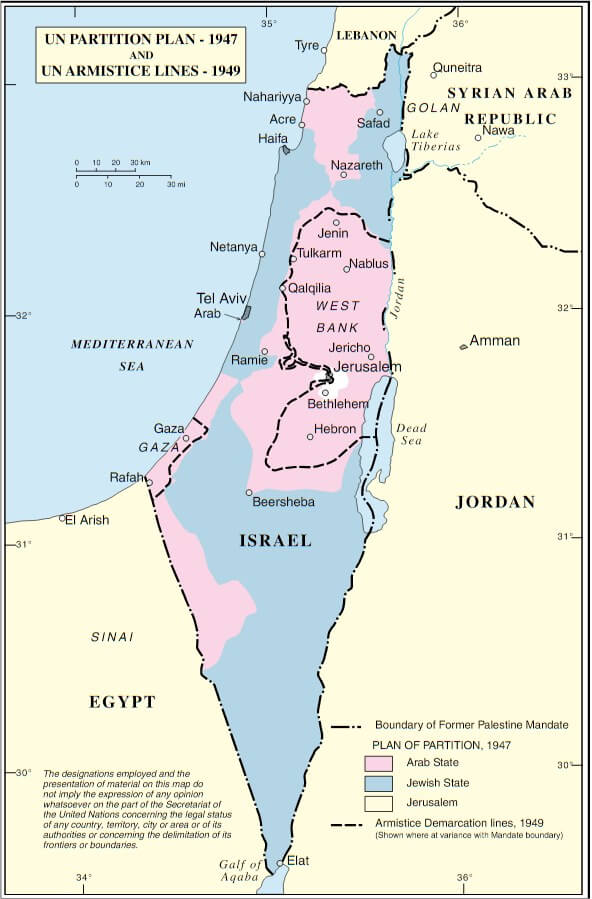
Trackbacks & Pingbacks